
Review · PORTUGAL
Tile Painting and Cocktails in Downtown Porto
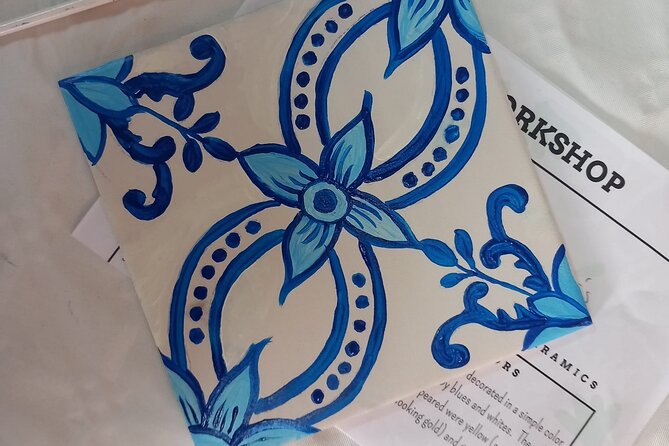
Porto’s famous azulejos are more than pretty blue walls. They tell stories, mark churches and railway stations, and give the city much of its visual character. This two-hour class turns that tradition into a hands-on souvenir: you learn the basics, paint your own tile, and take it home rather than buying another generic trinket.
I like two things right away. Daniela’s clear, patient teaching makes the class workable for complete beginners, and the cocktail gives the session a relaxed social feel. I also like the fast finish, since you can usually collect the tile about an hour after painting. The main consideration is that this uses an acrylic sealing process rather than a traditional kiln-fired method, so purists may prefer a more old-fashioned ceramics workshop.
Key points
- Paint a personal Portuguese-style tile using a supplied pattern or your own idea.
- Learn the story of azulejos in Portugal, including outside influences and common Porto colors.
- Enjoy a local cocktail or juice while you work.
- Collect the finished tile quickly, usually about an hour after the class.
- Suitable for families, solo visitors, couples, and groups, with no artistic skill required.
- Meet at R. Chã 77, close to many central Porto sights and public transportation.
Why a tile class fits Porto so well
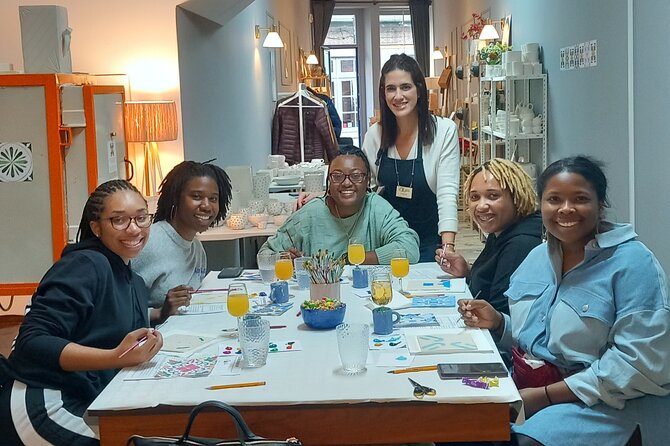
Porto is a city where decoration is part of everyday life. You see patterned tiles on churches, homes, stations, and public buildings. Some panels show religious scenes. Others depict ships, battles, saints, or daily life. Even a short walk through the center can feel like an informal tile lesson, though it is easy to look at the surfaces without understanding why they matter.
This workshop gives you a useful frame for what you see outside. During the opening talk, Daniela explains part of the history of Portuguese tiles, why they became so important, who influenced Portuguese design, and which colors appear most often in Porto and around the country. The talk also points you toward some of the city’s most visited tile-covered sights.
That short introduction is valuable because the class is not only about making something. You begin to notice patterns, color choices, and the difference between a decorative wall and a scene designed to tell a story. If you have already seen a few churches or railway stations, the background will help those places make more sense.
More nights out across Portugal:
- Porto: 4 Bar Pub Crawl, 7 Drinks, & Skip-the-Line Club Entry
★ 4.6 · 485 reviews - Porto: Tile Painting and Cocktails in Downtown Porto
★ 4.9 · 484 reviews - Wine and Cheese Tasting Lunch in Portuguese Wine Bar
★ 5.0 · 447 reviews
Starting at Boiler Studio on Rua Chã
The class begins at R. Chã 77, 4000-165 Porto. The studio is described as clean, spacious, and easy to find, and its central location makes it simple to fit the class into a day of sightseeing. It is also near public transportation.
Allow yourself enough time to arrive without rushing. Porto’s center is hilly, and a short distance on the map can take longer on foot than you expect. This is one reason the class works well as a pause between walking stops. You get two hours indoors, off the steep streets and away from the usual sightseeing pace.
The activity ends where it begins, so you do not need to arrange a second meeting point. That matters if you are planning lunch, a museum visit, or another tour afterward. The group can include up to 20 people. That is large enough for a social atmosphere, though it may feel less personal than a very small private lesson.
English instruction is available. Service animals are allowed, and most people can take part. The activity is also suitable for families. Children have been included in the teaching and have been able to make their own designs with help.
The tile story comes before the paint
The history section is not a full academic lecture, nor should it be. It is a practical introduction that sets up the creative work. Daniela covers how tile became important in Portugal, the outside influences that shaped the tradition, and the colors most associated with Portuguese tile work.
Blue and white are the obvious Porto combination, but the class does not force you into a single look. You can follow a traditional pattern, choose something more personal, or make a design inspired by a favorite part of the city. Past examples have included bridges, egg tarts, rainbow versions of classic patterns, and other personal images.
The best way to get more from this part is to pay attention to the city before your class. Look at a few tile panels during your walk through Porto. You do not need a formal tile tour. Simply notice how repeated shapes create large scenes and how a limited color range can still produce plenty of detail.
The history talk also gives the class a sense of place. You are not painting an anonymous ceramic square. You are making a small object connected to a visual tradition you have already seen on the streets.
Choosing a pattern without getting stuck
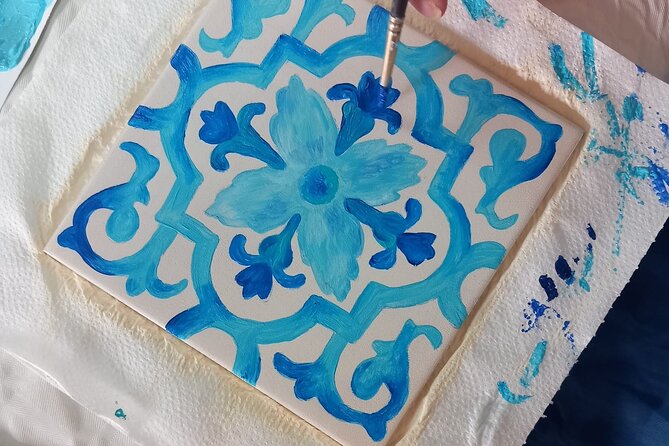
Once the explanation is finished, you choose what to paint. You can use one of the outlines provided or work freehand. Beginners should not feel pressured to invent a complex design. The supplied patterns give you a starting point, and the instructors guide you through the process step by step.
I would choose your design before the class if you tend to overthink decisions. One practical tip is to pick a simpler pattern if you are a perfectionist. Intricate designs can take longer than expected, and a crowded tile leaves less room for relaxed painting.
At the same time, you do not need to arrive with a finished plan. The staff can suggest ways to make your tile personal, and the class is designed for different skill levels. A simple geometric pattern may look more traditionally Portuguese, while a bridge, food, or colorful scene can make the souvenir more distinctly yours.
You also have room to experiment. The class is not presented as an art exam, and the emphasis is on learning the process. Daniela and the other instructors provide guidance when you need it, but you still make the creative choices.
Same city, a different round of bars:
- Porto Pubcrawl: 5h,7 Drinks,4 bars &Skip the line Club Entry
★ 5.0 · 249 reviews - Private Pub Crawl in Lisbon
★ 5.0 · 183 reviews - Lisbon: Tipsy Tour Fun Bar Crawl with a Local Guide
★ 4.9 · 116 reviews - Private Night Bar Crawl in Lisbon with Local Guide and Drinks
★ 5.0 · 69 reviews
Painting with patient, practical guidance
The painting portion is the heart of the experience. You work at your own tile while the instructor explains the steps and helps with details. The teaching style is patient and encouraging, which is important when a small mistake feels larger than it really is.
No artistic background is required. The class has worked well for first-time painters, older children, mixed-age families, solo visitors, and groups of friends. A family group can choose completely different approaches, from a traditional blue pattern to a bright personal design.
You should expect to spend much of the session concentrating on your tile. That is part of the appeal. Porto sightseeing can involve a lot of cobblestones, hills, churches, and busy viewpoints. Here, your attention narrows to color, shape, and brushwork. The pace feels calmer than a standard guided walk.
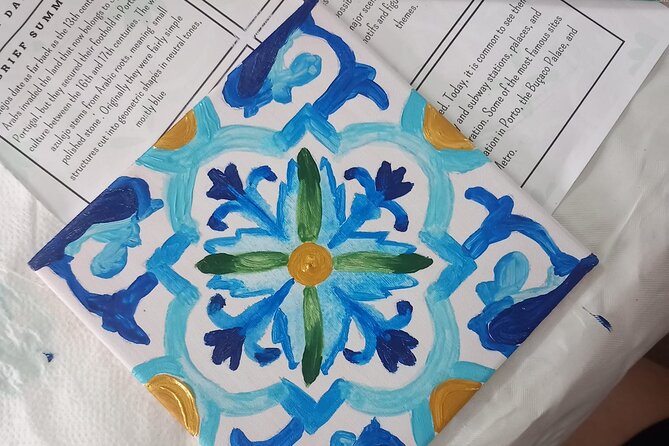
The instructors also help you turn a basic outline into something that feels finished. This is especially helpful if you want a recognizable image, such as the Dom Luís I Bridge, but do not normally draw. You can follow a design and still make choices about color and detail.
The cocktail makes it a social break
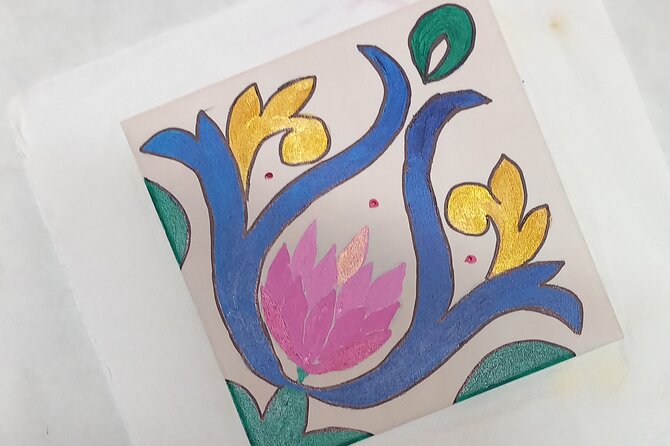
A drink is included as part of the experience. You can have a local gin and port cocktail or juice, depending on your preference. The cocktail is a small detail, but it changes the tone of the class. You can chat with the people around you, compare ideas, and take a break while the paint sets.
The drink is not the main reason to book. The tile and the cultural background carry the experience. Still, it adds value to the price and makes the workshop feel more like a relaxed afternoon activity than a formal art lesson.
This setup suits solo visitors particularly well. You have a built-in activity and an easy reason to talk with people nearby. It also works for couples and friend groups, including larger celebrations. A group of eight has used the class for a hen party, and the shared project gives everyone a souvenir without requiring the group to agree on one sightseeing plan.
If you do not drink alcohol, the juice option means you are not left out of this part of the experience. Families can also take part without making the cocktail central to the day.
Taking home the tile about an hour later
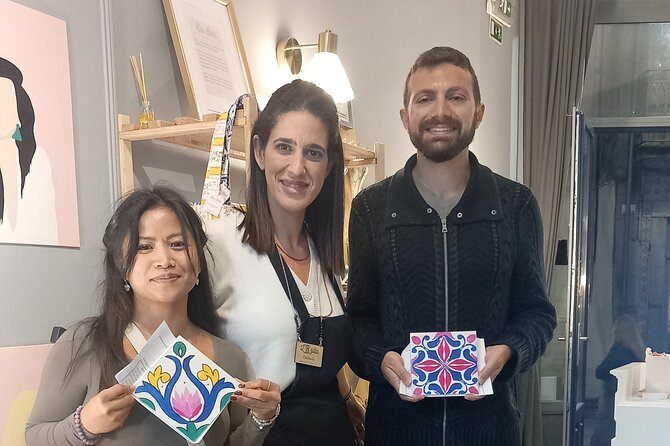
The quick collection time is one of the strongest practical features. The tile can be removed about an hour after the workshop ends using the studio’s technique. This is much easier to plan around than a workshop that requires kiln firing, shipping, or a return visit several days later.
The exact finish is worth understanding. The painting uses acrylics with a curing and sealing process, rather than the classic method of painting glaze onto a tile and firing it in a kiln. One account describes the tile as sealed within minutes, while the activity information says it can be removed about an hour later. The safest plan is to allow roughly an hour before collecting it.
This process is less traditional, but it is convenient. If your stay in Porto is short, you can leave with the souvenir ready for your luggage. You also avoid the worry of shipping a fragile ceramic piece home.
Plan your day with the pickup in mind. The activity ends at the studio, and the tile is available later at that location. If your schedule is tight, confirm the collection timing when you arrive and leave enough space before heading to the airport or another appointment.
What the $42.34 price includes in practical terms
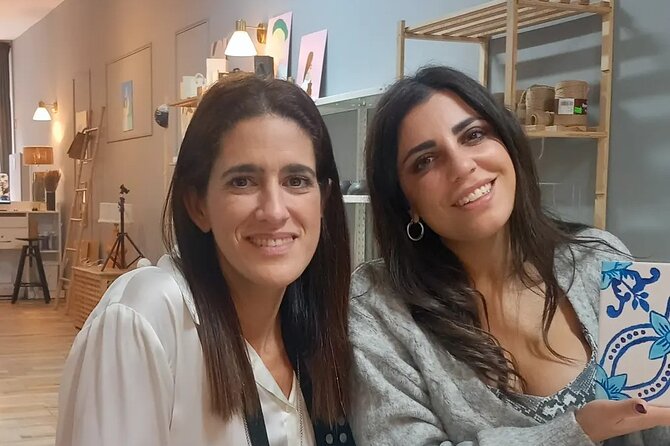
At $42.34 per person, the class is not the cheapest way to spend two hours in Porto. You can look at tile-covered buildings for free, and a small souvenir from a shop will cost much less.
The value comes from combining several things in one session:
- A guided introduction to Portuguese tile history
- A hands-on activity with materials provided
- Step-by-step instruction
- A cocktail or juice
- A finished personal souvenir
- A quick collection time
That package makes more sense if you value experiences over objects. A shop-bought tile may be cheaper and more traditionally made, but it does not carry the memory of choosing a design and painting it yourself.
The price also works better for a family or mixed-age group than many formal cultural tours. People who are not interested in a long museum visit can still learn something about Portugal while making an object. The class is active without being strenuous.
I would compare it with the cost of another paid indoor activity rather than with the price of a souvenir. If you want a creative break, a drink, and a little cultural context, the price is fair. If you only want to see historic tiles, spend your money on a walk through Porto instead.
Who will get the most from this workshop
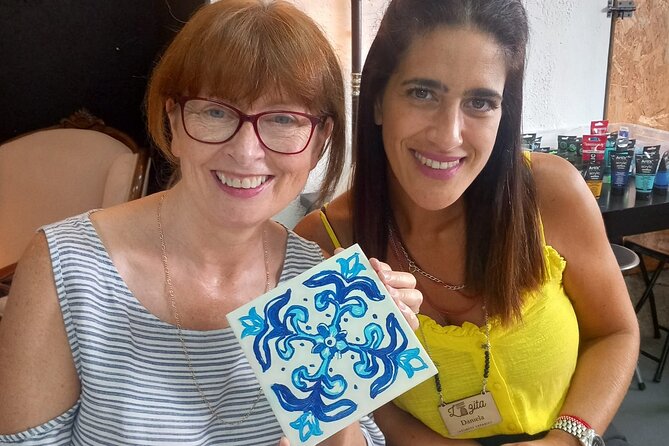
This is a good choice for you if you want:
- A slower activity between walking tours
- A personal souvenir instead of a mass-produced item
- A gentle introduction to Portuguese art and culture
- A family-friendly class with clear instruction
- A social activity for a solo visit or group celebration
- Something that does not require previous artistic skill
It is especially useful during a short stay. You get the cultural explanation, the creative activity, and the finished object in a compact two-hour format, with only a short return visit needed to collect the tile.
You may want a different experience if your main goal is traditional ceramic production. The acrylic sealing method is practical, but it is not the same as painting glaze and firing a tile in a kiln. You may also prefer a smaller class if you want nearly constant one-to-one instruction. With a maximum of 20 people, the atmosphere can be friendly and social, but the amount of individual attention can vary.
Smart planning before you book
The activity is often reserved well ahead of time, with an average booking lead of about 35 days. That suggests you should not leave it until the last minute if your Porto dates are fixed.
Confirmation is normally provided at booking. If you book within one hour of the start time, confirmation is subject to availability and may arrive later. For a larger group, contact the support team at least 24 hours ahead so they can check space.
Different dates and times may be possible if you contact the organizers. The standard booking is in English, which is useful if you want the history and painting instructions to be easy to follow.
Free cancellation is available if you cancel at least 24 hours before the scheduled start time. Changes or cancellations inside that window are not accepted for a refund. The activity also requires a minimum number of participants. If it is canceled because that minimum is not reached, you are offered another date or experience, or a full refund.
My verdict: book it for the personal souvenir
I would book this class if you want a compact Porto activity that gives you something to remember beyond photographs. The patient instruction, short history lesson, and personal tile make it more meaningful than a quick souvenir purchase.
Go in with a simple design idea, leave enough time to collect the tile, and accept that the finish is a modern shortcut rather than traditional kiln-fired ceramics. For families, solo visitors, couples, and groups looking for a relaxed break from Porto’s hills, this is a strong choice. Serious ceramic students should look for a more technical studio class, but most visitors will find this a friendly and well-priced way to connect with one of Portugal’s most recognizable art forms.
FAQ
Where does the tile painting class begin?
It begins at R. Chã 77, 4000-165 Porto, Portugal.
Where does the activity end?
The activity ends back at the meeting point on R. Chã.
How long does the experience last?
The workshop lasts approximately two hours.
What language is the class offered in?
The experience is offered in English.
What is included in the activity?
You receive an introduction to Portuguese tile history, guidance while painting one tile, and a cocktail or juice.
Can I choose my own tile design?
Yes. You can use an outline provided by the studio or create your own design.
Do I need artistic experience?
No. The class is designed for different skill levels, and the instructors guide you through the process.
When can I take my finished tile home?
The tile can be removed about one hour after the workshop ends. Plan to return to the studio to collect it.
How many people can join the class?
The maximum group size is 20 people.
Can I cancel for a full refund?
Yes, if you cancel at least 24 hours before the experience starts. Cancellations or changes made less than 24 hours before the start time are not refunded or accepted.
Last orders added around Portugal
- Bar Hopping & Poncha Workshop★ 4.0 · 2 reviews
- Port Wine Tasting Apéritif/Digestif at Portuguese Wine Bar★ 4.5 · 40 reviews
- Queer Lisbon Nightlife Tour★ 5.0 · 30 reviews
- Private Paradise Beaches and Famous Beach Bars Tour in Lisbon★ 5.0 · 5 reviews
- Private 4h Benagil or CountrySide Safari★ 5.0 · 9 reviews
- Albufeira PRIVATE Night Tour with Cocktails & Drinks★ 5.0 · 19 reviews
- Albufeira: 5 Bars and 1 Nightclub Pub Crawl with Free Shots★ 4.0 · 8 reviews
- Portuguese Traditional Dinner & Wine Experience★ 5.0 · 4 reviews
Portugal Bar Crawls: the next round

4 Bar Pub Crawl, 7 Drinks, & Skip-the-Line Club Entry
Read our review →
Wine and Cheese Tasting Lunch in Portuguese Wine Bar
Read our review →
Porto Pubcrawl: 5h,7 Drinks,4 bars &Skip the line Club Entry
Read our review →


Private Night Bar Crawl in Lisbon with Local Guide and Drinks
Read our review →

Port Wine Tasting Apéritif/Digestif at Portuguese Wine Bar
Read our review →This night out also appears in