
Review · LISBON
Queer Lisbon Nightlife Tour
Lisbon’s queer nightlife is tied to much more than bars. This 3.5-hour evening walk links colonialism, immigration, and the Carnation Revolution to the city’s present-day LGBTQ+ scene. I like the thoughtful route and the small-group limit of 15 people. I also like that the night ends in a queer-owned bar rather than stopping at a sightseeing viewpoint.
The main drawback is that dinner and drinks are not included, so the $66.08 price is only part of your evening budget. Some stops may change between Má Lingua and A Mata, and the tour requires good weather, so this is less of a fixed pub crawl and more of a guided cultural walk with nightlife along the way.
Key points to know before booking
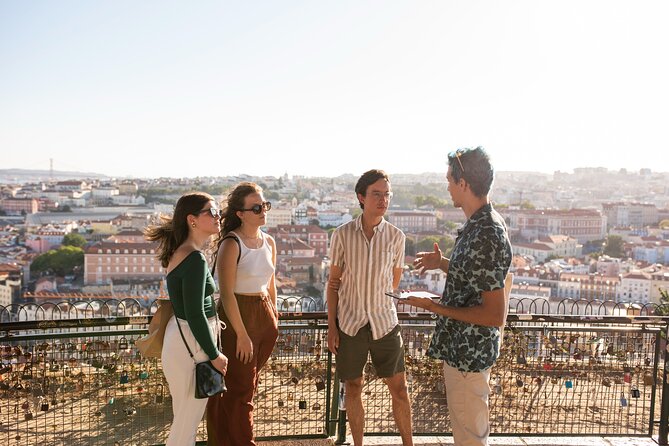
- The evening starts with history: At Miradouro dos Barros, you discuss colonialism and its effect on Portuguese culture before heading into the nightlife.
- Damas combines food, music, and politics: This restaurant, bar, and concert venue supports immigrant voices and social change in Portugal.
- The Carnation Revolution gets a local setting: A mural in Graça and São Vicente provides the backdrop for a clear look at dictatorship and the 1974 revolution.
- The route supports queer cultural spaces: Má Lingua or A Mata offers a window into the pressures facing queer and immigrant-owned venues.
- The finish is included: Drama Bar is the final stop, and admission is included there, though your drinks are still your responsibility.
- The format stays intimate: The maximum group size is 15, with a Portuguese and English-speaking local guide and a PDF queer map of Lisbon.
A nightlife tour that begins with Lisbon’s political past
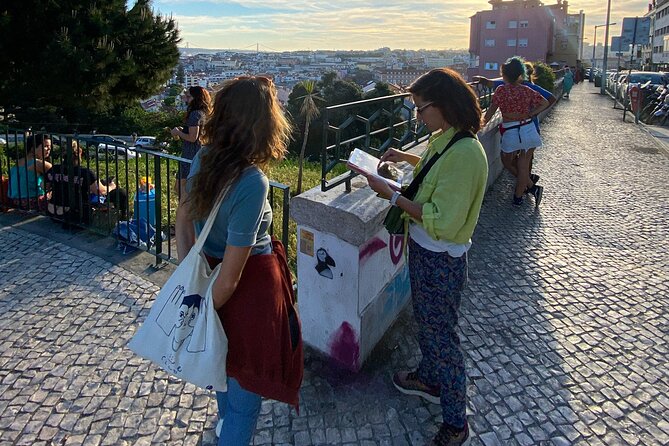
Many evening tours hurry straight to drinks. This one takes the longer view. It begins at Miradouro dos Barros, then uses Lisbon’s streets, murals, restaurants, and bars to explain how power, migration, and queer organizing shape the city today.
That approach gives the night a clear purpose. You are not simply being taken to a few LGBTQ+ venues. You are being asked to notice who owns these spaces, who performs in them, who feels welcome there, and what happens when rising costs or social pressure threaten them.
The timing works well for an evening out. You meet at 6:30 pm, when the tour can move from early evening views into dinner and later drinks. The total time is about three hours and 30 minutes, long enough for a substantial introduction to Lisbon’s queer scene without taking over your entire night.
The tour is offered in English, with a Portuguese and English-speaking guide. A past guide named Herika was singled out for creating a distinctive way to experience Lisbon’s history. Since guides can vary, I would treat her name as useful context rather than a guarantee that she will lead every departure.
More nights out across Portugal:
- Porto: 4 Bar Pub Crawl, 7 Drinks, & Skip-the-Line Club Entry
★ 4.6 · 485 reviews - Porto: Tile Painting and Cocktails in Downtown Porto
★ 4.9 · 484 reviews - Wine and Cheese Tasting Lunch in Portuguese Wine Bar
★ 5.0 · 447 reviews
Miradouro dos Barros sets the tone
Your first stop is Miradouro dos Barros, a viewpoint on Calçada do Monte. You spend about 20 minutes here, meeting the guide and the rest of the group against one of Lisbon’s scenic city views.
The important part is not only the view. This is where the discussion turns to colonialism and its effect on Portuguese culture. That opening gives the rest of the evening a frame. It asks you to think about how old ideas about empire, race, class, and national identity still affect public life.
I like beginning here because it avoids treating queer Lisbon as a sealed-off subject. The tour places LGBTQ+ life within the wider story of Portugal. You get a social and political introduction before ordering food or stepping into a bar.
There is no admission charge for the viewpoint. Wear shoes you can walk in, since this is the start of a route through Lisbon streets rather than a stationary tasting event. The meeting point is specific, Miradouro dos Barros, Calçada do Monte, 1100-361 Lisboa, so check the map before setting out.
Damas connects dinner with social change
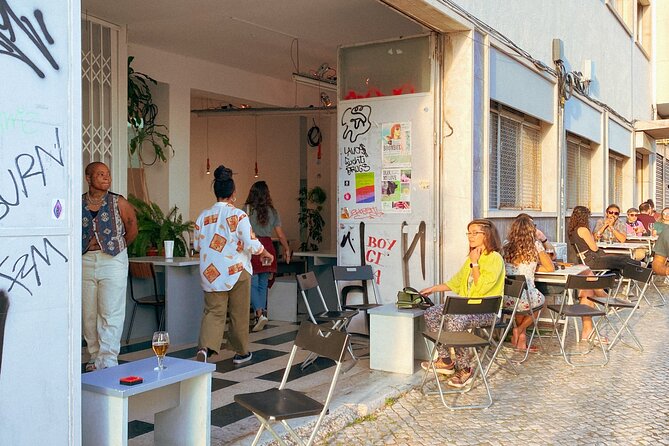
After the viewpoint, the group heads to Damas for about 40 minutes. Damas works as a restaurant, bar, and concert venue, making it a useful first indoor stop. Here, queer culture is presented alongside immigrant-led social and political work in Portugal.
Your food and drinks are not included. That is worth keeping in mind when judging the total price. The $66.08 fee covers the guide, the organized route, the included final bar stop, and the cultural interpretation, but you should plan extra money for your meal and drinks at Damas and elsewhere.
The stop is relatively short, so do not expect a full dinner here unless the pace allows it. The information provided does not specify a set menu, food credit, or reserved meal. You pay for what you order, and the food choice is part of your own evening budget.
Damas is a strong match for people who want more than a list of popular bars. Its role as a concert venue and meeting place for immigrant voices helps explain how queer nightlife can also serve as a platform for public discussion. It is a place where the social side of the tour becomes concrete.
A Carnation Revolution mural adds national context
The route then moves through Graça and São Vicente for about 30 minutes. The stop centers on a mural connected to the Carnation Revolution, the 1974 event that ended Portugal’s dictatorship.
This is a useful pause between venues. The revolution is not presented as a distant textbook event. You learn about the dictatorship, the conditions that led to the uprising, how it unfolded, and its continuing effect on Portuguese society.
The setting matters. A mural gives the history a public face and shows how political memory can remain part of an ordinary neighborhood. You will not be spending hours inside a museum, and that is both the benefit and the limit. The tour offers a focused explanation rather than a full political history of twentieth-century Portugal.
I like this part because it connects freedom of expression with the spaces you visit later. The route suggests that today’s queer organizing did not appear out of nowhere. It exists within a country shaped by dictatorship, revolution, migration, and changing ideas about public life.
Same city, a different round of bars:
- Porto Pubcrawl: 5h,7 Drinks,4 bars &Skip the line Club Entry
★ 5.0 · 249 reviews - Tile Painting and Cocktails in Downtown Porto
★ 5.0 · 187 reviews - Private Pub Crawl in Lisbon
★ 5.0 · 183 reviews - Lisbon: Tipsy Tour Fun Bar Crawl with a Local Guide
★ 4.9 · 116 reviews
Má Lingua or A Mata shows the fragile side of queer nightlife
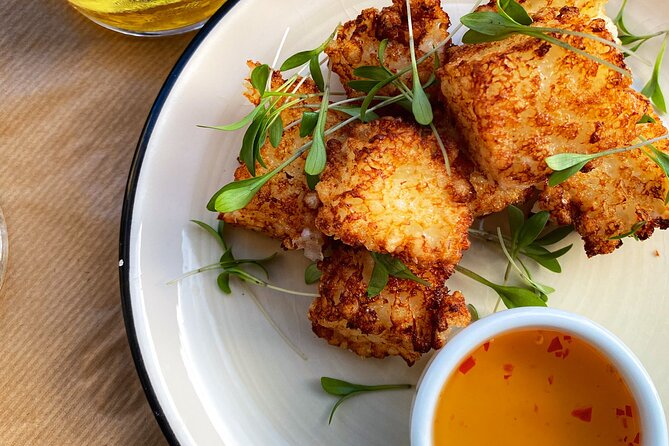
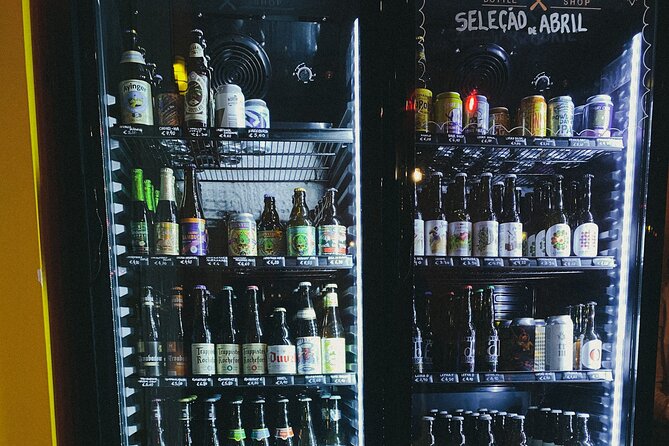
The next stop lasts about 40 minutes and takes place at Má Lingua or A Mata. Both are described as queer-friendly bars and cultural spaces where queer performers can find a platform.
The choice between the two may depend on the night. That flexibility is practical, but it also means you should not book this expecting an identical venue experience every time. The appeal is the subject and the setting, not a guaranteed particular performer, menu, or program.
This stop looks at the challenges facing queer and immigrant-owned venues, including a wave of closures in 2024. That detail gives the tour a needed dose of realism. Lisbon’s queer scene is not simply a collection of fun places that will always be there. Small cultural spaces can be vulnerable, even when they play an important role for performers, organizers, immigrants, and local residents.
You should also expect the tour to discuss who gets to participate in nightlife. A venue can be queer-friendly and still face questions about ownership, money, access, and representation. The focus on immigrant-owned venues brings a wider range of voices into that conversation.
As at Damas, admission is not listed as included at this stop. Your drinks and any food remain your responsibility. The tour does not promise a set number of drinks, a show, or a reserved table, so think of this as a guided visit and conversation rather than a package deal.
Drama Bar provides the final conversation
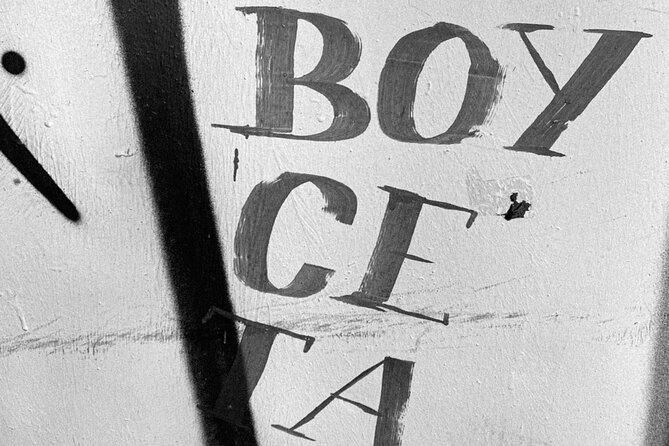
The tour ends at Drama Bar on Rua Maria Andrade, in the 1170 area of Lisbon. You spend about one hour here, making it the longest stop of the evening. Admission is included at this final queer-owned bar.
This is where the guide turns to the present-day queer scene in Portugal, with particular attention to Lisbon. The discussion includes associations and collectives working on LGBTQ+ issues, along with the questions they are trying to address.
The tour also looks at immigration through a decolonial lens. In plain terms, that means asking how Portuguese queer spaces can move beyond traditional norms and serve a broader, more varied community. Immigration is treated as an active source of ideas and change, not just as background to the city’s population.
Ending at Drama Bar makes sense. You have already discussed colonialism, immigrant voices, dictatorship, revolution, and venue closures. The final hour gives those subjects a current home. You can continue the conversation in a queer-owned space instead of being dropped at the last historical stop.
Your drinks are not included, even though admission is. The ending point is also different from the starting point, so plan your route home from Rua Maria Andrade rather than from Miradouro dos Barros.
What the $66.08 price really covers
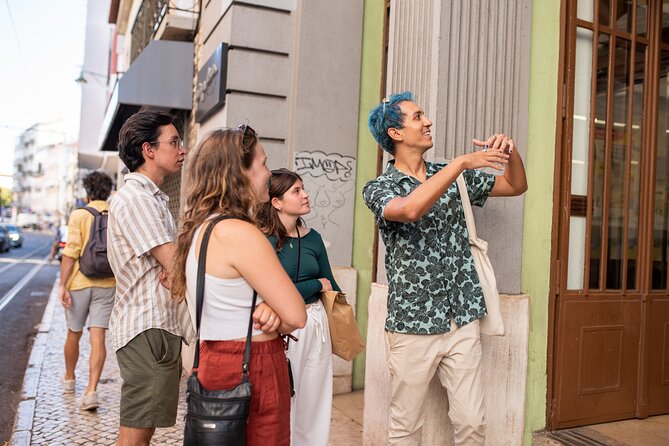
At $66.08 per person, this is not a cheap bar crawl. The value depends on how much you want interpretation and access to a focused subject.
You are paying for a small-group evening, a local guide, a planned route through several neighborhoods, entry to Drama Bar, and a PDF queer map of Lisbon. You are also paying for the link between the venues and Portugal’s political history. If you only want drinks, you can spend less by going out on your own.
I think the price is easier to justify if you are new to Lisbon, interested in LGBTQ+ history, or want context that standard sightseeing tours usually skip. The group limit of 15 should help keep the discussion more personal than a large coach tour, though the actual feel depends on the number booked for your date.
Food and drinks can add a noticeable amount. Budget separately for Damas, Má Lingua or A Mata, and Drama Bar. Since the tour lasts into the evening, you may want to decide in advance how much you are comfortable spending at each stop.
The 4.9 out of 5 rating from 30 ratings and the 97 percent recommendation figure suggest a strong early response. One especially positive account praised Herika and the tour’s unusual way of presenting Lisbon’s history. That matches the experience’s clearest strength: it treats nightlife as part of civic life, not just entertainment.
Who will get the most from this evening
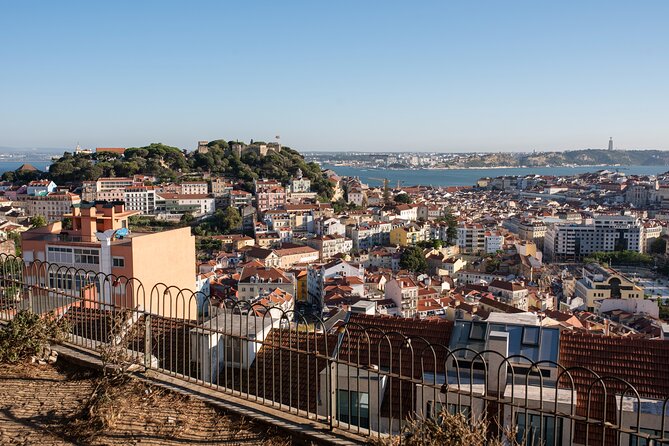
I would choose this tour if you want to meet Lisbon through its queer venues and social movements. It suits solo visitors and couples who prefer a guided introduction to going out, especially when you want historical context along with a drink.
It also fits people who have already seen the main monuments and want a more specific subject. The route is useful for anyone curious about immigration, decolonial thinking, the Carnation Revolution, or the practical work done by LGBTQ+ associations and collectives.
The tour may be less suitable if you want a high-energy club night. It is not advertised as a party bus, pub crawl, or show package. The schedule includes walking, short history talks, food, drinks, and discussion. The mood may shift from scenic and reflective to social and informal.
You should also be comfortable with some uncertainty in the exact venue plan. Má Lingua or A Mata may be used, and the experience depends on good weather and a minimum number of participants. The tradeoff is a route that can respond to Lisbon’s current queer cultural life instead of following a rigid script.
Most people can participate, service animals are allowed, and the route is near public transportation. The supplied details do not describe step-free access or the exact walking distance, so contact the provider if mobility is a concern.
Practical details for a smooth evening
Meet at Miradouro dos Barros at 6:30 pm. The tour ends at Rua Maria Andrade, not at the starting point. Both the meeting and ending locations are in Lisbon, but you should allow time to find the viewpoint and confirm your return route.
The tour is offered in English. The guide speaks Portuguese and English, which can help explain local names, political terms, and cultural references without losing the flow of the discussion.
You receive confirmation when you book and an updated queer map of Lisbon. Keep the PDF handy after the tour. It may help you understand the wider scene beyond the three venues visited that night.
Free cancellation is available if you cancel at least 24 hours before the 6:30 pm start. Changes or cancellations inside that window are not accepted and are not refunded. If poor weather cancels the experience, you can choose a different date or receive a full refund. The same choice applies if the minimum number of participants is not reached.
Should you book the Queer Lisbon Nightlife Tour?
Book it if you want an evening built around people, politics, and queer-owned cultural spaces, not just bar hopping. The route gives you a useful connection between Lisbon’s colonial past, the Carnation Revolution, immigration, and current LGBTQ+ organizing.
Skip it if your only goal is included food, included drinks, or a guaranteed club night. At $66.08, plus your own spending at several stops, it is best viewed as a guided cultural experience with nightlife built into the route.
For the right visitor, the unusual format is the point. You get a scenic start, a meal stop, neighborhood history, serious discussion about venue closures, and a final hour in a queer-owned bar. That is a thoughtful way to spend an evening in Lisbon, provided you are ready to listen as well as go out.
FAQ
How long is the Queer Lisbon Nightlife Tour?
The tour lasts approximately 3 hours and 30 minutes.
What time does the tour start?
The tour starts at 6:30 pm.
Where does the tour begin?
The meeting point is Miradouro dos Barros, Calçada do Monte, 1100-361 Lisboa, Portugal.
Where does the tour end?
The tour ends at Rua Maria Andrade, R. Maria Andrade, 1170 Lisboa, Portugal.
Is the tour offered in English?
Yes. The experience is offered in English, and the local guide speaks Portuguese and English.
Are food and drinks included?
No. You pay separately for your own meal and drinks. Admission is listed as included at Drama Bar, but drinks there are not included.
What venues are visited?
The route includes Damas, Má Lingua or A Mata, and Drama Bar. It also includes Miradouro dos Barros and a mural in Graça and São Vicente.
How many people can join the tour?
The tour has a maximum group size of 15 participants.
Can I cancel for a full refund?
Yes, if you cancel at least 24 hours before the experience start time. Cancellations made less than 24 hours before the start are not refunded.
Last orders added around Portugal
- Bar Hopping & Poncha Workshop★ 4.0 · 2 reviews
- Port Wine Tasting Apéritif/Digestif at Portuguese Wine Bar★ 4.5 · 40 reviews
- Private Paradise Beaches and Famous Beach Bars Tour in Lisbon★ 5.0 · 5 reviews
- Private 4h Benagil or CountrySide Safari★ 5.0 · 9 reviews
- Albufeira PRIVATE Night Tour with Cocktails & Drinks★ 5.0 · 19 reviews
- Albufeira: 5 Bars and 1 Nightclub Pub Crawl with Free Shots★ 4.0 · 8 reviews
- Portuguese Traditional Dinner & Wine Experience★ 5.0 · 4 reviews
- Madeira: Bar Hopping★ 3.5 · 4 reviews
Lisbon Bar Crawls: the next round
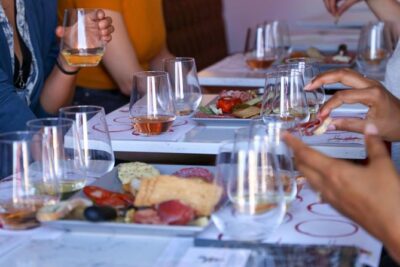
Wine and Cheese Tasting Lunch in Portuguese Wine Bar
Read our review →


Private Night Bar Crawl in Lisbon with Local Guide and Drinks
Read our review →

Port Wine Tasting Apéritif/Digestif at Portuguese Wine Bar
Read our review →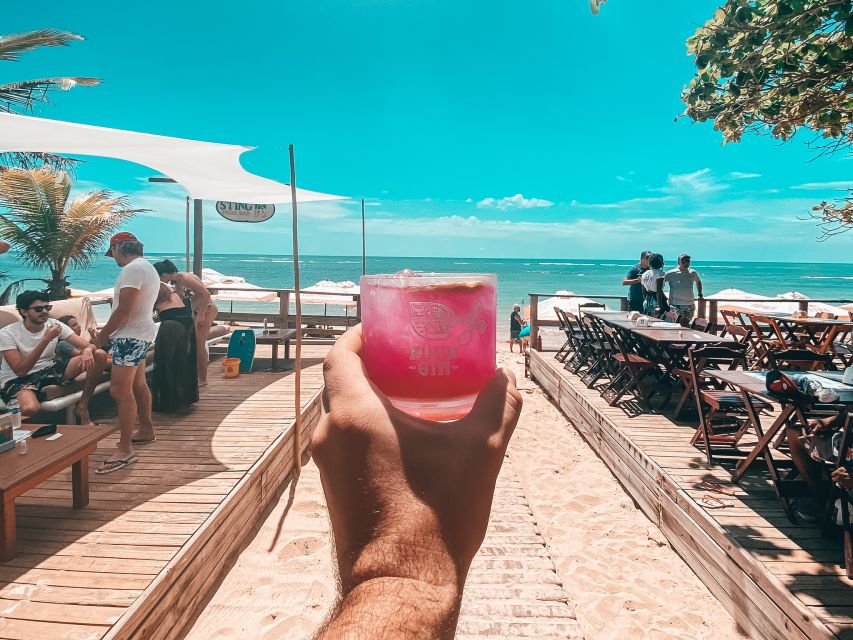
Lisbon Coast Tour: Paradise Beaches & Famous Beach Bars
Read our review →
This night out also appears in