
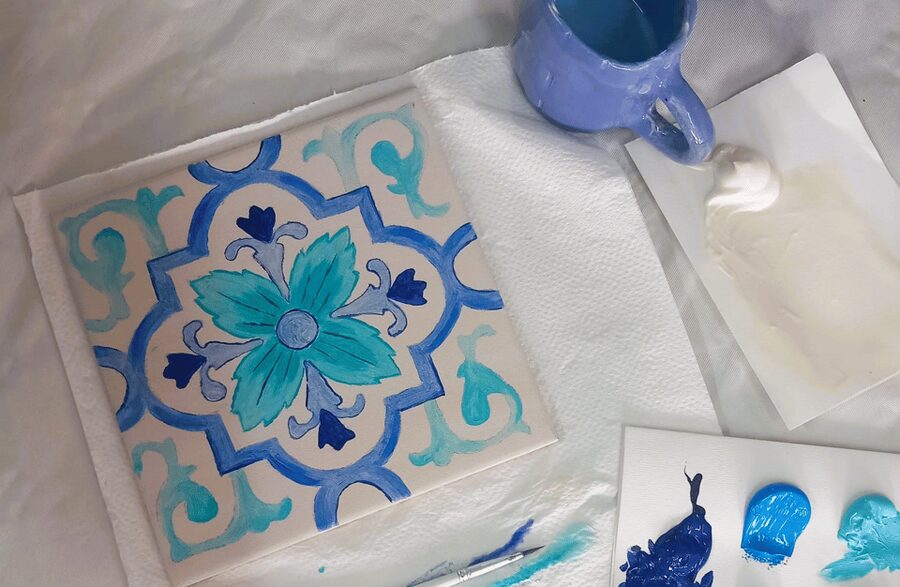
Review · PORTUGAL
Porto: Tile Painting and Cocktails in Downtown Porto
Porto’s tiled churches, railway station, and house fronts are more than pretty backdrops. At Boiler Studio, you get to learn why azulejos matter, then paint one of your own while sipping a cocktail. It is a pleasant way to make something connected to the city instead of buying another generic souvenir.
I like the clear introduction to tile history and the patient, hands-on help from instructors such as Daniela, Emmanuel, and Diogo. I also like the calm pace: music plays, the group chats, and nobody expects you to arrive with artistic talent. The main consideration is that your tile may need extra drying time, especially if you attend later in the day, so you might collect it the next day rather than carry it away immediately.
Key points at a glance
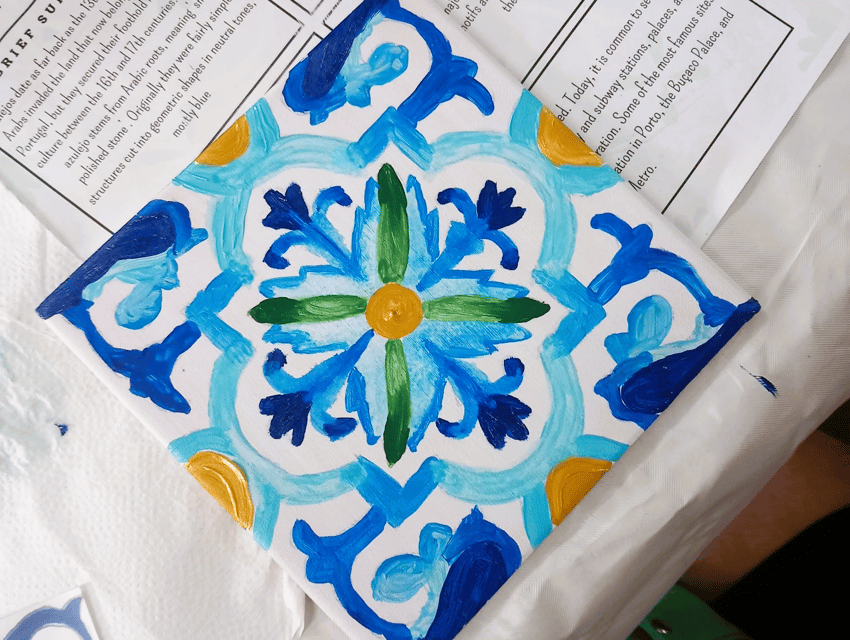
- Paint a real ceramic azulejo: You create a tile to keep, using the supplied paints, brushes, and materials.
- Learn before you paint: The workshop explains Arabic influence, Portuguese tile traditions, colors, patterns, and how tiles are used in different cities.
- Choose a design that fits your skill: Use a prepared stencil or ask the team to print a personal image.
- Enjoy a Portuguese-style drink: The cocktail may be a Porto Tonic or a white port and tonic, depending on the session.
- Find it beside Porto Cathedral: Rua Chã 77 is close to São Bento Station, the Dom Luís I Bridge, and other central sights.
- Plan for drying time: Some tiles are ready after about an hour, while afternoon participants may need to return the next day.
Why tile painting belongs on a Porto itinerary
You will see azulejos everywhere in Porto. They cover church façades, station halls, apartment buildings, and smaller details tucked into ordinary streets. It is easy to admire the blue-and-white patterns without knowing how they became such a strong part of Portuguese design.
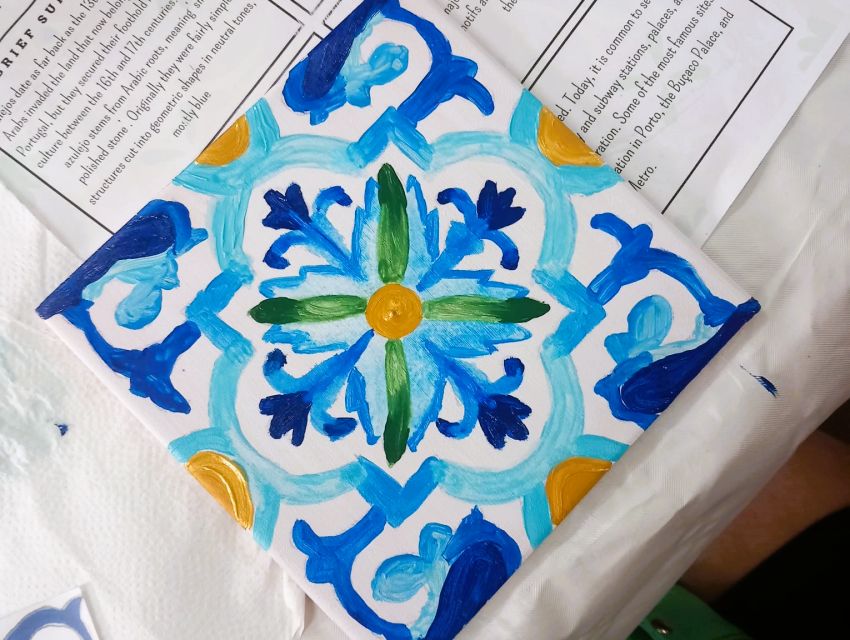
This workshop gives you a short, useful introduction before you pick up a brush. You learn that azulejos reach back to the 13th century, when Arab culture influenced the lands now known as Spain and Portugal. Tiles became especially important in Portuguese culture during the 16th and 17th centuries.
The word azulejo comes from Arabic roots connected with a small polished stone. Early tiles tended to use simple geometric forms and restrained colors, often blue. The workshop also covers different periods, cities, colors, and present-day uses, so the activity is not just a craft lesson. It helps you notice the details on Porto’s buildings after you leave.
I find that context useful. A tile souvenir means more when you understand why Portugal used tiles so extensively and how a small painted square fits into a much larger visual tradition.
More nights out across Portugal:
- Porto: 4 Bar Pub Crawl, 7 Drinks, & Skip-the-Line Club Entry
★ 4.6 · 485 reviews - Wine and Cheese Tasting Lunch in Portuguese Wine Bar
★ 5.0 · 447 reviews - Porto Pubcrawl: 5h,7 Drinks,4 bars &Skip the line Club Entry
★ 5.0 · 249 reviews
Entering Boiler Studio on Rua Chã 77
The workshop takes place at Boiler Studio, a shop and studio on Rua Chã 77, on a typical street directly in front of Porto Cathedral. This is an excellent location for a two-hour break because you can fit the activity between major sights without making a separate trip across town.
São Bento Train Station, the Dom Luís I Bridge, Time Out Market, and the Cathedral are all named as nearby landmarks. You can visit one or two of these before the class, then step indoors for a quieter activity. The central position also makes the workshop practical on a rainy afternoon, when walking around Porto’s steep streets may lose some appeal.
The space doubles as a shop selling handmade products by local artists. Allow a few minutes to look around before or after painting, but remember that the shop is an extra part of the visit, not the main attraction. The focus remains the class and your tile.
The studio is wheelchair accessible. Smoking, fireworks, and explosive substances are not allowed, which is hardly a difficult rule to follow but is worth knowing if you are planning a group outing.
The first part: Porto tile history before the brushes
The session begins with an overview of Portuguese tiles. You learn where the tradition came from, how outside influences shaped it, and how tile design changed over time. The introduction also touches on the colors and ways tiles are used today.
This opening matters because it keeps the painting from feeling like a disconnected craft project. You are not simply decorating a blank square. You are working with a small object that relates to Porto’s buildings and the city’s visual character.
The workshop includes a written summary with information about tiles. That gives you something to refer back to later, especially if you want to identify patterns and styles during the rest of your time in Portugal.
The history portion is not presented as a full academic course. In a two-hour activity, expect a practical introduction rather than a long lecture. That balance suits most visitors. You get enough background to understand the tradition, then spend the bulk of the session making your own piece.
Choosing a stencil, pattern, or personal image
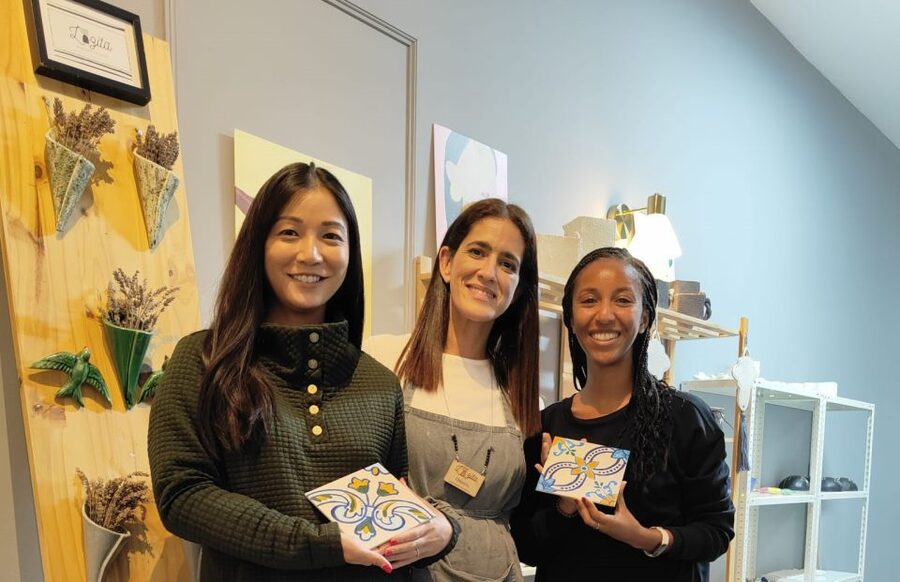
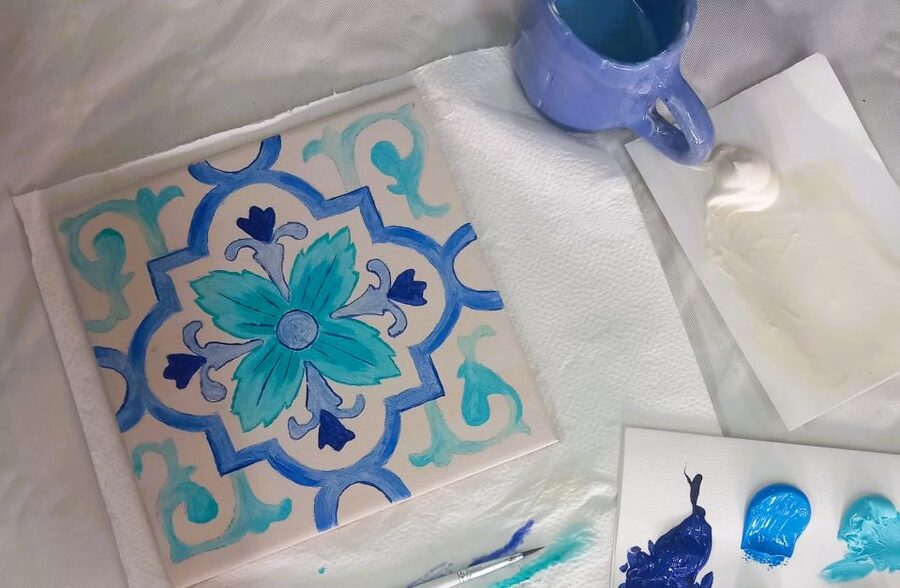
After the introduction, you receive a ceramic tile and begin planning your design. You can select from prepared patterns and stencils, which is the easiest route if you want a polished result without drawing from scratch.
You can also create something more personal. The team can print an image for you, and one participant described bringing a different design for a family member who wanted something outside the standard choices. This option makes the activity more flexible for families and couples with very different tastes.
The selection of colors and patterns gives you room to make the tile your own. You might follow a traditional-looking design, keep things simple, or add a personal image from your trip. The instructors explain the techniques and help you adjust your approach to your skill level.
I especially like this setup for people who say they are not artistic. You do not have to invent a design or trust your unsteady hand. Start with a stencil, follow the guidance, and ask for help when you need it.
Same city, a different round of bars:
- Tile Painting and Cocktails in Downtown Porto
★ 5.0 · 187 reviews - Private Pub Crawl in Lisbon
★ 5.0 · 183 reviews - Lisbon: Tipsy Tour Fun Bar Crawl with a Local Guide
★ 4.9 · 116 reviews - Private Night Bar Crawl in Lisbon with Local Guide and Drinks
★ 5.0 · 69 reviews
Painting with Daniela, Emmanuel, and the team
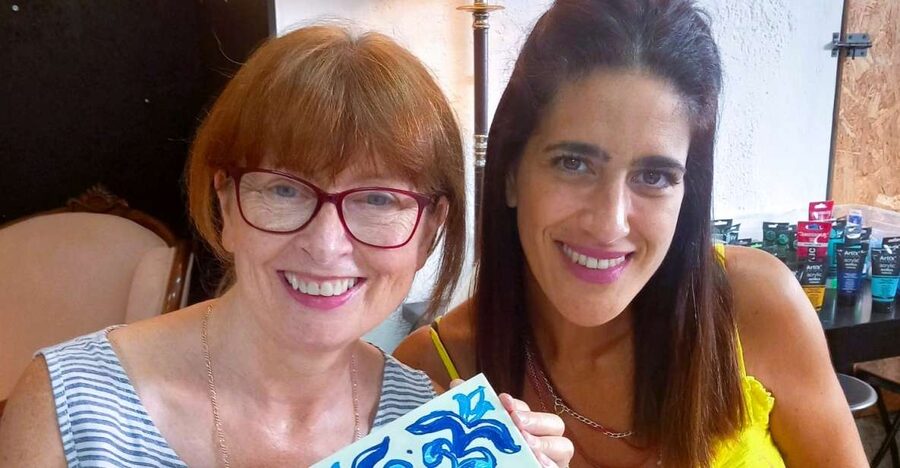
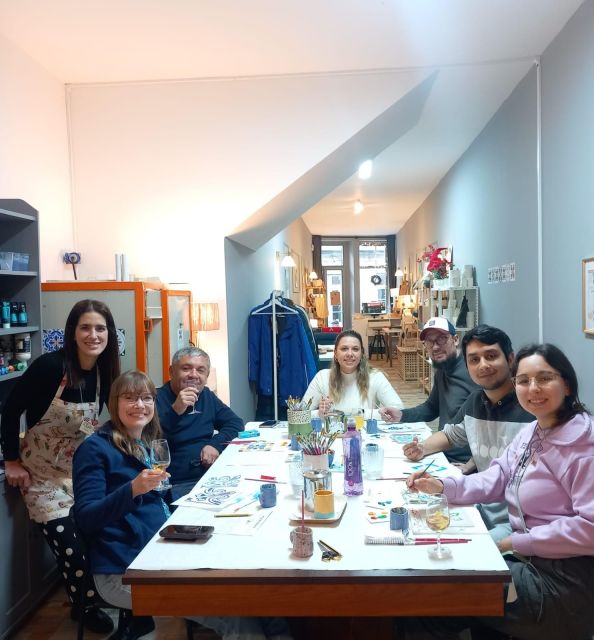
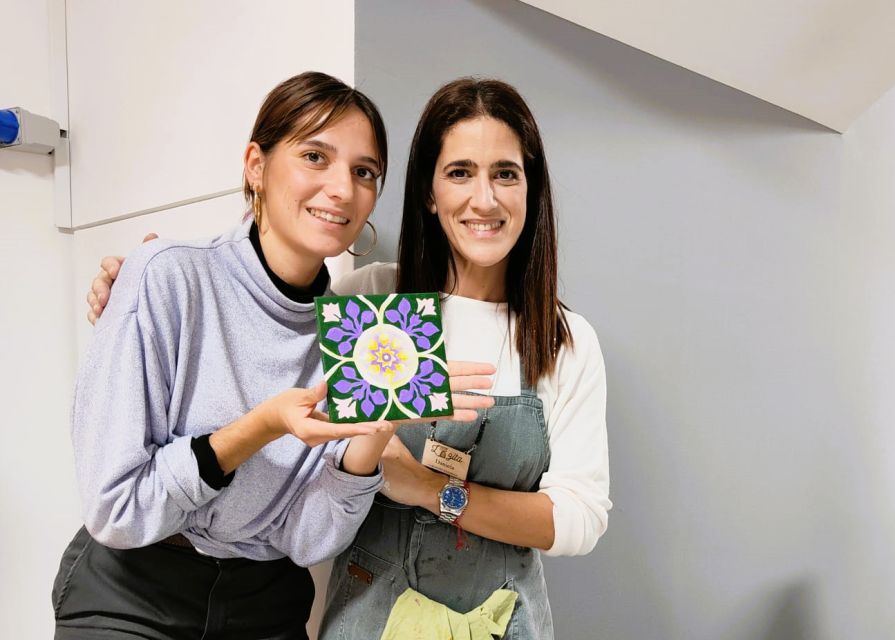
The painting portion is relaxed rather than formal. Calm music plays in the background, a cocktail is served, and the instructors circulate to help. Daniela is frequently singled out for being patient, funny, attentive, and willing to demonstrate techniques. Emmanuel and Diogo are also named as friendly and helpful members of the team.
The support is practical. You can ask how to handle a brush, where to place a color, or how to correct a small mistake. The instructors work with different ability levels instead of pushing everyone toward the same result.
That makes a difference if one person in your group enjoys art and another expects to dislike it. The activity has enough structure to prevent frustration, but enough freedom to let confident painters make their own choices. Even participants who initially thought the activity might not suit them found it engaging.
You should still expect to do the painting yourself. This is not a demonstration where an artist produces the finished object for you. The help is there to guide your hand and explain the process, while the final tile remains your work.
The class is listed as two hours, but the schedule has some flexibility. One participant was allowed to stay about 30 minutes longer to finish, and several people were not rushed when they needed more time. Do not treat that as a guaranteed extension, but it suggests that the studio understands that careful painting does not always fit neatly into a clock.
The cocktail and the social side
The drink gives the session its painting-and-sip character. The cocktail has been described as a Porto Tonic or a white port and tonic, a simple way to connect the activity with local drink traditions. Some people also had coffee during the session.
The drink is a pleasant extra, not a reason to book the class by itself. The real value comes from the combination of a small cultural lesson, hands-on work, and a relaxed social setting.
You share the space with other people painting their own tiles. That can make the activity a good choice if you want a little conversation without committing to a full group tour. It also works well for couples and families because everyone can work at a different pace while remaining together.
The setting is calm, but this is not a silent studio. If you want complete solitude, a group workshop may not be ideal. If you enjoy meeting people while doing something with your hands, the social element adds to the experience.
Finishing the tile and getting it home
The supplied materials include the ceramic tile, acrylic paints, paper packaging, and everything needed for the activity. You do not need to bring art supplies.
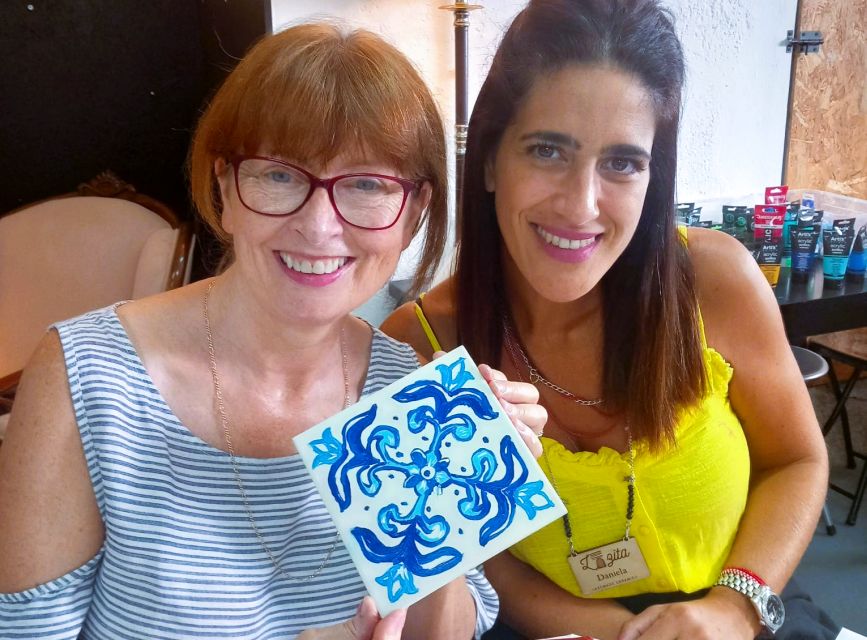
Once you finish, the tile is packaged so you can take it with you. Drying time is the one part that requires planning. Some participants picked up their tiles about an hour later or carried them home at the end of the activity. Others, especially those attending in the afternoon, needed to return the next day.
Ask the studio about the expected pickup time when you arrive. If you have a train, flight, or day trip immediately after the workshop, do not assume the tile will always be ready on the spot.
The packaging is useful because a painted ceramic tile is an awkward souvenir to protect in a suitcase. Still, pack it carefully once you leave the studio. Your finished piece will be a personal reminder of Porto, but it is also breakable.
What the $41 price includes
The listed price is $41 per person for two hours. That covers the workshop introduction, a ceramic tile, acrylic paints, brushes and other materials, packaging, and a cocktail.
I consider that a fair price if you want more than a quick craft activity. You are paying for instruction, the cultural explanation, the studio setting, the drink, and a finished object to keep. Buying a mass-produced tile in a shop may cost less, but it does not give you the process or the story behind the piece.
The value is strongest for people who would otherwise spend a rainy afternoon shopping or sitting in a café. You get a structured activity, but it still feels like a break from sightseeing.
The value is less clear if you only want a cheap souvenir or have no interest in making things. You can see remarkable tiled buildings for free as you walk through Porto, so the workshop is an optional way to connect with that tradition, not an essential sightseeing ticket.
The activity offers free cancellation up to 24 hours before the start time, and you can reserve now and pay later. That is useful when Porto weather or your daily plans are uncertain.
Who should book this workshop?
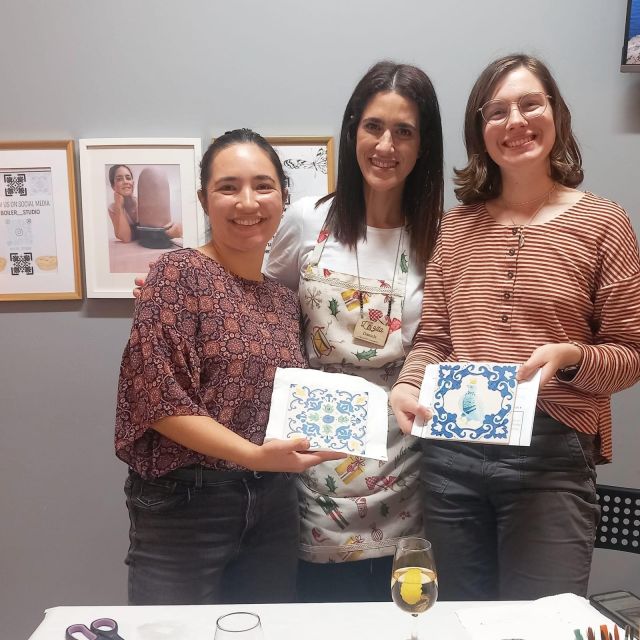
This is a strong fit for adults, couples, friends, families with older children, and solo visitors who want a social activity. Children under 10 are not suitable for the workshop, although one supplied experience involved a 9-year-old enjoying the activity. Since the formal information sets the minimum at 10, follow that rule when booking.
You do not need previous painting experience. The stencils and hands-on help make the class approachable, while the option to use a personal image gives more confident participants room to be creative.
It is also a good choice for a mixed group. The person who loves art can work on a detailed design, while the hesitant painter can choose a simple pattern and receive step-by-step help.
I would especially consider it on a rainy day, during a long stay in Porto when you want something different, or after a morning of churches and museums. It also works as a lighter cultural activity between the Cathedral and São Bento Station.
You may want to skip it if your schedule is so tight that you cannot allow two hours plus possible tile pickup time. It is also not the right choice if you want a private lesson, a large finished artwork, or a serious ceramics course. This is a friendly introductory workshop using a single tile and acrylic paint.
Practical details before you reserve
The class lasts two hours, with starting times available according to the date you select. Instruction is offered in English and Portuguese.
Boiler Studio is at Rua Chã 77, in front of Porto Cathedral. The location is close to São Bento Station, the Dom Luís I Bridge, and Time Out Market, so you can build the workshop into a central Porto walking day.
All materials are included. You only need to arrive ready to paint and decide whether you want a prepared pattern or a personal image. If you want to use your own image, have it available and ask the team whether it can be printed for the tile.
Plan your clothing sensibly. The supplied information does not specify a dress code or protective clothing, so avoid wearing anything you would be upset to mark with paint.
The studio is wheelchair accessible. The instructors speak English and Portuguese, and the booking terms allow a full refund when you cancel at least 24 hours in advance.
Should you book Porto tile painting and cocktails?
Book it if you want a relaxed, useful souvenir and a clearer understanding of one of Portugal’s most familiar art forms. The strongest parts are the short tile history, patient instruction from Daniela, Emmanuel, Diogo, and the team, the choice of stencils or personal designs, and the chance to take your own work home.
The main caution is timing. Confirm when your tile will be ready, particularly for an afternoon session, and leave room to return to the studio if needed.
At $41, this is not the cheapest way to spend two hours in Porto, but it offers more than a drink or a souvenir purchase. You leave with a tile you made yourself, a little context for the city’s decorated façades, and a pleasant pause from sightseeing. For most visitors who enjoy hands-on activities, that combination makes the workshop worth considering.
FAQ
Where does the tile painting workshop take place?
The workshop takes place at Boiler Studio, Rua Chã 77, on a typical street in front of Porto Cathedral. São Bento Train Station, the Dom Luís I Bridge, Time Out Market, and the Cathedral are nearby.
How long does the activity last?
The scheduled duration is two hours. Some people may need extra time to finish, and the studio may allow you to stay longer when possible.
What is included in the price?
The price includes the tile workshop, a ceramic tile, acrylic paints, paper packaging, a cocktail, and all materials needed for the activity. A written workshop summary about Portuguese tiles is also included.
Can I choose my own tile design?
Yes. You can choose from prepared designs and stencils, or ask the team to print a personal image for you.
Can I take the tile home immediately?
Often you can take it with you after it has dried, and some people collected it about an hour later. Depending on the time of day and drying time, you may need to return the next day.
Is the workshop suitable for children?
The activity is not suitable for children under 10. The formal minimum age is 10 years.
Is the studio wheelchair accessible?
Yes. The activity information states that Boiler Studio is wheelchair accessible.
Last orders added around Portugal
- Bar Hopping & Poncha Workshop★ 4.0 · 2 reviews
- Port Wine Tasting Apéritif/Digestif at Portuguese Wine Bar★ 4.5 · 40 reviews
- Queer Lisbon Nightlife Tour★ 5.0 · 30 reviews
- Private Paradise Beaches and Famous Beach Bars Tour in Lisbon★ 5.0 · 5 reviews
- Private 4h Benagil or CountrySide Safari★ 5.0 · 9 reviews
- Albufeira PRIVATE Night Tour with Cocktails & Drinks★ 5.0 · 19 reviews
- Albufeira: 5 Bars and 1 Nightclub Pub Crawl with Free Shots★ 4.0 · 8 reviews
- Portuguese Traditional Dinner & Wine Experience★ 5.0 · 4 reviews
Portugal Bar Crawls: the next round

4 Bar Pub Crawl, 7 Drinks, & Skip-the-Line Club Entry
Read our review →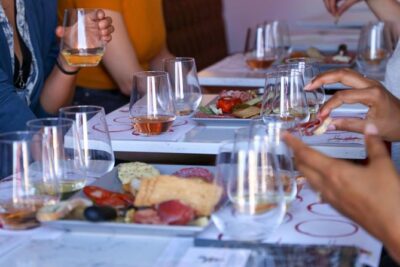
Wine and Cheese Tasting Lunch in Portuguese Wine Bar
Read our review →
Porto Pubcrawl: 5h,7 Drinks,4 bars &Skip the line Club Entry
Read our review →


Private Night Bar Crawl in Lisbon with Local Guide and Drinks
Read our review →

Port Wine Tasting Apéritif/Digestif at Portuguese Wine Bar
Read our review →This night out also appears in