Review · GOTHENBURG
Historical Walking Tour in Restaurant and Bars in Central City
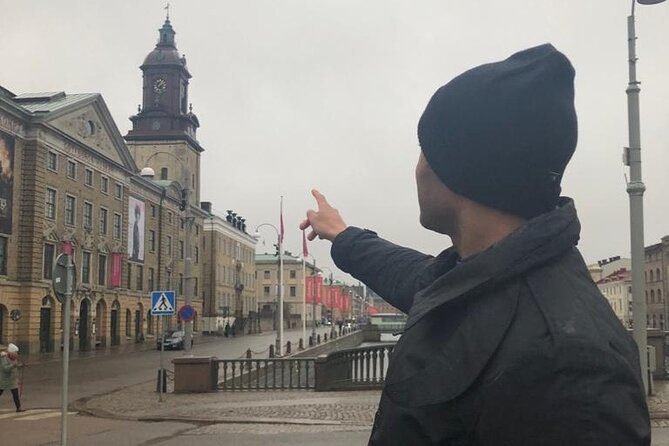
Gothenburg’s story makes the most sense on foot, where old walls, market halls, churches, cafés, and waterfront districts sit close together. This tour with Marcus links those pieces in a compact walk through central Gothenburg, with plenty of practical advice on where to eat and drink.
I like the focus on fortifications and city views, rather than only the standard postcard sights. I also like the useful food angle: the route includes an indoor fishmarket, a large food market, restaurant streets, bars, and cafés. The main consideration is pace. In 1 hour 45 minutes, you will see many places from the outside or in passing, not explore each one at length.
- Second-oldest building: Visit a former armory with an important place in Gothenburg’s past.
- Food and drink districts: Walk through streets filled with restaurants, bars, cafés, stores, and market stalls.
- Old defenses and viewpoints: See former fortifications from city hills, plazas, and a bridge.
- Market life: Pass the indoor fishmarket and the large market where you can shop for meat, cheese, vegetables, and more.
- Central landmarks: Take in a cathedral, German-speaking church, Horticultural Gardens, and old lodge.
- Small-group format: The tour is in English, capped at 20 people, and begins and ends at Gustav Adolf’s Square.
A Fast Introduction to Gothenburg’s Old Center
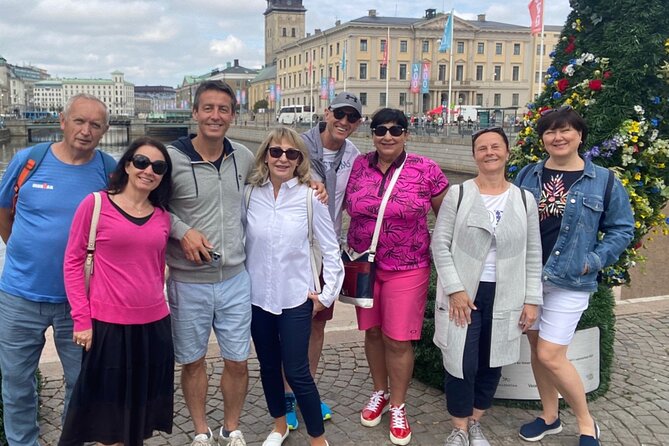
This walking tour is best understood as a city orientation walk with history woven through it. Rather than taking you into one major museum or spending an hour at a single monument, Marcus moves through several central districts and explains how Gothenburg developed around its defenses, markets, public squares, churches, and commercial streets.
That format matters on a first visit. You get a mental map of central Gothenburg quickly, then can return to the places that catch your eye. The route also gives you restaurant and bar ideas, which is especially helpful in a city where a good evening often begins with choosing the right neighborhood rather than one famous sight.
Marcus is described as friendly, open, passionate about Gothenburg, and happy to answer questions. He also likes to travel, so conversation can go beyond dates and buildings. If you enjoy a guide who mixes local knowledge with personal exchange, that is a useful part of the experience.
The tour starts at 12:00 p.m. at Gustav Adolf’s Square and returns there at the end. That midday timing is practical: you can use it as an early introduction before deciding where to eat, shop, or explore later.
Gustav Adolf’s Square and the Former Armory
The meeting point is Gustav Adolf’s Square, in the central Nordstaden area. From here, the walk heads into Gothenburg’s older core and includes the city’s second-oldest building, a structure that once served as an armory.
A building with that former purpose gives the tour a useful starting point. Gothenburg was not simply a trading town with attractive streets. It was also a defended city, shaped by military needs and changing borders. Seeing an old armory helps place the later stops, including the fortifications and elevated viewpoints, in a wider context.
Do not expect a long interior visit or a museum-style presentation unless Marcus confirms that conditions allow it. The value here is the explanation of the building and its place in the city. You are looking at architecture that once served a practical military role, not just an old façade.
Dinner tables before the first drink around the world:
- Tokyo Bar Hopping Tour in Shinjuku (All-You-Can-Drink + Dinner)
★ 5.0 · 3,587 reviews - St. Augustine’s Wine, Cocktail and Food Experience
★ 5.0 · 1,251 reviews - Gdańsk: Olivia Star Sky-High Views, Dinner, and Cocktails
★ 4.3 · 797 reviews
Restaurant Streets, Cafés, and Gothenburg’s Social Side
One stop is a particularly fashionable street lined with restaurants, bars, stores, and cafés. The exact appeal is not just the number of businesses. It gives you a chance to see where central Gothenburg’s social life gathers and to ask Marcus for suggestions that fit your plans.
This is one of the tour’s most useful features. Many city walks point out monuments but leave you wondering where to eat afterward. Here, the food and drink stops are part of the route. You can note places that look appealing, then return later when you have more time.
Keep your expectations clear: the supplied details do not promise tastings, reserved tables, or drinks included in the price. This is a guided walking tour through restaurant and bar areas, not a food tour with included courses. If you want a meal, plan to make your own reservation or choose a place after the walk.
Gothenburg’s Hills, Walls, and Former Fortifications
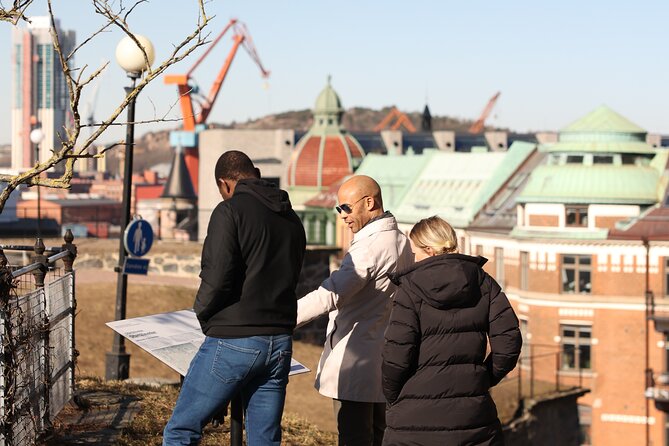
The route climbs one of the city hills for a viewpoint and a look at old fortifications. Later, it reaches a plaza positioned on top of former defenses, as well as a bridge with another good view.
These stops give the walk some shape. You are not only moving from one flat street to the next. The higher points help you see how the city fits together, while the fortification remains connect the present-day center with Gothenburg’s defensive past.
The views are also a good reason to bring a camera, though the experience is not sold as a dedicated panorama tour. The route includes several points where you can pause and look across the city. If you have limited time in Gothenburg, that combination of orientation and history is valuable.
There is one practical point to remember: this is a walking route with hills. The distance is not stated, and the tour lasts about 1 hour 45 minutes, so you should be comfortable walking for that period and handling some change in level.
Fish Church, Gothenburg’s Indoor Fishmarket
The indoor fishmarket is one of the route’s most distinctive sights. Its specific appearance makes it a major point of interest, even for visitors who are not planning to buy fish.
Markets tell you more about a city than a polished shopping street can. Here, you get a look at Gothenburg’s connection with food and the sea, while the building itself adds architectural interest. Marcus can place it within the city walk rather than treating it as an isolated photo stop.
The market is a practical place to remember if you want to return later. The tour information identifies it as an indoor fishmarket, but it does not promise a tasting or a food purchase as part of the walk. Consider it a market visit and a local landmark, with any shopping left to you.
Bar walks with the history told around the world:
- New Orleans Cocktail and Food History Tour
★ 5.0 · 819 reviews - New Orleans Cocktail History Walking Tour in the French Quarter
★ 5.0 · 604 reviews - NYC: Speakeasy Drinks and Prohibition History Tour
★ 4.7 · 474 reviews - Rome: Guided Bar Crawl with Drinks & Dark History
★ 4.9 · 444 reviews
The Big Market for Meat, Cheese, and Vegetables
Another stop is Gothenburg’s large market square, where you can buy meat, cheese, vegetables, and much more. This gives the tour a second food-focused point, but with a different feel from the fishmarket.
I like this pairing because it helps you compare two kinds of food commerce in the same central walk. The indoor fishmarket has a strong identity of its own, while the larger market offers a broader range of everyday ingredients. If you are staying in an apartment or simply like browsing local food, this may be one of the most useful stops.
The market also adds a more ordinary side of the city. You are not only seeing grand civic buildings. You are seeing where people shop, where food is displayed, and how the center works during the day.
Gardens, Cathedrals, and the German-Speaking Church
The walk passes the Horticultural Gardens, also called the Garden Society, and Marcus points them out along the route. This is a pleasant change from walls, squares, and commercial streets, even though the details do not indicate a long garden visit.
You will also pass one of Gothenburg’s famous cathedrals. It is open to visitors, so you may be able to return for a closer look if the tour schedule only allows a passing view. The walk itself does not promise a full guided interior visit, so think of this as an introduction and a useful note for later.
The German-speaking church adds another layer to the city’s cultural story. It is a less obvious stop than a cathedral, but that is exactly why it can be interesting. Churches linked to language communities show how trade, migration, and commerce shaped the center over time. The available information does not specify interior access, so ask Marcus if you want to know whether entering is possible during your visit.
Squares That Explain Modern Gothenburg
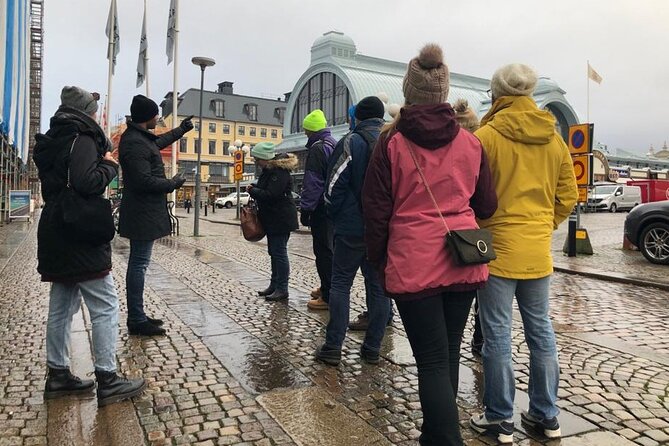
Several plazas appear along the route. One has an interesting story and several good bars. Another is a pleasant square with many restaurants and bars. A third sits on top of the old fortification.
These spaces are useful because they show how old city structures now support modern urban life. A former defensive position can become a public gathering place. An old square can now be surrounded by places for coffee, dinner, or a drink.
I would pay attention to Marcus’s comments here and write down names you may want to revisit. The tour is short enough that you will not have time to sample every district. A quick note in your phone can turn the walk into a plan for the rest of your stay.
An Old Lodge, Historic Buildings, and Shopping Streets
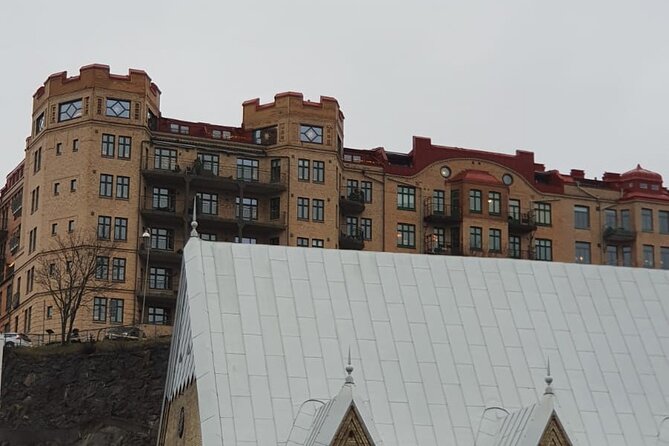
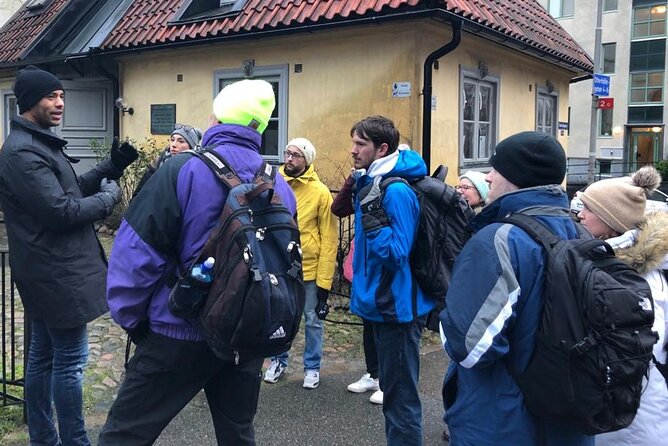
The route includes an old 17th-century lodge in the city center and another building with an interesting past. These are the kinds of details that are easy to miss when you walk alone, especially when they sit beside more obvious stores and public buildings.
The tour also passes through areas with lots of shopping. That gives you a practical break from the history and helps you understand the center as it functions now. If you want souvenirs, clothing, or everyday stores, you can identify the main shopping areas during the walk and return later.
Because the tour covers many stops, the amount of detail at each building may vary. You should see this as a connected overview, not a series of long architectural lectures. That is a strength if you want variety, but a limitation if you prefer one building examined room by room.
The Electric Boat Company and a Useful Discount
The walk passes an electric boat company where you may be eligible for a discount. The amount and conditions of the discount are not specified, so you should ask Marcus for the current details before making plans around it.
This is a nice extra because it connects a walking route with another way to see Gothenburg. Still, it should be treated as a bonus rather than a reason to book the tour on its own. The main experience remains the guided walk through the central streets and landmarks.
If a boat trip interests you, confirm whether the discount applies on the day you visit and whether any separate booking is required. The provided details only state that you may be eligible for a discount.
What the 1 Hour 45 Minutes Gives You
The tour lasts approximately 1 hour 45 minutes. That is long enough for a useful introduction, but short enough to fit into a busy arrival day or a midday schedule.
You will cover a broad mix of places: an old armory, restaurant streets, viewpoints, defenses, two food markets, gardens, churches, shopping areas, squares, an old lodge, and a bridge. The trade-off is depth. You cannot expect a full visit inside every church, a long market browse, and a detailed talk at every building in less than two hours.
For me, the timing works best when you use the tour as a starting point. Afterward, choose one market, church, garden, viewpoint, or restaurant district to explore at your own pace. The walk gives you options rather than trying to replace a full day of sightseeing.
Price, Group Size, and Who Gets Good Value
At $51.15 per person, this is not the cheapest way to get a quick city orientation. The value depends on how much you want from a live guide. You are paying for a focused route, local explanations, restaurant and bar suggestions, viewpoints, and the chance to ask questions while walking.
The group has a maximum of 20 people. That is large enough to keep the tour social but limited enough to avoid the feel of a huge city group. Group size can still affect how easily you hear Marcus, especially near traffic or busy public areas, but the cap is reasonable for a central walking tour.
The tour is booked, on average, 55 days ahead. That suggests you should not leave it until the final day if your schedule is fixed. Confirmation arrives at booking, and the ticket is mobile, so you do not need a printed voucher.
Free cancellation is available if you cancel at least 24 hours before the local start time. Changes or cancellations inside that window are not accepted for a refund. The experience also requires a minimum number of participants, and if it is canceled for that reason, you are offered another date or experience, or a full refund.
Is This the Right Gothenburg Walk for You?
Book this tour if you want a first-day introduction to central Gothenburg, enjoy city history in small pieces, and like having local ideas for restaurants, bars, markets, and cafés. It is also a good match if you prefer a live guide and want viewpoints and fortifications included.
I would be more cautious if you want a slow museum visit, extensive interior access, or a food tour with included tastings. The route covers a lot, but most of its strength comes from connection and orientation rather than long stops.
For many visitors, the best plan is to take it early in the stay. You can ask Marcus about the parts of Gothenburg that interest you, note places to revisit, and then spend the rest of your trip following up on the stops that appeal to you most. At $51.15, that guidance needs to matter to you, but the wide mix of history, food districts, shopping, and views gives the walk a solid purpose.
FAQ
Where does the walking tour begin?
The tour begins at Gustav Adolf’s Square, Gustav Adolfs torg, in the Nordstaden area of Gothenburg.
What time does the tour start?
The scheduled start time is 12:00 p.m.
Where does the tour end?
The activity ends back at the meeting point at Gustav Adolf’s Square.
How long does the tour last?
The tour lasts approximately 1 hour 45 minutes.
What language is the tour offered in?
The tour is offered in English.
How much does the tour cost?
The listed price is $51.15 per person.
How many people can join the tour?
The maximum group size is 20 people.
Is a mobile ticket available?
Yes. The tour includes a mobile ticket, and confirmation is provided at the time of booking.
Can I cancel for a full refund?
Yes, if you cancel at least 24 hours before the experience start time. Cancellations or changes made less than 24 hours before the start are not accepted for a refund.
Last orders added around the world
- Nha Trang Sunset Cocktails and Dinner Cruise★ 5.0 · 5 reviews
- Brewery & Distillery Tour (Craft Beer, Spirits, and Cocktails)★ 5.0 · 21 reviews
- Snorkeling Adventure and Floating Bar Party in Nha Trang★ 5.0 · 3 reviews
- Private Speakeasy Adventure A Tipsy Trip through History★ 5.0 · 5 reviews
- New York Greenwich Village Speakeasy and Ghost Tour (with pizza!)★ 5.0 · 29 reviews
- Mud Bath, Coral Reef Snorkeling and Floating Bar From Nha Trang★ 4.5 · 3 reviews
- Bar, Lounge and Rooftop Tour NYC★ 4.5 · 88 reviews
- 2-Hour Spanish Nightlife Guided Walking Tour of Greenwich Village★ 5.0 · 11 reviews
Bar Crawls: the next round

Luxury Saloon Boat Cruise with Cocktails & Waffle
Read our review →
Entry ticket to Ice Pub Prague with Nightclub Option
Read our review →
Madrid Tapas & Wine Tasting Walking Tour – Small Group Local Bars
Read our review →
Tokyo Bar Hopping Tour in Shinjuku (All-You-Can-Drink + Dinner)
Read our review →
Key West Sunset Sail with Open Bar, Live Music and Hors D’oeuvres
Read our review →
Pub Crawl with Unlimited Drinks & 5-floor Club Entry
Read our review →