
Review · TOKYO
Asakusa: Culture exploring bar visits after history tour
Asakusa makes its best impression after dark, when temple roofs, gates, and old streets take on a quieter glow. This tour pairs that nighttime walk with the everyday food culture of three izakaya restaurants, giving you both the grand story and the commoner’s side of the district.
I like the way the tour connects the Sumida River, Senso-ji, and Asakusa’s modernization instead of treating the temple as an isolated sight. I also like the practical format: a certified English-speaking guide, headsets, a maximum of eight people, and dinner with 3 to 4 drinks and 3 to 4 dishes included.
The main caution is the balance of time. The walking history section comes first, and one account found the temple portion a little long compared with the food and culture discussion. Wear comfortable shoes, and remember that the route is not suited to people with mobility impairments.
Key points to know before booking
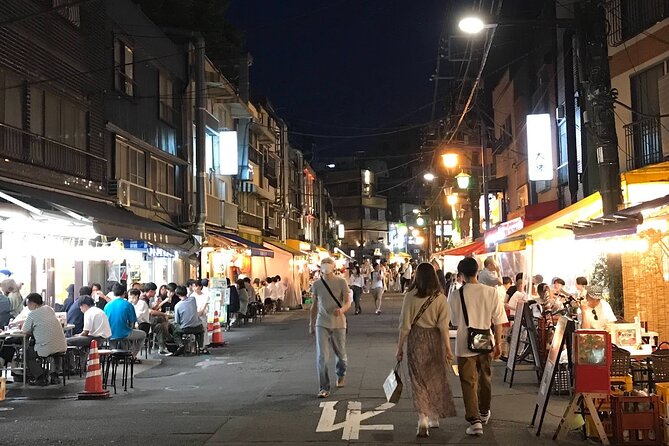
- Asakusa after dark: See Senso-ji and nearby landmarks lit up, a more atmospheric setting than a daytime temple visit.
- A 1,400-year story: Learn how the Sumida River helped give rise to Senso-ji and how temple life shaped Asakusa.
- Three food stops: Eat and drink at typical izakaya venues, with 3 to 4 drinks and 3 to 4 dishes included.
- Small group format: The tour is limited to eight people, making it easier to hear the guide and ask questions.
- Food as cultural history: The meal is not just a stop for dinner. It explains how ordinary Japanese people relax, socialize, and eat together.
- Easy evening planning: Meet outside Exit 4 of Asakusa subway station on the Ginza Line, beside Burger King.
Starting beside Asakusa Station
The meeting point is in front of the Burger King next to Exit 4 of Asakusa subway station, station G19 on the Ginza Line. Step outside the exit rather than waiting inside the station. That small detail matters in Asakusa, where several train and subway entrances can leave you on different sides of the neighborhood.
From there, the tour begins on foot. There is no hotel pickup or drop-off, so you need to reach the station on your own and make your own way home afterward. The four-hour length makes this a substantial evening activity, not a quick orientation walk before dinner.
You receive a headset so you can hear the guide while walking. That is useful in a small but active city district, especially when the guide is speaking from a few steps ahead or the group is moving through a crowded area. With no more than eight people, the tour should feel more personal than a large bus-style sightseeing outing.
The activity is offered in English with a live guide. Guide Aki has been praised for hospitality, so if Aki leads your departure, you can expect a warm personal touch. Guide assignments can vary, so it is best to treat the guide’s individual style as part of the day rather than a guaranteed feature.
Bar walks with the history told around Tokyo:
- New Orleans Cocktail and Food History Tour
★ 5.0 · 819 reviews - New Orleans Cocktail History Walking Tour in the French Quarter
★ 5.0 · 604 reviews - NYC: Speakeasy Drinks and Prohibition History Tour
★ 4.7 · 474 reviews
Senso-ji and the Sumida River connection
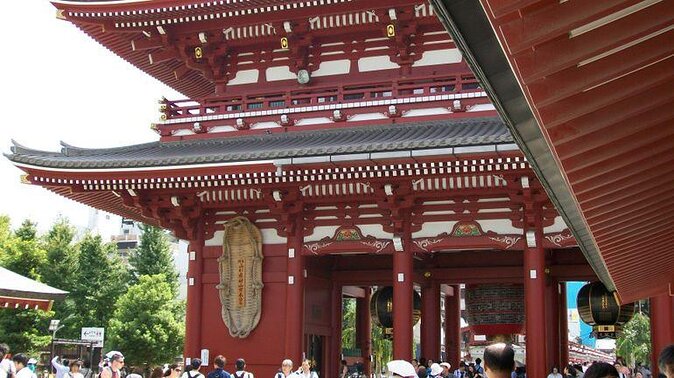
The first section is deliberately not about food. You begin with Asakusa’s historical setting, using the district’s major landmarks to understand why the neighborhood became so important.
The Sumida River is central to the story. The tour explains why the river is tied to the origin of Senso-ji, rather than presenting the temple as a building that simply appeared in place. That connection gives the surrounding streets more meaning. Waterways brought movement, trade, and people, while the temple gave the district a religious and social focus.
You also learn how Senso-ji and Asakusa developed together. The temple was not merely a stop for worship. Its presence helped shape the identity of the whole area, drawing activity around it and making Asakusa one of Tokyo’s most recognizable historic districts.
This part will suit you if you enjoy context more than a quick checklist of sights. Instead of hearing only the names of gates, halls, and streets, you get an explanation of how they relate to one another. The tradeoff is time. If your main goal is to sample as much food as possible, the walking section may feel longer than necessary.
Nighttime views around Asakusa
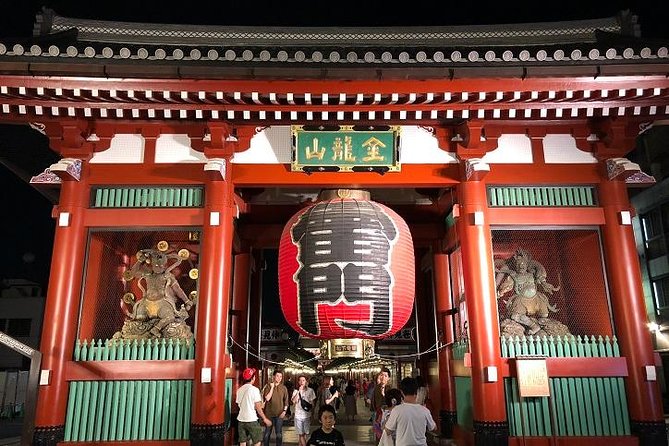
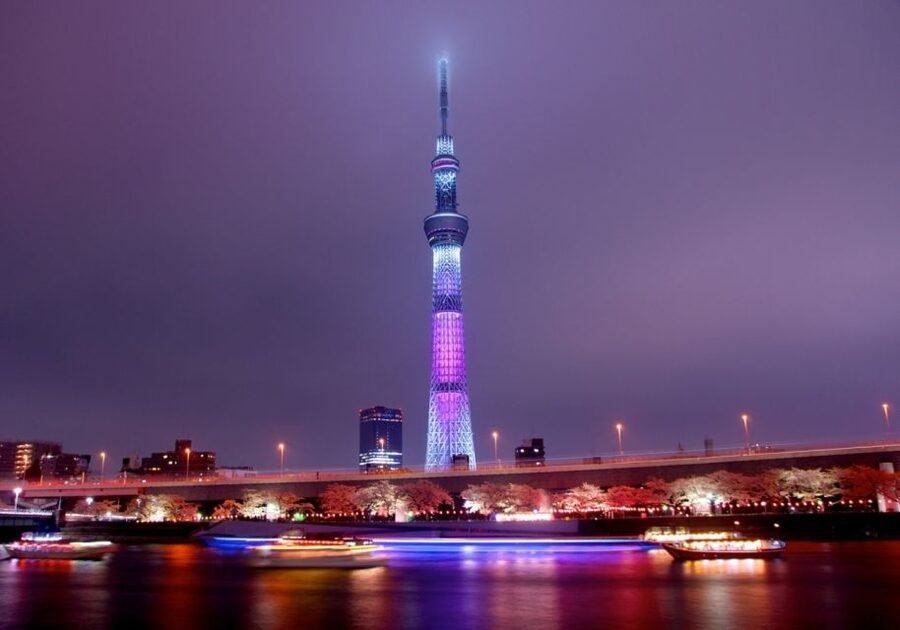
The timing gives the historic buildings a different mood. Senso-ji and other landmarks are especially striking when illuminated, and the evening light can make the familiar temple complex feel less formal and more atmospheric.
You should not expect a long photography session at every monument. This is a guided history walk, not a dedicated photo tour. Still, the nighttime setting is one of the strongest reasons to choose this experience over a daytime food crawl. You get a look at Asakusa when the day’s sightseeing crowds have begun to thin, then continue into the kind of evening social life the area is known for.
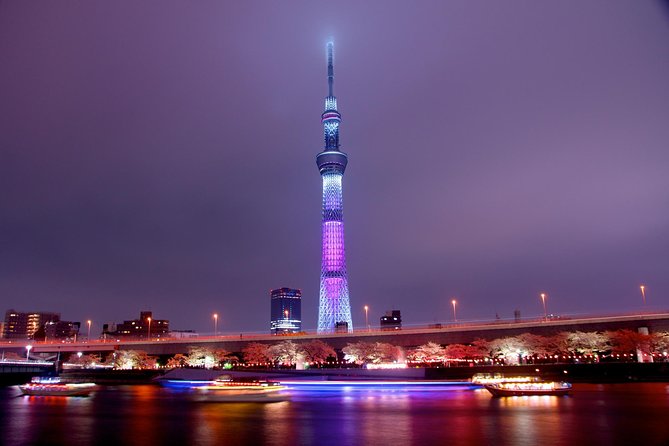
The walk also shows how old and modern Asakusa sit side by side. The tour covers the district’s role as a forerunner of Japanese modernization, along with the way local culture spread beyond the neighborhood and influenced the wider world. Those ideas are broad, but they help explain why Asakusa is more than a temple precinct.
Bring water and wear shoes you can walk in for several hours. The tour is not suitable for people with mobility impairments, and the combination of walking, standing, and moving between venues may be tiring even for otherwise active visitors.
From temple grounds to the izakaya table
After the history section, the experience changes pace. You leave the major landmarks and move into the food-and-drink part of the evening, visiting three distinct but typical izakaya restaurants.
An izakaya is a casual Japanese place where people commonly meet co-workers and friends after work. It is not presented as formal restaurant dining. The appeal is the relaxed setting, shared food, drinks, and conversation. That makes these stops useful for understanding how people unwind, rather than simply sampling dishes chosen for tourists.
The food is described as unassuming and closely linked to Japanese history and culture. That is important. You are not paying for an elaborate tasting menu or a parade of rare ingredients. You are paying for a guided introduction to the ordinary places where local eating and drinking habits make more sense.
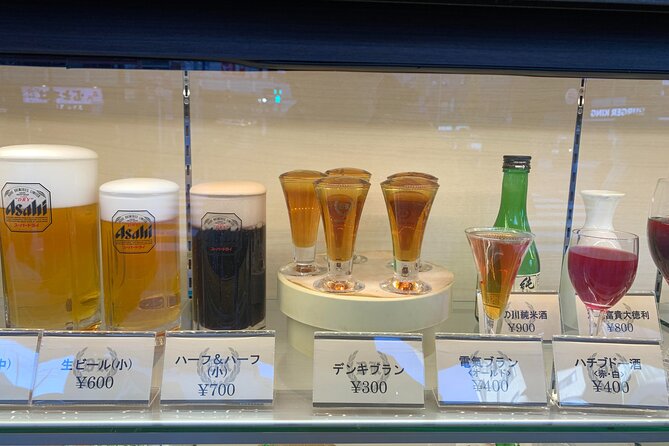
The included dinner consists of 3 to 4 drinks and 3 to 4 dishes. The wording gives you a useful picture of the meal: enough food to make dinner of it, with several chances to see how different drinks and small plates work together. The exact dishes are not specified, so do not book this expecting a fixed menu or a particular specialty.
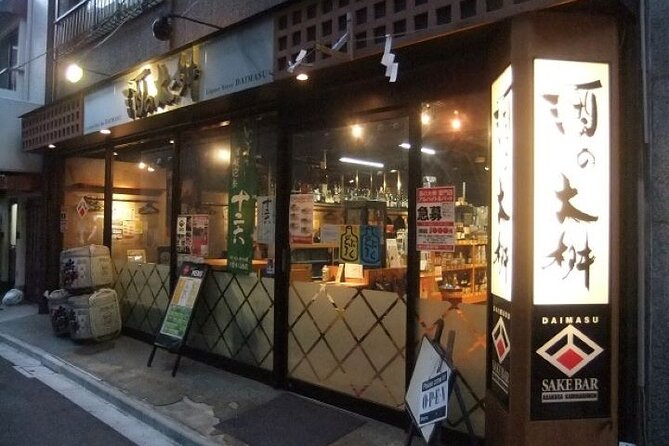
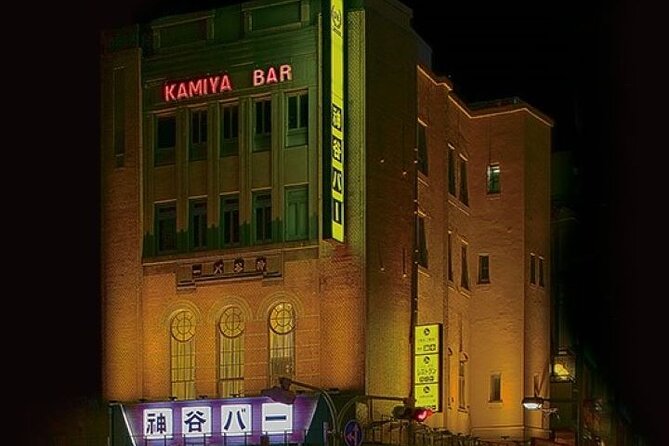
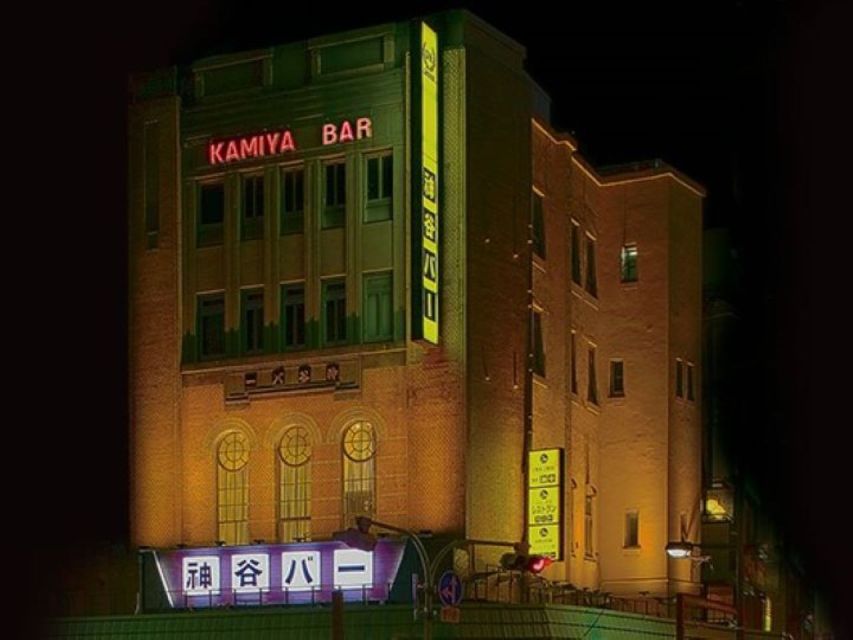
The three stops are meant to be different from one another. The route has included an izakaya, a sake bar, and Tokyo’s oldest bar. That combination gives the evening some variety, though the exact venues and order should be confirmed when you book.
More nights out across Tokyo:
- Tokyo Bar Hopping Tour in Shinjuku (All-You-Can-Drink + Dinner)
★ 5.0 · 3,587 reviews - Tokyo: Shinjuku Local Bar and Izakaya Guided Walking Tour
★ 4.9 · 1,794 reviews - Shibuya Meltdown Nightlife Tour: All-You-Can-Drink Bar Hopping
★ 5.0 · 1,058 reviews - Tokyo: Pub Crawl and Bar Tour
★ 4.5 · 951 reviews
What the food section teaches you
The best idea behind this tour is that food can explain culture without turning the evening into a lecture. At an izakaya, you see how people share dishes, order drinks, and spend time together in a less formal setting.
The guide helps explain the background behind Japanese cuisine and everyday dining customs. You can ask questions as the meal unfolds, which is more useful than reading a short description on a menu. If you are unsure how to approach an unfamiliar dish or drink, the guide provides a bridge between the food and the local custom around it.
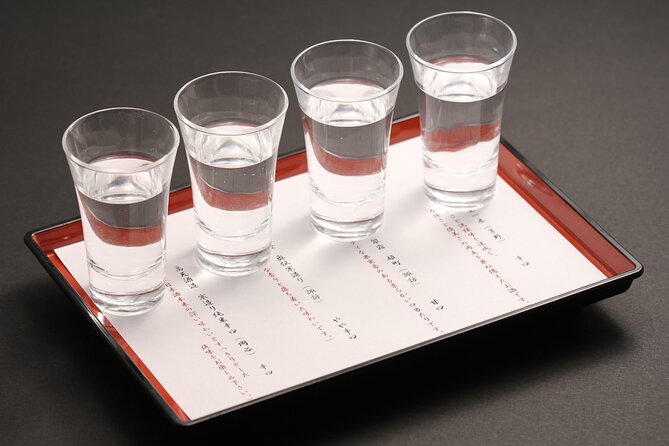
The sake bar portion, when included in the route, adds another angle. Sake is not simply a drink to taste and rate. It is part of a wider food culture, and the point here is to understand how drinks fit into social life. The Tokyo’s oldest bar stop also shifts the focus from temple history to the city’s modern drinking culture.
There is one fair criticism to keep in mind. The historical walk and the food portion compete for the same four hours. If you want the strongest possible explanation of how food reflects Japanese culture, you may wish the guide would spend less time around the temple and more time talking over the meal. If you want a balanced evening that begins with landmarks and ends with local-style dining, the current structure makes sense.
What $154 includes, and what it does not
At $154 per person, this is not a budget dinner. The value depends on how much help you want with the evening. You are paying for a certified professional guide, an in-depth history walk, headsets, three food-and-drink stops, 3 to 4 drinks, and 3 to 4 dishes.
That package can compare well with arranging the same evening alone, especially if you would otherwise struggle to choose authentic casual venues or understand what to order. The guide also removes some of the uncertainty that comes with entering small Japanese drinking places for the first time.
Still, price-conscious diners should look closely at the format. This is not a luxury meal, and the food is intentionally ordinary rather than refined. You are paying for access, explanation, organization, and company as much as for the dishes themselves.
The small group is a real part of the value. A maximum of eight people allows the guide to keep the group together without making every stop feel like a formal presentation. It also gives you a better chance to ask about the neighborhood, the food, and Japanese drinking customs.
Hotel transportation is not included. Plan your route to Exit 4 before the start time, and allow enough time to find the correct station entrance. At the end, you will also need to continue on your own.
Who will enjoy this Asakusa evening
I would recommend this tour to first-time visitors who want more than photographs of Senso-ji. It gives you a clear story for the district, then lets you experience a social setting that can be intimidating if you do not speak Japanese.
It is also a good fit for people who like food but do not want a polished restaurant tour. The emphasis is on typical izakaya dining, shared dishes, and drinks that locals enjoy. You should be comfortable with a meal whose exact contents are not listed in advance.
History-minded visitors will appreciate the opening walk, especially the explanations about the Sumida River, Senso-ji, modernization, and Asakusa’s influence. The tour also works well for visitors who prefer a guide to connect separate sights into one narrative.
I would hesitate to recommend it to anyone who wants a short temple visit followed by a long, detailed food lesson. The historical portion may take more of the evening than you prefer. It is also a poor fit if walking is difficult or if you do not drink alcohol, since the included meal features several drinks.
The free cancellation policy gives you some flexibility. You can cancel up to 24 hours in advance for a full refund, and the reserve-now, pay-later option lets you hold a place without paying immediately. Check the available start times before committing, since the tour lasts four hours and the food stops run into the evening.
Should you book this Asakusa food and history tour?
Book it if you want Asakusa explained through both its monuments and its everyday drinking culture. The strongest features are the small group, the nighttime setting, the clear connection between Senso-ji and the Sumida River, and the chance to eat at three casual venues with drinks included.
Think twice if your priority is maximizing meal time. One evening account found the temple section too long and wanted more discussion of culture through food. That is the central choice: this is a history walk followed by dinner, not a dinner tour with a brief historical introduction.
For most first-time visitors who want a guided introduction to Asakusa, the $154 price is reasonable if you value context and organization. Bring comfortable shoes, meet carefully at Exit 4, and arrive ready for a four-hour evening that moves from temple history to the way ordinary people eat, drink, and relax.
FAQ
How long does the Asakusa culture and izakaya tour last?
The tour lasts four hours.
Where does the tour meet?
Meet in front of the Burger King restaurant beside Exit 4 of Asakusa subway station, G19 on the Ginza Line.
What language is the tour offered in?
The live tour guide speaks English.
How many people can join the tour?
The group is limited to a maximum of eight participants.
Are food and drinks included?
Yes. The dinner includes 3 to 4 drinks and 3 to 4 dishes.
How many restaurants does the tour visit?
The food portion visits three distinct izakaya restaurants or related drinking venues.
Is hotel pickup included?
No. Hotel pickup and drop-off are not included.
What should I bring?
Bring comfortable shoes and water.
Can I cancel for a full refund?
Yes. You can cancel up to 24 hours in advance for a full refund. You can also reserve now and pay later.
Last orders added around Tokyo
- Tokyo:Shinjuku Ni-chome LGBTQ+ Bar Hopping Tour with Guide★ 5.0 · 2 reviews
- Tokyo: Shinjuku Izakaya and Golden Gai Bar Hopping Tour (2h)★ 4.9 · 67 reviews
- Tokyo: Shinjuku Nightlife Tour with Karaoke and Bar Hopping★ 4.1 · 4 reviews
- Tokyo: Shinjuku Hidden Japanese Bar Tour (Neon Light City)★ 5.0 · 4 reviews
- Tokyo: Enjoy Tokyo’s Nightlife in Shinjuku★ 4.5 · 45 reviews
- Tokyo: Shinjuku Golden Gai Bar Hopping Night Tour★ 4.4 · 8 reviews
- Tokyo: Shinjuku Bar Hopping & Karaoke Night Tour★ 4.9 · 19 reviews
- Tokyo: Shinjuku Golden Gai Bar Hopping that only locals know★ 5.0 · 5 reviews
Tokyo Bar Crawls: the next round
Tokyo Bar Hopping Tour in Shinjuku (All-You-Can-Drink + Dinner)
Read our review →
Shinjuku Local Bar and Izakaya Guided Walking Tour
Read our review →
Shibuya Meltdown Nightlife Tour: All-You-Can-Drink Bar Hopping
Read our review →
Shinjuku Nightlife & Secret Backstreets Walking Tour
Read our review →
This night out also appears in