
Review · ROME
Pasta Cooking Class Near the Colosseum with 3 Spritz Cocktails
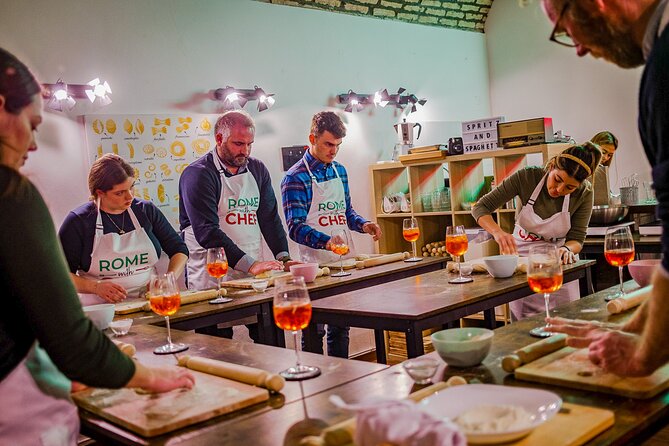
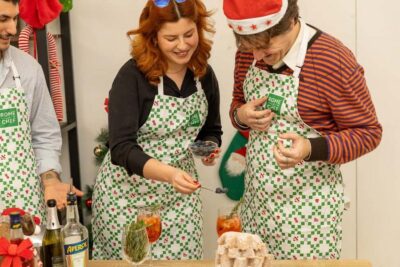
The clever idea here is simple: make pasta with a cocktail in hand. Near the Colosseum, you mix, knead, roll, slice, and cook fresh fettuccine, then sit down to eat it with carbonara or vegetarian cacio e pepe. Along the way, you prepare Aperol, Hugo, and Limoncello spritzes.
I like the small-group setup, which gives the chef room to help with sticky dough and uneven pasta strips. I also like the relaxed rhythm: drink first, cook, drink again, eat, and leave with recipes you can use at home. The main drawback is dietary: this is not suitable for vegan, gluten-free, coeliac, gluten-intolerant, or dairy-free diners.
Key points to know
- Three Italian spritzes: Make Aperol, Hugo, and Limoncello versions during the class.
- Fresh fettuccine: Mix, knead, roll, cut, and cook your own pasta.
- Roman sauces: Prepare carbonara, or cacio e pepe if you choose the vegetarian option.
- Small groups: The maximum group size is 14, allowing more help from the chef.
- Central location: Meet at Via Cesare Balbo, 19, a short walk from the Colosseum area.
- Useful take-home material: Recipes are provided in an ebook after the class.
Why pasta and spritzes work so well together
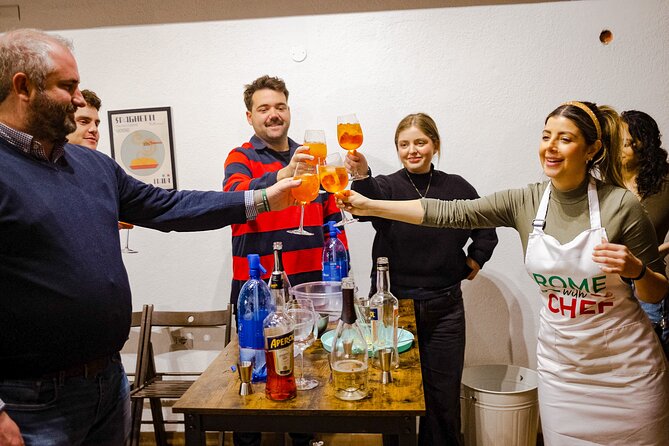
Rome has no shortage of famous sights, but a cooking class gives you a different kind of afternoon. You are not simply looking at Roman culture through church doors and museum cases. You are handling flour, learning how a sauce comes together, and sitting down to eat what you made.
This class builds the meal around two staples of modern Italian social life: handmade pasta and a long drink. The spritzes keep the mood easy, while the pasta gives the session a practical purpose. You leave with a meal in your stomach and a recipe you can try again.
The three-hour length matters. A shorter class could show you how pasta is made, but would leave little time for cocktails, cooking, and a proper meal. Here, the schedule allows the experience to unfold in stages rather than rushing you from one task to the next.
Expect a social room rather than a quiet chef demonstration. Music, jokes, flour on the work surface, and conversation with the rest of the group are all part of the appeal. Hosts named in past sessions include Sunny, Jimmy, Jim, Benjamin, Giovanna, Gustavo, Angela, Bea, and Sherry. Your chef and mixologist may be someone else, but the format remains the same.
Pasta classes with a drink around Rome:
- Rome Cooking Class: Make Pasta and 3 Spritz Cocktails
★ 5.0 · 2,937 reviews - Rome Tipsy Cooking Class: Make Pasta and Mix 3 Spritz Cocktails
★ 5.0 · 1,357 reviews - Rome: Pasta Cooking Class with Spritz Cocktails
★ 4.9 · 158 reviews
Meeting near the Colosseum

The listed meeting point is Via Cesare Balbo, 19, 00184 Rome. The activity ends back at the same meeting point, and the location is near public transportation.
The exact meeting place can shift slightly on some days. If that happens, the alternate location is said to be only about a five-minute walk away, with advance notice sent to you. Check the final message before leaving for class, especially if you are coming directly from the Colosseum or another appointment.
This is a useful activity to place between sightseeing stops. It is close enough to Rome’s central attractions to fit into a day in the historic center, but you should allow time to reach the meeting point without hurrying. Confirmation arrives at booking, and directions are sent before the activity.
The setting is practical rather than scenic. You are here to work at a table, not to look out over ancient ruins while you cook. That is a fair trade. The Colosseum supplies the backdrop for your day, while the class provides the hands-on part.
The first spritz sets the tone
The class begins with an Aperol spritz. You learn how the drink is assembled, then have time to enjoy it before the pasta work starts.
Aperol brings the familiar orange color and bittersweet flavor many people associate with Italian aperitivo. It is also a useful first drink for the group because it is recognizable, quick to prepare, and easy to sip while introductions begin.
Next comes the Hugo spritz. This gives you a lighter variation and breaks up the flavors before the richer food arrives. The final drink is a Limoncello spritz, which works as a bright ending after the pasta.
The order is designed to match the cooking. You are not handed three drinks at once and left to manage them while kneading dough. Instead, the drinks appear through the session, giving the afternoon a loose structure.
Keep your own pace. The title uses the word tipsy for a reason, and three alcoholic drinks over a three-hour class can affect people differently. Unlimited water and soft drinks are included, so use them. You can enjoy the social side of the class without treating the spritz count as a challenge.
One point is worth clarifying. The supplied description says you will make all three spritzes, but one past participant felt the third drink was prepared partly by the staff and that the ratios were not fully explained. If learning each recipe in exact detail is important to you, ask the host as the class moves along and take notes in the recipe ebook.
Mixing and rolling fresh fettuccine
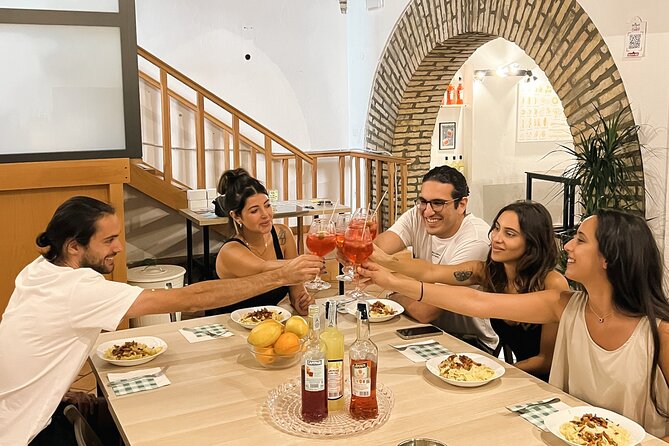
The pasta section is the heart of the experience. You mix locally sourced ingredients, knead the dough, roll it, slice it into fettuccine, and cook it.
This is a good format for first-time pasta makers. The tasks are simple enough to follow, but physical enough to make you feel involved. You will handle the dough rather than watch a chef do everything from a distance. Expect a little flour on your hands and work surface. That is part of the deal.
The small group helps here. With no more than 14 people, the chef has a better chance of seeing when your dough needs more work or when your pasta is too thick. Hosts such as Sunny and Benjamin have been singled out for patience and encouragement, qualities that matter when your first pasta strip looks less than perfect.
The session also works well for families with older children and teenagers. One family group enjoyed making pasta with two teenage daughters, while other pairs have used the class as a birthday, honeymoon, or couples activity. You do not need previous cooking skill.
Still, keep your expectations realistic. This is an introductory workshop, not a professional pasta course. You will learn the basic handling of fresh dough and fettuccine, but the amount of individual coaching can depend on the size and energy of your particular group.
More nights out across Rome:
- Rome Bar Crawl: Interactive Night Tour with Games and Karaoke
★ 5.0 · 769 reviews - Rome: Guided Bar Crawl with Drinks & Dark History
★ 4.9 · 444 reviews - Rome: Rooftop Bar Opera Show
★ 4.6 · 94 reviews - Rome: Nightlife Tour & Guided Bar Crawl with Games & Karaoke
★ 4.9 · 75 reviews
Carbonara or vegetarian cacio e pepe
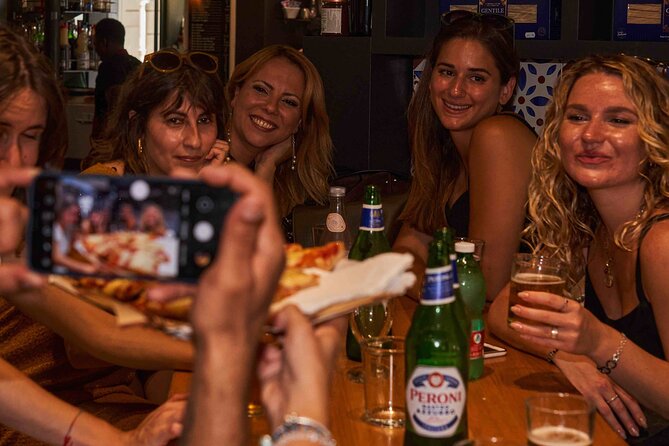
After the pasta is cut, it is paired with a Roman sauce. The standard choice is carbonara, while the vegetarian option is cacio e pepe.
Carbonara is one of Rome’s signature dishes, built around pasta, egg, cheese, and traditionally pork. The key technique is controlling heat so the egg and cheese create a creamy coating rather than scrambling. That makes it a useful dish to learn because the method matters as much as the ingredients.
The vegetarian alternative, cacio e pepe, keeps the focus on cheese, pepper, pasta water, and timing. It is a simpler dish on paper, but it still requires care. The pasta water helps form the sauce, and the cheese needs to blend smoothly.
The description says you will make the sauce under the chef’s guidance. One past participant, however, felt that the staff prepared both sauces without enough participant involvement. That is an important distinction if you are booking this mainly to learn Roman cooking technique. The class clearly includes hands-on pasta making, but your role in preparing the sauce may vary.
If sauce technique is your priority, ask questions while the chef works. Ask why the pasta water matters, when the cheese is added, and how the heat is controlled. A good class becomes more useful when you make the host explain the reasons behind each step.
The meal itself is substantial. You eat the pasta you helped prepare, and the drinks continue through the class. You should not expect to leave hungry. The combination of pasta, cheese, and several spritzes makes this a full food-and-drink activity rather than a light snack.
What the three-hour schedule feels like
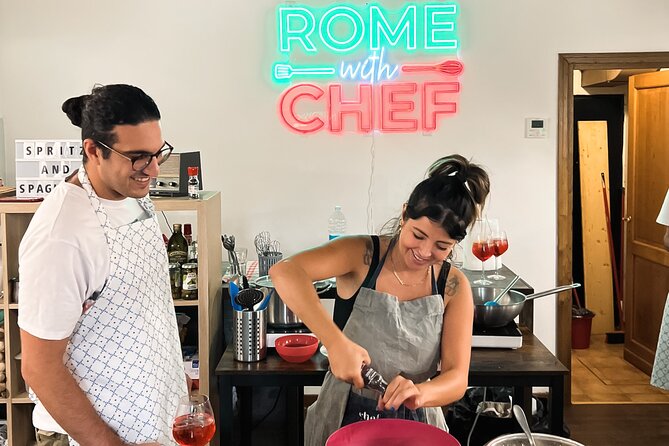
The pace follows a natural sequence:
- You meet the chef and group, then begin with an Aperol spritz.
- You learn the basics of the drink before moving into the pasta dough.
- You mix, knead, roll, and cut fresh fettuccine.
- A Hugo spritz accompanies the cooking portion.
- You prepare or observe the preparation of the Roman sauce.
- The pasta is cooked and served.
- A Limoncello spritz closes the session.
The exact timing may shift, but the experience is designed to move from aperitivo to cooking to dinner. That progression is one of its strengths. You are not sitting through a long lecture before reaching the food.
Several people have described the atmosphere as welcoming and easy to join, even when the group includes different nationalities and languages. Music is part of the room’s personality. One host, Jim, was praised for using a lively soundtrack that included Blur, Pulp, Michael Jackson, and George Harrison.
This is not the right pick if you want a silent, highly formal lesson. It is better suited to you if you enjoy conversation, shared tables, and a bit of harmless kitchen chaos. Flour on the table is more likely than perfect symmetry.
The teaching style depends on your host
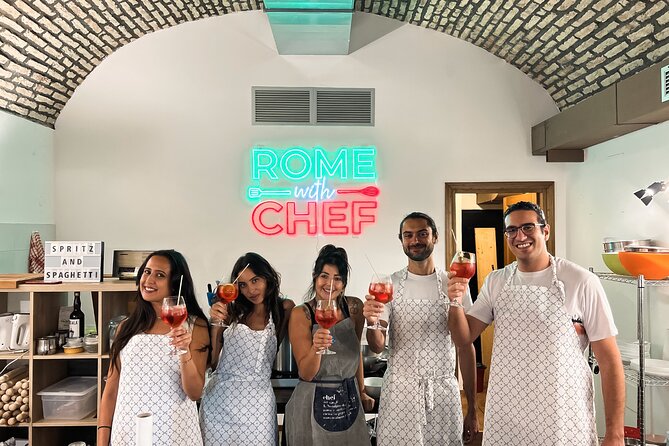
The host can make or break any cooking class, and this experience seems built around personality. Sunny has been described as patient and good at making mixed-language groups comfortable. Jimmy has been praised for turning a family session into a warm, welcoming evening. Benjamin has been noted for humor and patience.
Other named hosts include Giovanna, Gustavo, Angela, Bea, Jennifer, Sherry, and Jim. These names give you a sense of the range of people leading sessions, but they do not guarantee who will teach your class. If you have a particular host in mind, confirm availability before booking rather than assuming.
The strongest feature of the format is the amount of contact you can have with the staff. A group of 14 is still large enough for a lively room, but smaller than many mass-market cooking events. That balance gives you a chance to ask questions without turning the class into a private lesson.
The tradeoff is that a group class cannot tailor every moment to each person. If one table moves faster or slower, the chef has to keep the whole room together. You may receive more direct attention during the pasta work than during sauce preparation.
Price and what you actually receive
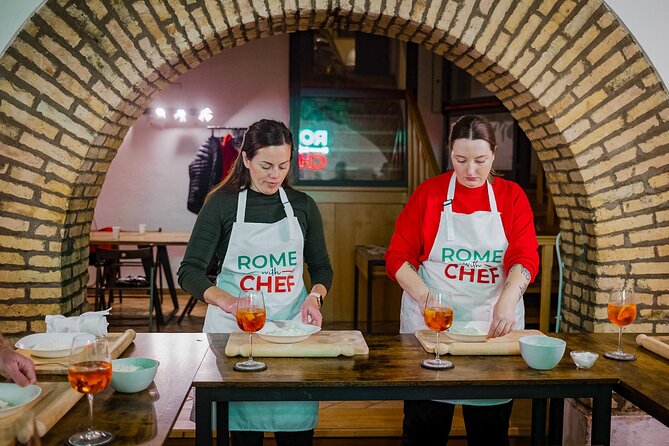
The listed price is $95.53 per person. For about three hours, that includes the pasta workshop, three spritzes, the meal you make, water and soft drinks, a local chef and professional mixologist, and recipes in an ebook.
That is a fair price if you value the full combination of food, drinks, instruction, and social time. You are not paying only for a bowl of pasta. You are also paying for ingredients, staff, a prepared venue, cocktail instruction, and a guided activity in central Rome.
The value is weaker if you mainly want an advanced cooking lesson. The class does not promise a long curriculum, multiple dishes, or detailed training in sauces. The menu is focused: fresh fettuccine and one Roman sauce, plus three spritzes.
Group discounts may be available, which can help families or friends booking together. Since the activity is often reserved well ahead, booking about six weeks in advance is sensible if your Rome dates are fixed. The average advance booking period is 44 days.
Free cancellation is available if you cancel at least 24 hours before the start time. Cancellations within 24 hours are not refunded, and late changes are not accepted. That rule is worth noting before you lock the class into a tight sightseeing schedule.
Dietary limits you need to take seriously
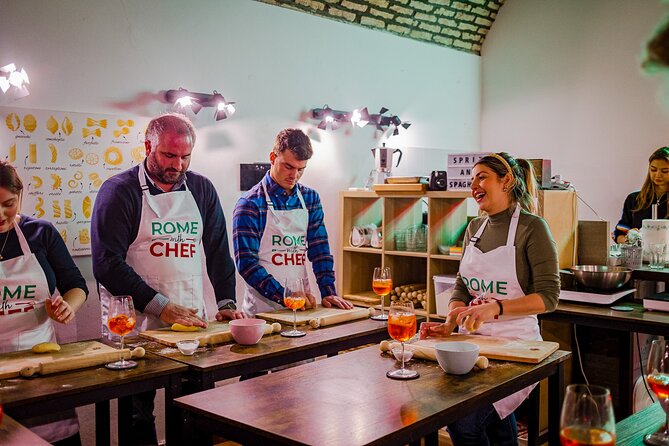
This class has firm food restrictions. It cannot accommodate coeliac disease, gluten intolerance, vegan diets, or dairy-free diets because the menu uses wheat and dairy products.
A vegetarian option is available through cacio e pepe instead of carbonara. That does not make the class vegan or dairy-free, since cacio e pepe depends on cheese.
If you have another dietary restriction, contact the provider in advance. The information says the team may be able to work out the best option for some needs, but you should not assume that a substitution is possible.
The safest approach is to treat the listed menu as fixed unless you receive confirmation. This is not the place to hope that a gluten-free or vegan plate can be improvised at the table.
Who should book this pasta class
I would choose this for couples, families with teenagers, birthday groups, honeymooners, and friends who want an active evening rather than another formal meal. It also suits solo visitors who enjoy meeting people at a shared table.
You will get the most from it if you:
- Like learning by doing
- Enjoy cocktails and social conversation
- Want to make fresh pasta in Rome
- Are happy with a focused menu
- Can eat wheat and dairy
- Prefer a friendly group lesson to a private chef experience
I would be cautious if you want advanced instruction, a quiet tasting menu, or complete control over every step of the sauces. I would also skip it if you do not drink alcohol, unless you are comfortable with the cocktail portion being central to the experience.
Should you book it?
Book it if you want a cheerful, practical Roman evening built around fresh pasta, three spritzes, music, and a small group. The strongest reasons are the hands-on fettuccine work, the generous food and drink format, and hosts who bring patience and humor to the room.
Think twice if dietary restrictions rule out wheat or dairy, or if you expect to prepare every part of carbonara from start to finish. For most visitors, this is less a serious culinary course than a social cooking experience with a useful skill at the center. If that sounds like your kind of Rome, it earns its place in your schedule.
FAQ
How long does the pasta and spritz class last?
The class lasts approximately three hours.
Where does the class meet?
The listed meeting point is Via Cesare Balbo, 19, 00184 Roma RM, Italy.
Does the class end at the meeting point?
Yes. The activity ends back at the meeting point.
How many people can join the class?
The maximum group size is 14 participants.
What drinks are included?
You make and enjoy Aperol, Hugo, and Limoncello spritzes. Unlimited water and soft drinks are also included.
What pasta will I make?
You will make fresh fettuccine by mixing, kneading, rolling, slicing, and cooking the dough.
What sauce options are available?
The standard sauce is carbonara. A vegetarian cacio e pepe option is available.
Is the class suitable for vegans or people with gluten intolerance?
No. The class cannot accommodate vegan diets, coeliac disease, gluten intolerance, or dairy-free diets.
Are recipes provided after the class?
Yes. Recipes are provided in an ebook.
Can I cancel for a full refund?
Yes, if you cancel at least 24 hours before the experience start time. Cancellations within 24 hours are not refunded.
Last orders added around Rome
- Rome: Rooftop Bar Opera Show★ 4.6 · 94 reviews
- Rome: Wine and Food Tasting Experience at Speakeasy★ 5.0 · 11 reviews
- Rome: “Rooftop Pasta and Cocktails Cooking Class”★ 5.0 · 12 reviews
- Rome: Guided Bar Crawl in Trastevere★ 4.6 · 18 reviews
- Rome: Pizza Making Cooking Class With Spritz Cocktails★ 4.9 · 61 reviews
- Rome: Evening Walking Tour with Cocktails and Local Guide★ 4.2 · 19 reviews
- Rome: Nightlife Tour & Guided Bar Crawl with Games & Karaoke★ 4.9 · 75 reviews
- Rome: Pasta Cooking Class with Spritz Cocktails★ 4.9 · 158 reviews
Rome Bar Crawls: the next round
Rome Cooking Class: Make Pasta and 3 Spritz Cocktails
Read our review →
Rome Bar Crawl: Interactive Night Tour with Games and Karaoke
Read our review →


Nightlife Tour & Guided Bar Crawl with Games & Karaoke
Read our review →
Pizza Making Cooking Class With Spritz Cocktails
Read our review →
Evening Walking Tour with Cocktails and Local Guide
Read our review →This night out also appears in