
Review · CUSCO
Cusco: Peruvian Cooking Class, Cocktails & Local Market Tour
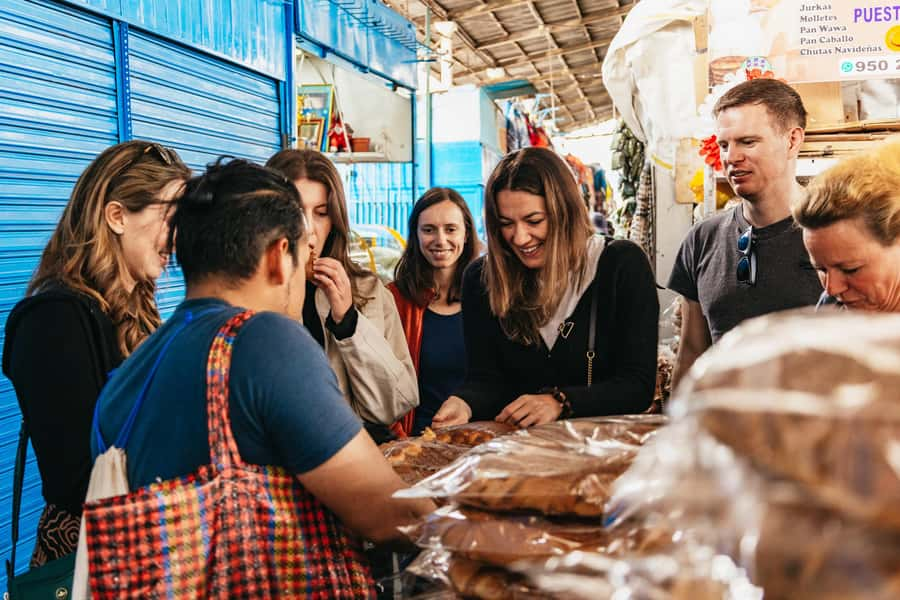
San Pedro Market is the best part of this experience’s opening act. You’ll examine potatoes, quinoa, cacao, cheese, bread, fruit, and other everyday Peruvian ingredients before using some of them in class. I especially like the market-to-table link, and I like that the small group is capped at 10 people, so the chef can give you real help at the counter.
The food is not just a tasting menu. You prepare three Peruvian dishes, two cocktails, and finish with picarones and honey. The main consideration is that this is a long, food-heavy afternoon, and some of the work is assembly rather than full cooking. Come hungry, wear comfortable shoes, and tell the chef about dietary needs when you arrive.
Key points at a glance
- San Pedro Market first: Meet at Door Number 1 and explore one of Cusco’s oldest markets before heading to the kitchen.
- Three classic dishes: Prepare cebiche, causa limeña, and quinoa tamal, then eat what you make.
- Two pisco cocktails: Mix your own drinks, with non-alcoholic versions available.
- A chef-led small group: The class accommodates up to 10 people and is conducted in English.
- Good dietary flexibility: Vegetarian, vegan, and gluten-free menus are available, with alcohol-free drinks on request.
- A substantial four-hour outing: The market visit, cooking, drinks, meal, and picarones make this a full experience rather than a quick lesson.
Starting at San Pedro Market in Cusco
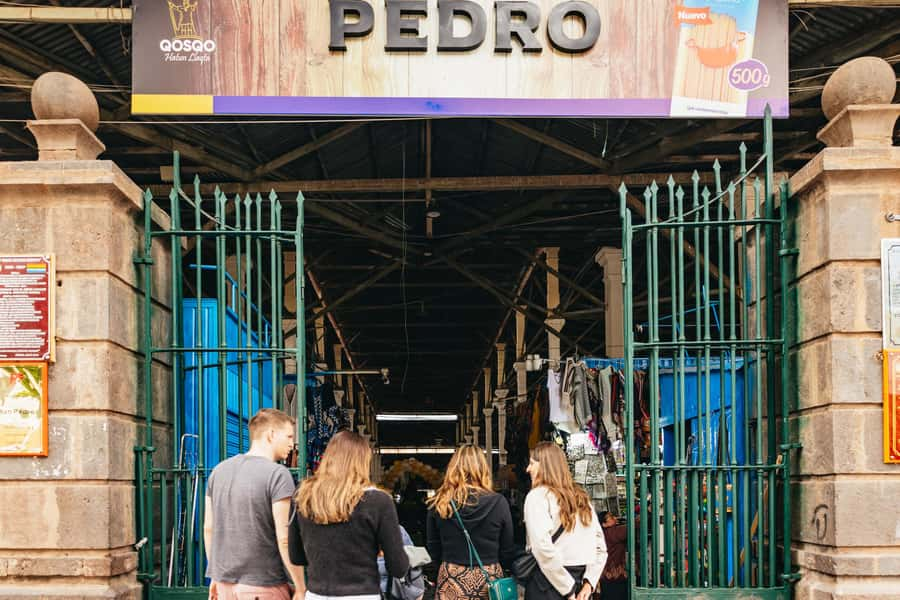
Your meeting point is Door Number 1 at San Pedro Market. This is a useful place to begin because the class introduces Peruvian food where local ingredients are sold, not in an abstract kitchen filled with imported supplies.
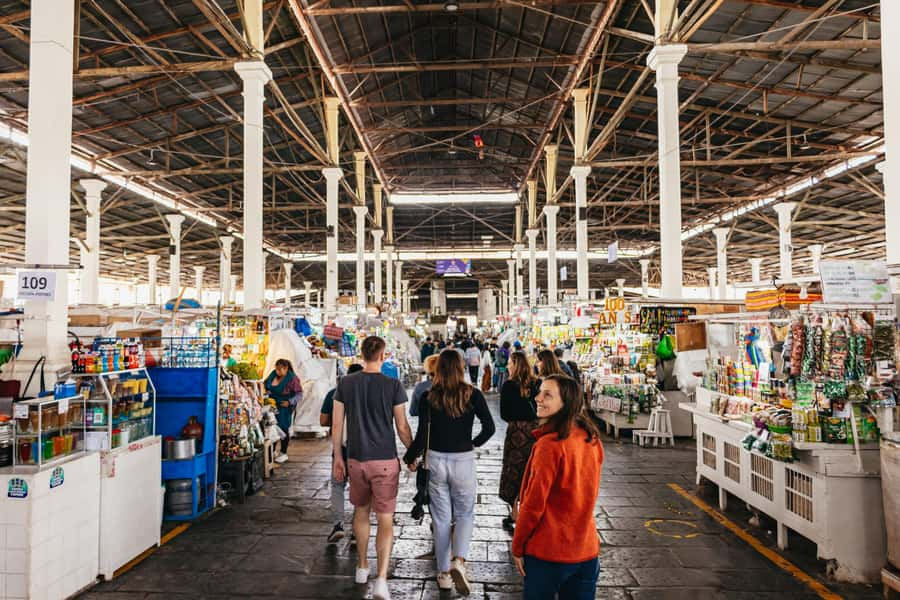
The market section gives you a working look at the ingredients behind Cusco cooking. Expect to see potatoes in many forms, quinoa, cacao, chocolate, local cheeses, bread, and unfamiliar fruits. The chef explains what you are looking at and may offer samples of products such as cheese, bread, chocolate, coffee, and fruit.
That tasting matters. Peruvian cooking makes more sense when you can connect a finished dish with the raw ingredient. You might see a fruit at the stall, taste it, and later understand how Peru’s produce adds sharpness, sweetness, or texture to a recipe.
I also like that the market visit is not merely a photo stop. The ingredients used in class are selected from the market, so the first part of the outing sets up the second. You get a better sense of how a local cook shops, even though this is still a guided introduction rather than a full market-shopping lesson.
San Pedro Market can be crowded and noisy, so stay close to your guide and wear shoes that are easy to walk in. The market is only one part of the four-hour schedule, but it shapes the whole experience. You are not simply learning recipes. You are learning what those recipes are made from and where those ingredients fit into Cusco life.
Market stops around the world:
- Vegan Peruvian Cooking Class Cocktails and Local Market in Cusco
★ 5.0 · 46 reviews - Hoi An Nightlife Tour with Hoi An Ancient Walking Tour, Boat Ride, Night Market
★ 4.5 · 6 reviews - Alicante: Central Market Guided Food Tour with Tapas Bars
★ 5.0 · 5 reviews
From the market to a Cusco cooking studio
After the market, you take a short walk to the cooking studio in Cusco’s historic center. The walk connects the two parts of the experience without requiring a separate taxi or transfer.
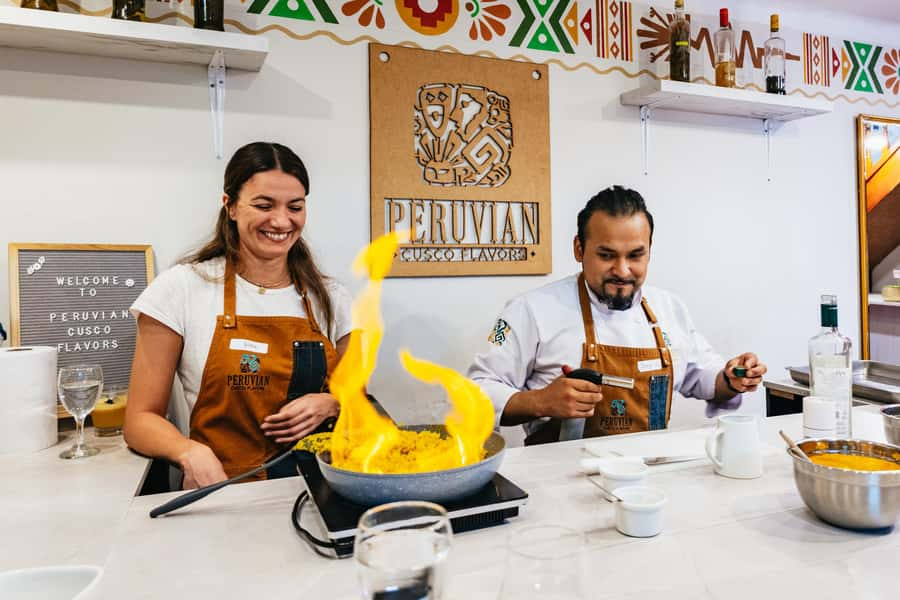
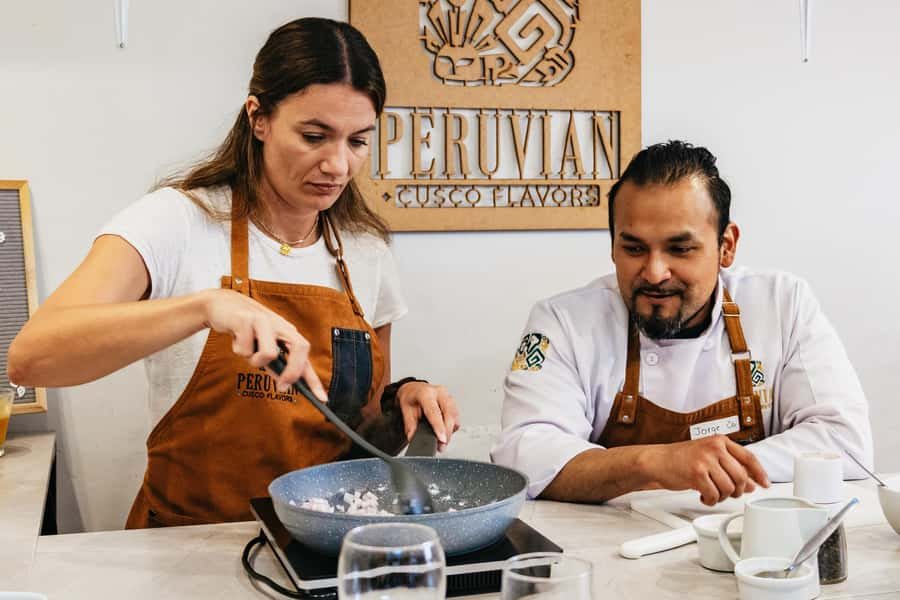
At the studio, you receive an apron and settle into the kitchen. The space is described as modern and clean, which will appeal to anyone who enjoys the market but prefers to prepare food in a more controlled setting.
The class is conducted in English. Chef Jesus is named as the chef leading the experience, while several recent bookings also identify chefs Jorge and Eric as guides. The important point is that your chef is expected to handle both the market explanation and the kitchen teaching, though the exact chef may vary by date.
The small-group format makes a difference here. With no more than 10 participants, you have a better chance of seeing the demonstrations, asking questions, and getting help with presentation. This is not the kind of class where you are left to copy a recipe from the back of the room.
The pace is social. You work alongside people from different countries, share ingredients and tools, and eventually sit down together to eat. That makes it a good choice for solo visitors who want a built-in social activity, as well as couples and friends who want more than another restaurant meal.
Making the first pisco cocktail
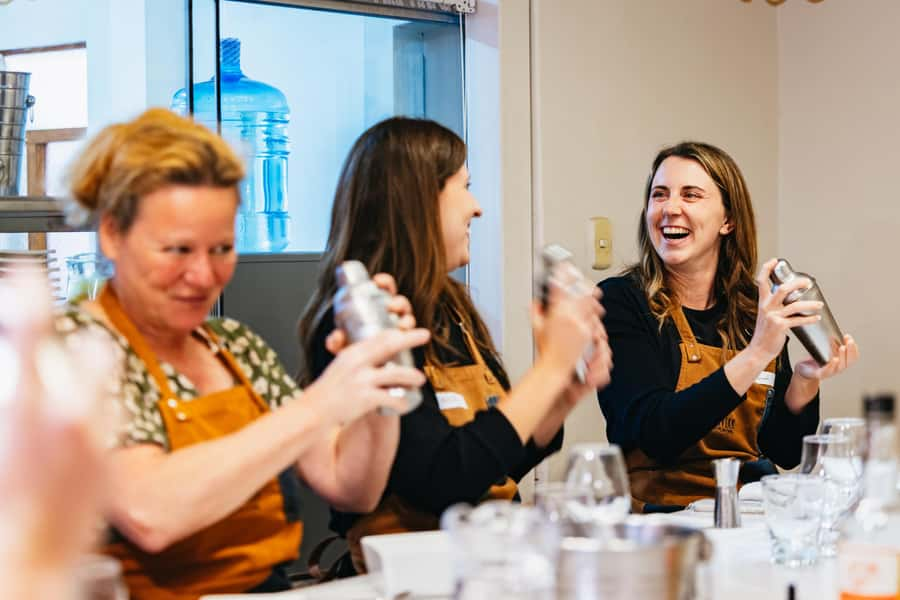
The drink portion comes early. You begin by preparing a Peruvian cocktail, followed by a second pisco drink later in the class. The cocktails are part of the hands-on activity, not simply beverages served while someone else cooks.
Pisco is Peru’s best-known spirit, and making the drinks gives the class a clear local identity. You learn how the ingredients come together, then sip the result while the food preparation continues.
Two drinks can make the afternoon more festive, but they are also worth considering when planning your day. If you are adjusting to Cusco’s altitude, you may prefer the non-alcoholic versions. Those are available, so you can still take part in the mixing and tasting without drinking alcohol.
The class also offers mocktail options for children over the minimum age or anyone avoiding alcohol. Children under 10 are not permitted, so this is better suited to older children, adults, and groups who want a food-focused activity with a social drink component.
Cebiche, causa limeña, and quinoa tamal
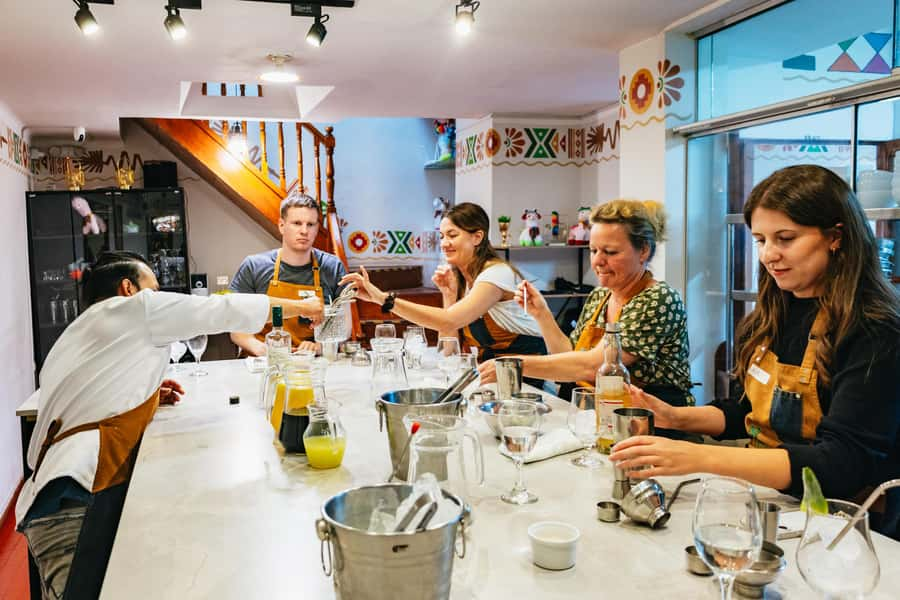
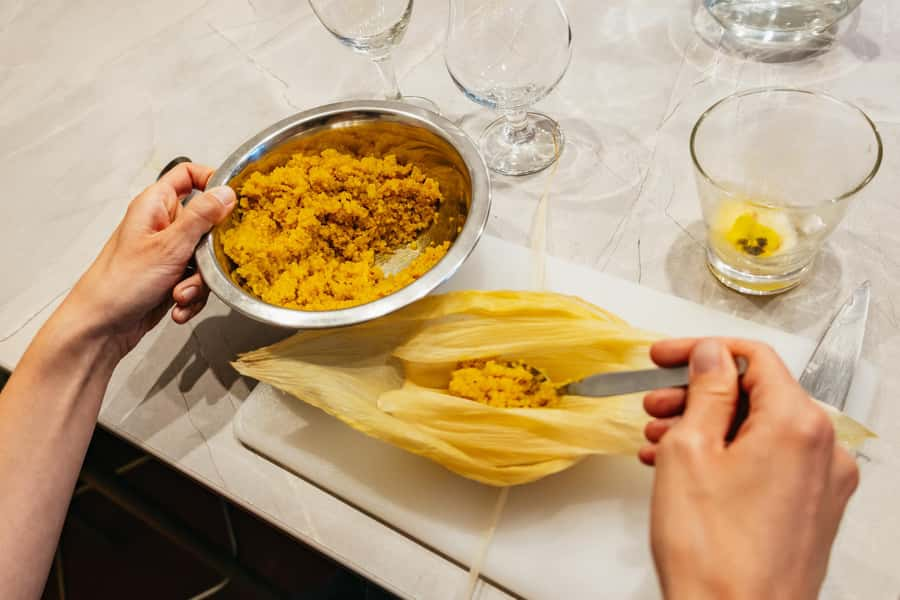
The central cooking lesson covers three Peruvian dishes: cebiche, causa limeña, and quinoa tamal. These recipes give you a useful spread of flavors and textures.
Cebiche is the bright, fresh part of the meal. It is a good dish for learning how acidity, seasoning, and fresh ingredients work together. You prepare it with the chef’s guidance and eat it as part of the meal rather than receiving a pre-made sample.
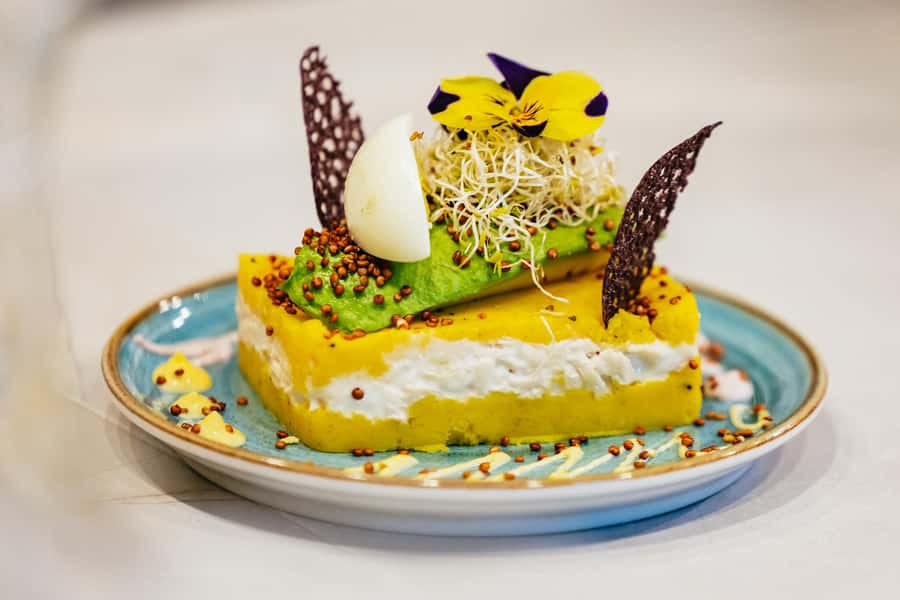
Causa limeña is especially satisfying for beginners because presentation plays a large role. The potato-based dish is assembled in layers and shaped carefully. One participant described feeling like a chef after putting the causa together with Chef Eric, which captures the appeal: the dish looks polished, but the steps are manageable when someone shows you how to plate it.
The quinoa tamal brings a different texture and highlights an ingredient closely associated with the Andes. It also makes the lesson feel specific to Peru rather than like a general Latin American cooking class.
The cooking is partly hands-on preparation and partly assembly. That is useful to know before booking. You will make the dishes and learn the method, but you should not expect four hours of chopping, simmering, and working alone over a stove. The chef and assistants handle some preparation so the group can finish the full menu within the allotted time.
That balance is sensible. You get enough practical work to understand the recipes, while the chef keeps the class moving and helps the food look good on the plate. If you are an experienced home cook seeking advanced technique, the class may feel introductory. If you want to learn recognizable Peruvian dishes without spending a full day in a professional kitchen, the format works well.
Shopping stops between drinks around the world:
- Nashville Shopping Tour with Wine, Cocktails and Snacks
★ 4.0 · 29 reviews - Diamonds and Cocktails a Shopping Experience in Grand Cayman
★ 5.0 · 10 reviews - Nashville: Boutique Shopping and Bar Cart Tour
★ 4.1 · 8 reviews - Chandigarh Nightlife Tour with shopping and food tasting
★ 4.2 · 3 reviews
Ending with picarones and a shared meal
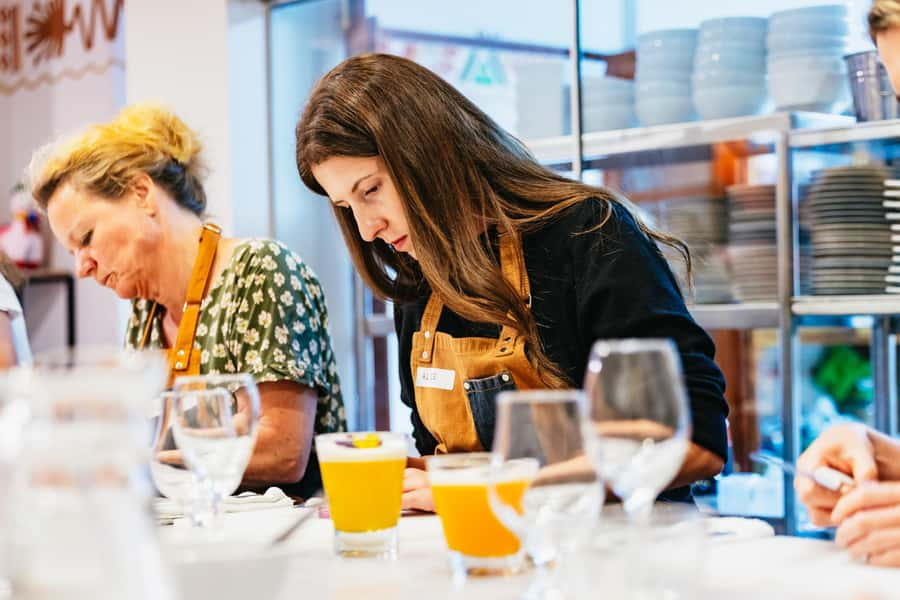
After the savory dishes, you sit down to eat what the group has prepared. The meal is substantial, especially when combined with market samples, cocktails, and dessert.
The final sweet is picarones with honey. Picarones are a Peruvian fried treat, and ending with them gives the class a proper dessert rather than a rushed final taste. Sugar-free and gluten-free options are available, which is helpful for people who need to modify the menu.
The shared table is part of the experience. You trade stories with your cooking companions, compare dishes, and get a chance to enjoy the meal without rushing off to another activity. Several people have described the social side as one of the reasons the class feels memorable, and that makes sense: cooking toward a common meal gives a small group an easy way to connect.
You should plan to eat a full meal here. One useful tip is to arrive with an empty stomach. There are market tastings, two cocktails, three savory dishes, and picarones, so this is not a light snack between sightseeing stops.
Dietary choices and practical comfort
The menu can be adjusted for vegetarian, vegan, and gluten-free diets. Alcohol-free cocktail versions are also available. This flexibility is one of the strongest practical features of the class, since Peruvian food often includes ingredients that need careful substitution.
Still, tell the chef about your needs at the start. One booking included some confusion over a gluten-free request, even though it had been entered in advance. The safest approach is to state your restriction clearly when you meet the group and again before food preparation begins.
The class is offered in English only. That makes it a good fit if you want detailed explanations in English, but it may not suit you if you need another language.
Wear comfortable clothes and shoes. The outing includes the market, a short walk, and several hours on your feet in the kitchen. You do not need to dress formally, and an apron is provided.
Children under 10 cannot join. Older children can take part if they are comfortable following kitchen instructions, and mocktails make the drink portion accessible to anyone who does not want alcohol.
Is $67 a fair price?
At $67 per person, this experience offers more than a standard cooking lesson. The price includes the market tour, a professional chef, all ingredients, two cocktails, three dishes, water, picarones, and the four-hour session.
I would judge the value by comparing it with the cost of separate activities. A meal in Cusco would not include a guided market visit, instruction, drinks, dessert, and the chance to recreate the dishes at home. The class also replaces several hours of planning and restaurant research with one organized outing.
The price is strongest for people who value context and participation. You are paying to understand the ingredients, prepare the food, eat a full meal, and spend time with a chef. If you only want to sample Peruvian cuisine, a market visit and restaurant meal may cost less and take less time.
The small group adds value. A maximum of 10 participants gives the chef a reasonable chance to help with shaping, seasoning, and presentation. It also keeps the class from feeling like a large demonstration where you watch more than you do.
Recipe instructions are sent by email after the class, according to the experience details provided by participants. That is a useful extra because you can try the dishes at home instead of leaving with only photos and a vague memory of the ingredients.
The best time to fit it into your Cusco plans
This class works well near the start of a Cusco visit because it is a gentle way to get oriented through food. One useful feature is that it keeps you in the city, rather than sending you on a long excursion after arrival.
Several bookings placed it on an adjustment day before the Inca Trail. That can be a smart choice if you want a relaxed cultural activity while you get used to Cusco’s altitude. Still, the four-hour duration and food volume mean you should not schedule it immediately before a demanding hike or another fixed appointment.
It also works near the end of a Peru trip. The market and cooking lesson help you turn familiar dishes into something you understand, and the recipes give you a way to carry that part of the trip home.
Keep the rest of the day fairly open. The activity includes walking, tasting, preparation, eating, and conversation. You will get more from it if you do not watch the clock.
Who will enjoy this cooking class most?
I would recommend it to you if you want:
- A direct introduction to Peruvian ingredients and cooking
- A market visit with tastings rather than only a guided walk
- A social activity for a small group
- A full meal you help prepare
- Alcohol-free, vegetarian, vegan, or gluten-free adjustments
- Recipes you can use again at home
- A Cusco activity that does not require a long drive
It is less suitable if you want advanced culinary training, a quiet private lesson, or a very short activity. The class is conducted in English, and the meal is large. Children under 10 cannot attend.
The chef’s teaching style appears to be a major part of the experience. Chef Jesus is praised for his personality and instruction, while Chef Eric and Chef Jorge are also identified in recent bookings as friendly, engaging guides. Since the exact chef may vary, book this for the market-to-table format and small group rather than expecting one specific person every time.
Should you book the San Pedro Market cooking class?
I would book this if you want one activity that combines Cusco food, local shopping, practical cooking, cocktails, and a shared meal. The strongest part is the sequence: see the ingredients at San Pedro Market, learn what they are used for, then prepare them in a clean studio with a chef.
The main tradeoff is time. Four hours is a serious portion of your day, and the class is filling. The work is also partly guided assembly rather than advanced cooking. For most visitors, those are reasonable compromises because the experience stays approachable and lets you finish a full menu without kitchen stress.
At $67, the combination of food, drinks, instruction, and market time is good value. I would especially choose it for an early Cusco day, a pre-Inca Trail rest day, or the final days of a Peru trip when you want something more personal than another restaurant dinner.
FAQ
Where does the cooking class meet?
Meet at Door Number 1 at San Pedro Market in Cusco.
How long does the experience last?
The activity lasts four hours. Starting times vary, so check availability when booking.
What dishes will I prepare?
You will prepare cebiche, causa limeña, and quinoa tamal. The experience also includes picarones with honey for dessert.
Are cocktails included?
Yes. You will prepare and enjoy two pisco cocktails. Non-alcoholic versions are available.
Can I join if I am vegetarian, vegan, or gluten-free?
Yes. Vegetarian, vegan, and gluten-free menus are available. Tell the chef about your dietary needs at the beginning of the activity.
Is the class suitable for children?
Children under 10 are not permitted. Non-alcoholic drink options are available for participants who do not want alcohol.
Is the class offered in English?
Yes. The live guide and cooking instruction are available in English only.
Last orders added around the world
- Snorkeling Adventure and Floating Bar Party in Nha Trang★ 5.0 · 3 reviews
- Nha Trang Sunset Cocktails and Dinner Cruise★ 5.0 · 5 reviews
- Brewery & Distillery Tour (Craft Beer, Spirits, and Cocktails)★ 5.0 · 21 reviews
- Private Speakeasy Adventure A Tipsy Trip through History★ 5.0 · 5 reviews
- New York Greenwich Village Speakeasy and Ghost Tour (with pizza!)★ 5.0 · 29 reviews
- Mud Bath, Coral Reef Snorkeling and Floating Bar From Nha Trang★ 4.5 · 3 reviews
- Bar, Lounge and Rooftop Tour NYC★ 4.5 · 88 reviews
- 2-Hour Spanish Nightlife Guided Walking Tour of Greenwich Village★ 5.0 · 11 reviews
Bar Crawls: the next round
Luxury Saloon Boat Cruise with Cocktails & Waffle
Read our review →
Entry ticket to Ice Pub Prague with Nightclub Option
Read our review →
Madrid Tapas & Wine Tasting Walking Tour – Small Group Local Bars
Read our review →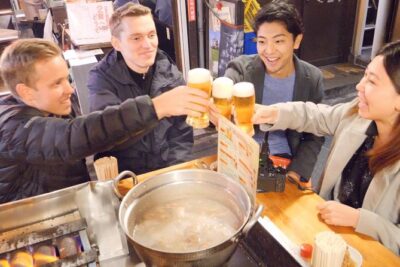
Tokyo Bar Hopping Tour in Shinjuku (All-You-Can-Drink + Dinner)
Read our review →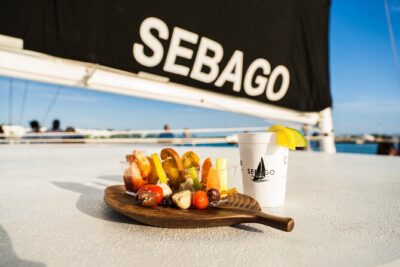
Key West Sunset Sail with Open Bar, Live Music and Hors D’oeuvres
Read our review →
Pub Crawl with Unlimited Drinks & 5-floor Club Entry
Read our review →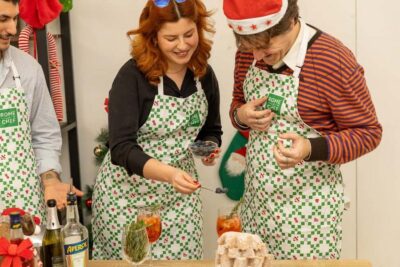
Rome Cooking Class: Make Pasta and 3 Spritz Cocktails
Read our review →This night out also appears in