
Review · JAPAN
Private Fukuoka Bar Hopping and Food Walking Tour
Fukuoka’s best food experience here is not a grand restaurant crawl. It is a three-hour evening through Nishijin, where a quick ride from central Fukuoka brings you to ramen counters, neighborhood shops, standing bars, and a traditional house. The $2 ramen, flexible noodle texture, and one-hour drink session give the night a strong local flavor.
I like the mix of low-cost everyday food and carefully chosen drinks. I also like that this is a private tour, so your group can ask questions and move at a comfortable pace. The main consideration is that the tour is built around drinking, and the English-language options may be limited in the neighborhood.
Key points to know before booking
- Ramen comes first: Try tonkotsu ramen at a shop dating to 1976, with a choice of noodle hardness.
- Nishijin feels local: The route leaves central Fukuoka for a shopping district where English menus are uncommon.
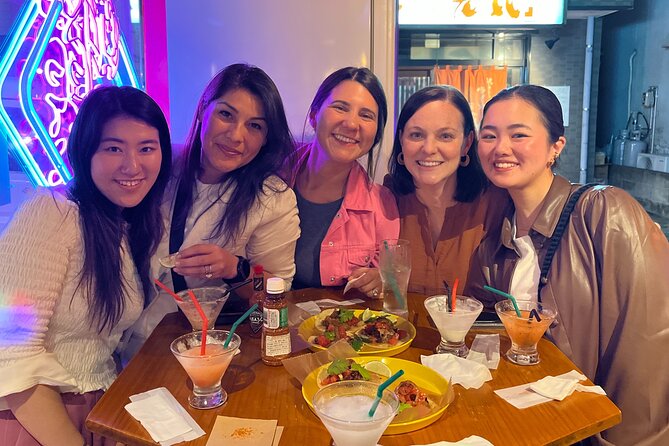
- One hour of unlimited drinks: The standing-bar stop includes sake, shochu, beer, highballs, and tacos.
- The food keeps changing: Takoyaki, mentaiko tamagoyaki, fried horse mackerel, and other small dishes round out the evening.
- You finish in a century-old house: The final stop near Fujisaki offers sake and a look at traditional Japanese architecture.
- Private from start to finish: Only your own group takes part, with a mobile ticket and free cancellation up to 24 hours before departure.
Why Nishijin makes a good food-tour setting
Fukuoka is famous for tonkotsu ramen, but a good food night here should be more than one bowl in a busy tourist area. Nishijin gives you a chance to see how eating and drinking fit into an ordinary evening in Fukuoka.
The neighborhood is about ten minutes from the city center by transport. That short trip matters. You are still close to the main sights, but the atmosphere shifts toward local shops and small places where menus may not be written for foreign visitors.
This tour begins at Nishijin Station at 5:00 pm. That timing works well for a gradual evening. You start with a proper meal, move into snacks and drinks, then finish with sake. The four stops take about three hours in total, although the schedule gives one hour to the standing bar and another hour to the final deli.
I like the private format here. With only your group participating, the guide can explain unfamiliar dishes and help with ordering without turning the evening into a large procession. That is especially useful in places where English menus are rare.
More nights out across Japan:
- Tokyo Bar Hopping Tour in Shinjuku (All-You-Can-Drink + Dinner)
★ 5.0 · 3,587 reviews - Tokyo: Shinjuku Local Bar and Izakaya Guided Walking Tour
★ 4.9 · 1,794 reviews - Shibuya Meltdown Nightlife Tour: All-You-Can-Drink Bar Hopping
★ 5.0 · 1,058 reviews
Stop one: inexpensive tonkotsu ramen at Hakataya
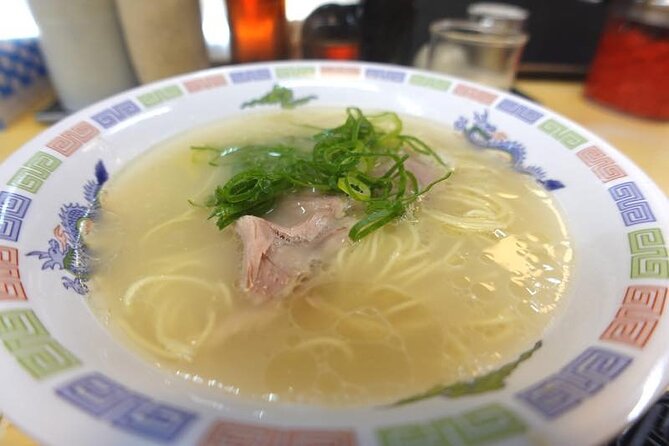
The first stop is Hakataya Hakata Ramen Nishijin Branch, a ramen shop established in 1976. The shop has grown to eight locations around Fukuoka, yet it continues to offer ramen at about $2. That price is part of the appeal. You are not being served a costly tasting portion designed only for visitors. You are starting with a filling local staple.
The ramen is tonkotsu style, known for its pork-bone broth. The supplied tour details describe it as rich and flavorful, with a choice of noodle hardness. That choice is a useful Fukuoka detail. You may be able to order noodles that are soft, regular, or quite firm, depending on what the shop offers that day.
The stop lasts about 20 minutes, so think of it as a focused bowl rather than a long restaurant visit. You will have time to taste the ramen and learn why the shop has kept its low price, but this is not the place for a slow dinner with several side dishes.
For me, this is one of the strongest parts of the route. The food is iconic, inexpensive, and tied to Fukuoka’s everyday eating culture. If you already have a favorite ramen shop in the city, this may feel simple. If you want a first taste of Hakata ramen without working out the ordering system yourself, it is a helpful start.
Stop two: takoyaki and mentaiko tamagoyaki
The next part takes you into Nishijin Shopping District for about 40 minutes. Here, the focus shifts from a single bowl to snack-sized local specialties.
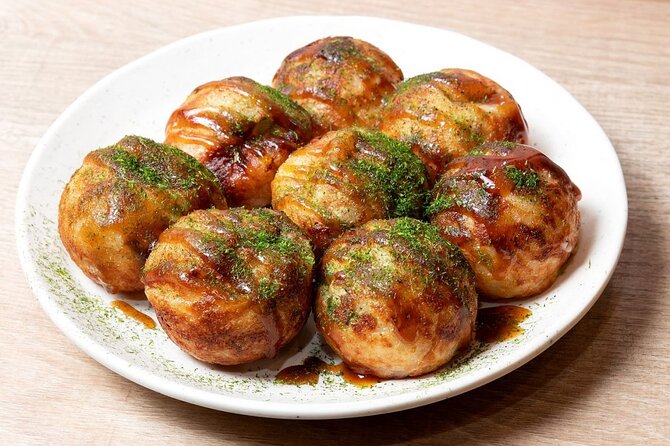
The takoyaki is prepared by a chef trained at a well-known Osaka eatery. These small octopus-filled balls are a major street-food favorite in Japan, and the tour presents them as a reason people come from around Fukuoka. That training connection gives this stop a clear point of difference from a generic snack counter.
You also try tamagoyaki filled generously with mentaiko, Fukuoka’s famous spicy cod roe. Tamagoyaki is a Japanese rolled omelet, but the mentaiko filling gives it a sharper, saltier taste. If you have not tried mentaiko before, this is a more memorable introduction than a plain omelet.
The 40-minute timing should allow room for eating and explanation. It also gives you a look at the shopping district itself, rather than keeping you inside restaurants all night. The trade-off is that the stop may feel less polished than a formal tasting menu. You are visiting everyday food businesses, and the pace depends on the shops.
That is part of the value. The tour is not selling a series of grand dining rooms. It is showing how Fukuoka’s food culture works through ramen shops, snack specialists, bars, and delis.
Stop three: one hour at a Japanese standing bar
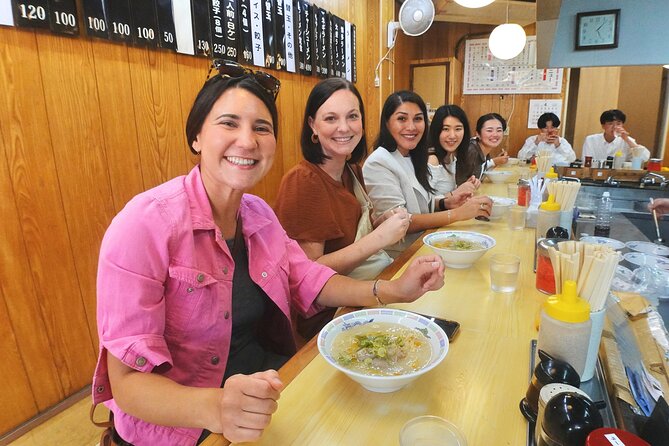
The third stop is the drinking center of the evening. For one hour, you receive an all-you-can-drink selection that includes sake, shochu, beer, highballs, and tacos.
The combination is distinctly casual. Sake and shochu introduce you to two important Japanese drinks, while beer and highballs offer more familiar choices. Tacos add a modern food element, so the stop is not limited to traditional Japanese dishes.
You should pace yourself here. The tour still has a final hour, and the next stop includes more sake and food. An unlimited drink session can sound generous, but it is best treated as a chance to sample several styles rather than a contest.
The standing-bar format is also worth noting. Japanese standing bars are built for quick conversation, small plates, and easy movement. You may find this more social and informal than a seated restaurant. It can be a lively change after the first two food stops, although anyone who prefers a quiet table should know what they are signing up for.
This is also where the limited English-menu issue matters most. The private guide can help explain the choices, but you should expect a neighborhood setting rather than a visitor-oriented bar with every item translated. That makes the tour more useful for some people and less comfortable for others.
Same city, a different round of bars:
- Osaka Bar Hopping Night Walking Tour in Namba (3 bars, 6 tastes)
★ 5.0 · 958 reviews - Tokyo: Pub Crawl and Bar Tour
★ 4.5 · 951 reviews - Tokyo: Shinjuku Local Bar & Izakaya Crawl Tour
★ 5.0 · 890 reviews - Kyoto: Izakaya Bars Guided Walking Tour
★ 4.9 · 815 reviews
Stop four: sake in a century-old house
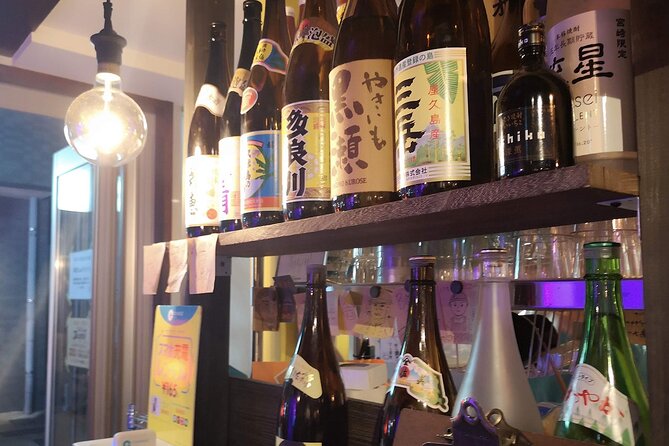
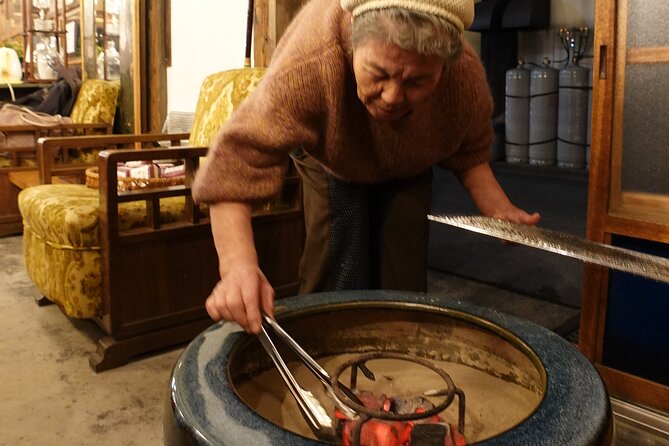
The final stop is in Fujisaki-machi, near Fujisaki Station. It takes place at a deli in a traditional house more than 100 years old. The shop draws local customers from midday onward, and the setting adds a visual change after the modern food and drink stops.
Here you can enjoy Japanese sake, talk with local people, and see traditional Japanese architecture. The atmosphere sounds slower than the standing bar, which is a good way to finish a food walk. You have already tasted ramen, takoyaki, omelet, tacos, and several drinks. The final stop gives you time to settle into sake and conversation.
The description mentions fried horse mackerel at this stage. It is a useful reminder that the route is not built around only famous international dishes. You get to try a fish preparation that is less obvious to many first-time visitors.
The final stop is listed as one hour, and admission is free. That does not mean there is nothing to eat or drink. It means the stop itself does not carry a separate admission charge. Because the exact final spending details are not specified, you should confirm with the guide what is included at this point when you book or meet.
The route ends near Fujisaki Station, at 2 Chome-2 Momochi in Sawara Ward. That makes the finish practical if you plan to continue by train or return toward central Fukuoka.
What the $98 price really buys you
At $98, this is not the cheapest way to eat in Fukuoka. You could order ramen and snacks on your own for much less. The value comes from the route, the private guide, the translation help, and the chance to enter several types of local food businesses without having to plan the sequence yourself.
The price includes a three-hour private activity, mobile ticketing, the listed food stops, and the one-hour all-you-can-drink session. The information does not spell out every item included at the final stop, so ask about that before you commit if you are comparing prices closely.
For a couple or small group, the private format can make the cost easier to justify. You are not paying only for food. You are paying to have someone manage the evening, explain noodle choices and drinks, and handle the awkward first steps in places where English menus are uncommon.
The value is weaker if you are already comfortable ordering in Japanese, know Nishijin well, and prefer to choose your own bars. It is stronger if this is your first night in Fukuoka or you want access to local-style places without spending hours researching them.
Who will enjoy this evening most
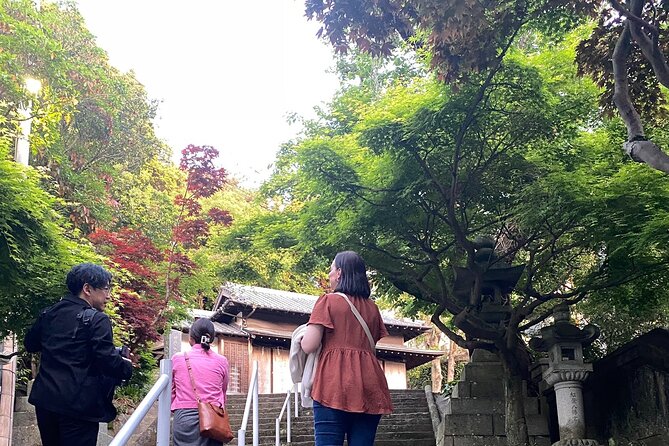
I would recommend this tour to people who care more about local eating habits than formal sightseeing. It suits couples, friends, and small groups who want a private night with a clear route and plenty of food.
It is also a good fit for anyone who wants to compare several parts of Japanese food culture in one outing. You get noodles, octopus snacks, mentaiko, omelet, tacos, sake, shochu, beer, highballs, and fried fish. That range makes the evening feel varied rather than like a single-theme tasting.
The tour may be less suitable for people who do not drink alcohol. Water and nonalcoholic choices are not specified, so ask before booking if that is important to you. The one-hour unlimited-drink session is a major part of the program.
You should also expect a walking and station-based evening, though the provided information does not give a total walking distance. Most travelers can participate, and the route is near public transportation. Anyone with mobility concerns should confirm the walking and standing requirements in advance.
Timing, meeting point, and cancellation
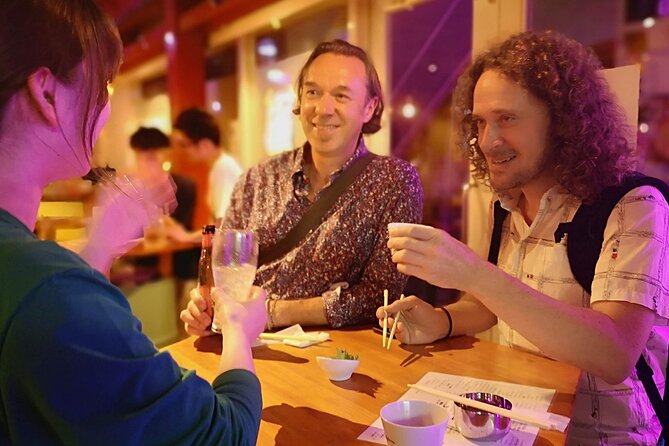
Meet at Nishijin Station at 5:00 pm. The listed starting address is Nishijin Station, 4-1-2 Nishijin, Sawara Ward, Fukuoka. The tour ends near Fujisaki Station, next to the starting area and about one station away according to the supplied details.
A mobile ticket makes entry simple. Confirmation is normally sent when you book. If you book within one day of departure, confirmation arrives as soon as possible and depends on availability.
You can cancel for a full refund up to 24 hours before the local start time. Cancellations or changes made within 24 hours are not refunded or accepted. That is a reasonable policy, but the timing matters, so do not wait until the day of the tour if your plans are uncertain.
Should you book the Nishijin food walk?
Book it if you want an easy, private introduction to Fukuoka’s neighborhood food culture, especially if you like the idea of moving from ramen to snacks, then drinks and sake. The strongest features are the $2 tonkotsu ramen, the unusual mentaiko tamagoyaki, the one-hour drink session, and the century-old final venue.
Skip it if you want a quiet restaurant dinner, do not drink, or prefer to choose each stop yourself. At $98, the tour is priced for guidance and access, not just the food on the plate.
For most visitors, the best reason to choose this evening is simple: it gets you out of the city-center routine and gives you a structured way to try places you might not confidently enter alone. If that sounds useful, Nishijin is a smart place to spend your first local food night in Fukuoka.
FAQ
Where does the tour begin?
The tour begins at Nishijin Station in Fukuoka, at 4-1-2 Nishijin, Sawara Ward.
What time does the tour start?
The start time is 5:00 pm.
How long does the experience last?
The tour lasts approximately three hours.
Where does the tour end?
It ends near Fujisaki Station, at 2 Chome-2 Momochi in Sawara Ward, Fukuoka.
Is this a private tour?
Yes. Only your own group participates in the activity.
What food is included along the route?
The route includes tonkotsu ramen, takoyaki, tamagoyaki filled with mentaiko, tacos, and fried horse mackerel, along with Japanese drinks and sake.
What drinks are available?
The one-hour all-you-can-drink session includes sake, shochu, beer, and highballs. The final stop also includes Japanese sake.
Can I cancel for a refund?
Yes. You can cancel at least 24 hours before the local start time for a full refund. Cancellations and changes made within 24 hours are not accepted and are not refunded.
Last orders added around Japan
- Naha Bar Hopping Tour in Okinawa★ 5.0 · 28 reviews
- The Nagoya Restaurant and Bar Crawl★ 5.0 · 2 reviews
- Nagoya Night Bar & Food Tour with Locals 【Private Tour】★ 4.5 · 9 reviews
- Samurai Guide Sho’s:Kichijoji Night Training–Drink & Dish Pairing★ 5.0 · 7 reviews
- Bar Hopping Private Tour in Kyoto(WAKUWAKU area)★ 5.0 · 4 reviews
- Kyoto Luxury Sake, Whisky and Cocktail Tour★ 5.0 · 4 reviews
- Takasaki Bar-Hopping Tour with Rooftop Bath Hotel Stay★ 5.0 · 5 reviews
- Tokyo: Shinjuku Golden Gai Bar Hopping that only locals know★ 5.0 · 3 reviews
Japan Bar Crawls: the next round
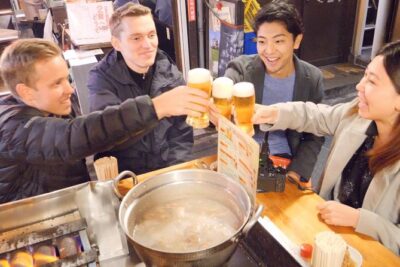
Tokyo Bar Hopping Tour in Shinjuku (All-You-Can-Drink + Dinner)
Read our review →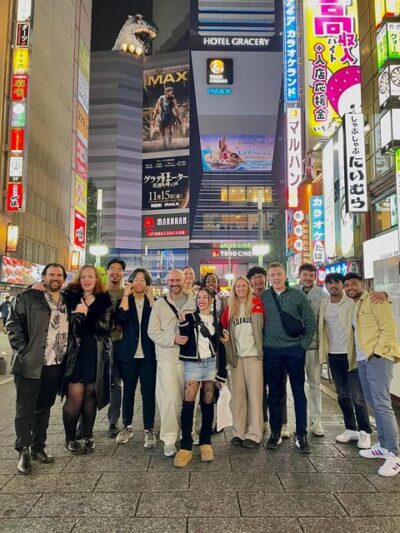
Shinjuku Local Bar and Izakaya Guided Walking Tour
Read our review →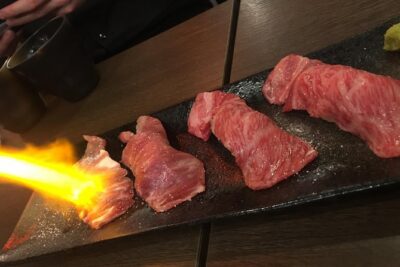
Shibuya Meltdown Nightlife Tour: All-You-Can-Drink Bar Hopping
Read our review →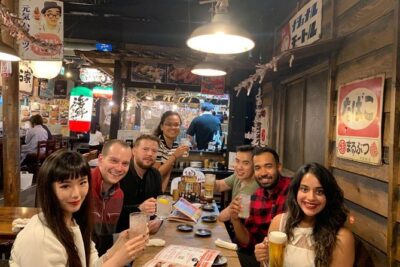
Osaka Bar Hopping Night Walking Tour in Namba (3 bars, 6 tastes)
Read our review →
This night out also appears in