
Review · TOKYO
Tokyo: Shinjuku Izakaya and Golden Gai Bar Hopping Tour (2h)
Shinjuku after dark is a maze of neon signs, smoky little pubs, lantern-lit lanes, and bars so small you could miss them in a blink. This two-hour izakaya and bar-hopping tour gives you a local guide, three drinks, and six to eight foods while you walk through Omoide Yokocho, Kabukicho, and Golden Gai.
I like the small group, limited to eight, because it makes cramped bars easier to manage and gives you a real chance to talk with your guide. I also like the route’s mix of food and nightlife, from yakitori in a nostalgic alley to cocktails in Golden Gai. The main drawback is that this is a fast, alcohol-centered evening with plenty of walking, and the operator cannot handle vegetarian, vegan, halal, gluten-free, or allergy-related requests.
Key points to know before booking
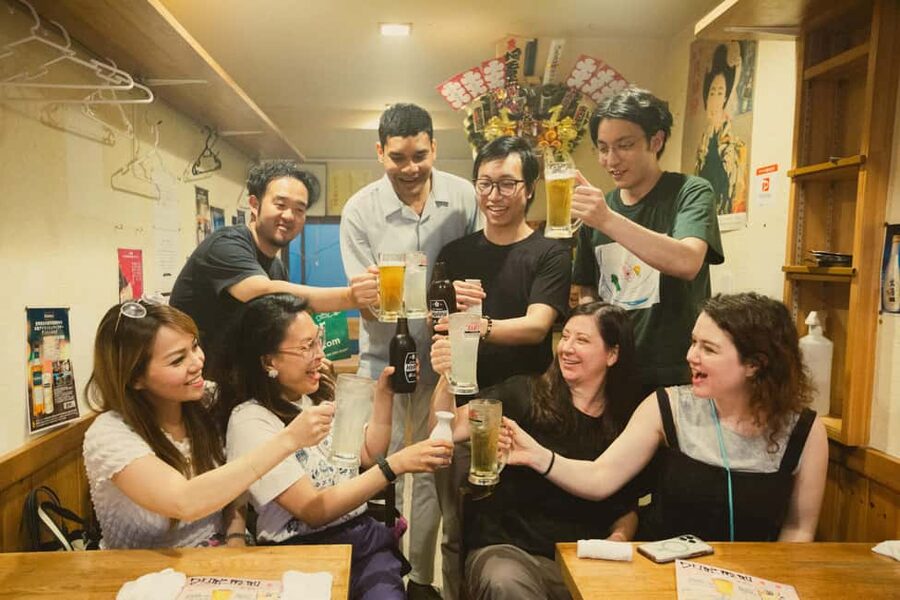
- Three drinks and six to eight foods are included, giving the $96 price more value than a simple guided walk.
- Omoide Yokocho provides the food-first start, with yakitori, beer, and a look at old Tokyo drinking lanes.
- Kabukicho supplies the neon and people-watching, with karaoke spots, pubs, snack bars, and small clubs.
- Golden Gai is the main event, a dense area of more than 300 miniature bars with different themes.
- The group is capped at eight, and guides including Hiro, Ryota, Sean, Shuji, and Ash have been praised for friendly English and local advice.
- You need comfortable shoes and an open mind about the menu, since dietary substitutions are not available.
Why Shinjuku is best seen after dark
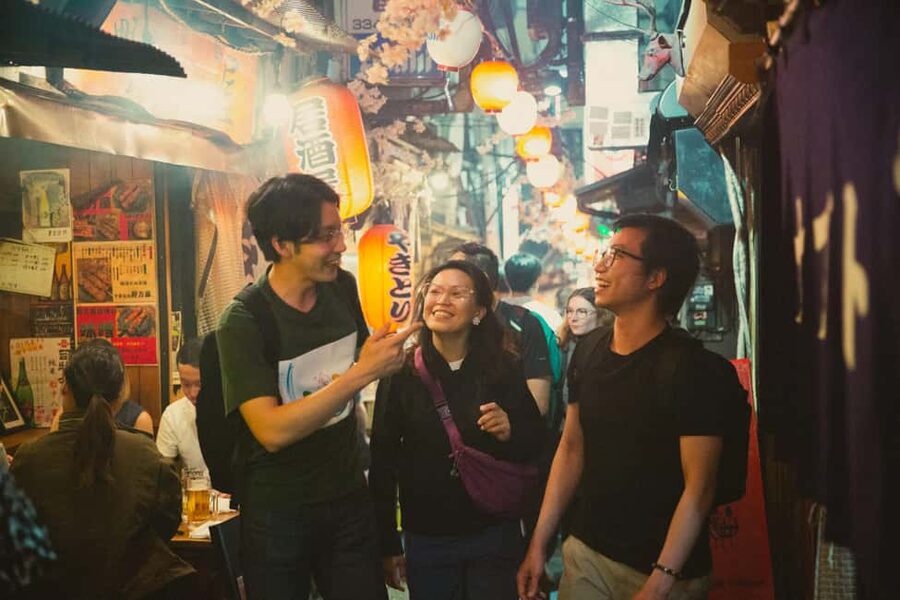
Shinjuku is one of Tokyo’s biggest nightlife districts, but its appeal is not limited to bright signs and crowded streets. The character changes every few steps. A broad avenue gives way to a narrow lane, then to a row of tiny eating places where the counter may be almost the whole room.
This tour works because you are not asked to choose among thousands of doors on your own. Your guide leads you into the evening in stages. You start with food and a drink, walk through the entertainment district, then finish among the miniature bars of Golden Gai.
That order matters. It gives you time to get comfortable before the liveliest part of the night. You also get context as you go, so the lanes feel like part of Shinjuku’s daily life rather than a string of random photo stops.
The tour is conducted in English and is intended for international visitors. Guides named in the booking information and recent feedback include Hiro, Ryota, Sean, Shuji, Ash, Hideo, Taka, Tak, and Jimmy. The guide can change, but the pattern is clear: expect a social host who explains the area, answers questions, and helps you navigate places you might not enter alone.
More Izakaya and Sake Bar Hopping in Tokyo
- Tokyo: Shinjuku Local Bar and Izakaya Guided Walking Tour
★ 4.9 · 1,794 reviews - Tokyo: Shinjuku Local Bar & Izakaya Crawl Tour
★ 5.0 · 890 reviews - Shibuya: Local Bar & Izakaya Crawl
★ 4.9 · 354 reviews
Meeting at Tajimaya Coffee
The meeting point is in front of Tajimaya Coffee, written in Japanese as 但馬屋珈琲. This is useful in a city where similar-sounding names and multiple station exits can cause confusion, so save the exact name before you leave your hotel.
The route involves walking through busy streets and narrow alleys. Wear comfortable shoes, and avoid bringing anything bulky. Golden Gai’s tiny rooms and tight lanes are easier to handle when you can move freely.
The tour lasts two hours, but the schedule describes roughly one hour around Omoide Yokocho, 30 minutes passing through or stopping in Golden Gai, 45 minutes at a local restaurant, and another 45 minutes around Golden Gai. These time estimates overlap, so think of them as the shape of the evening rather than a strict timetable.
Omoide Yokocho starts with food
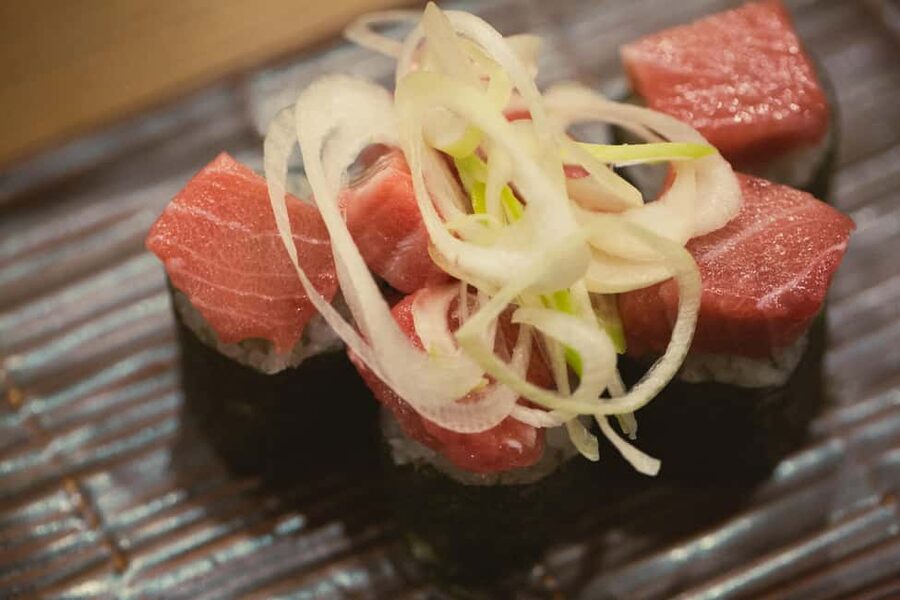
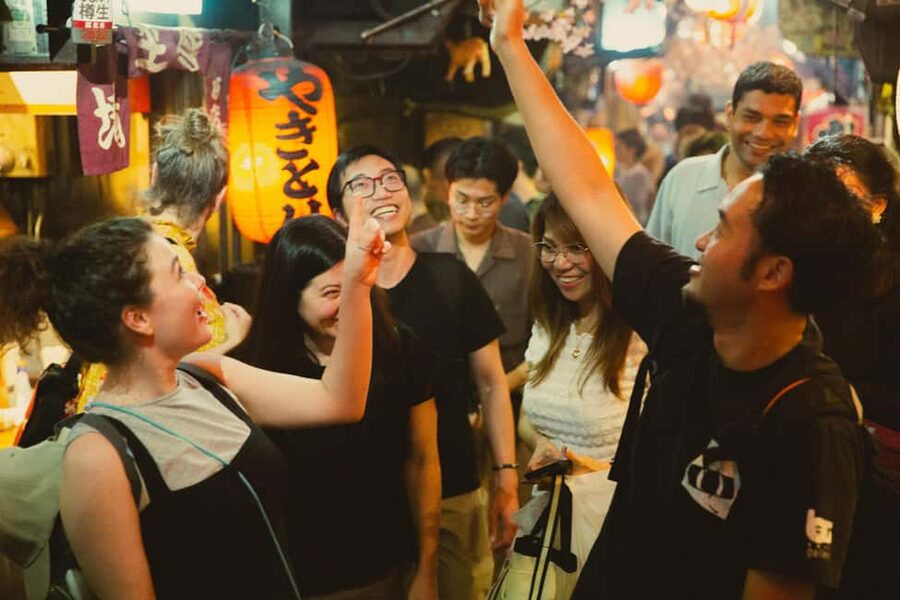
Your first major stop is Omoide Yokocho, also called Memory Lane. This historic alleyway is lined with small eateries and has a retro feel that contrasts with the tall buildings and huge signs elsewhere in Shinjuku.
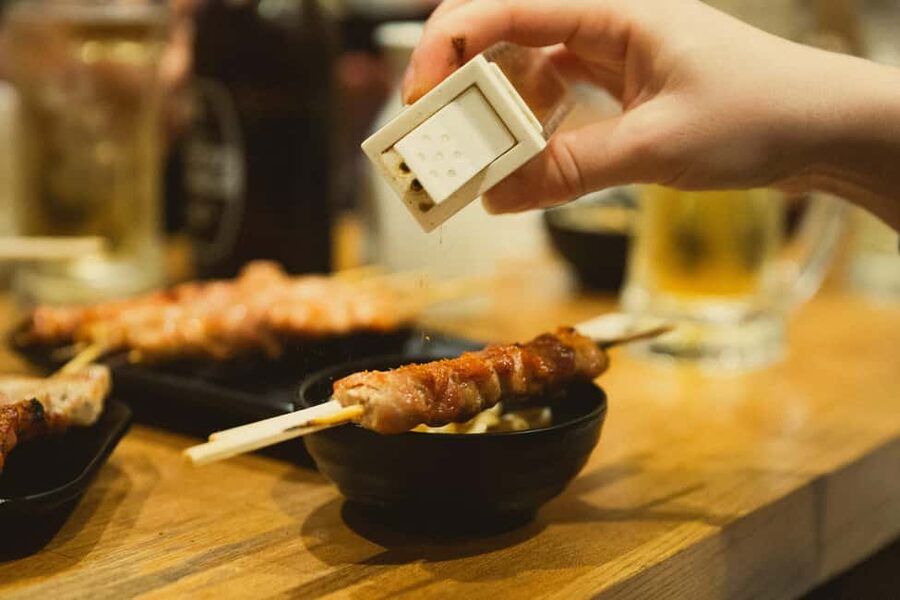
This is where the tour settles into its food-and-drink rhythm. You can expect yakitori, or grilled chicken skewers, along with a beer or another included drink. The food is not an afterthought. Starting with something to eat is a sensible choice before moving on to more bars.
Omoide Yokocho is especially useful for first-time visitors because the scale is easy to appreciate on foot. You see how close the tables and counters are, how much activity can fit into a narrow passage, and how different the atmosphere is from a large modern restaurant.
I would pay attention to the guide here. A good explanation can make the alley more than a pretty backdrop. Guides such as Hiro, Shuji, and Ryota have been praised for explaining the area while keeping the mood light. You should have room to ask about Japanese drinking customs, the dishes being served, and the role of izakaya in a night out.
There is one practical limitation. The food selection is not designed around special diets. The operator specifically does not accommodate vegetarians, vegans, halal diets, gluten-free requests, or food allergies. If you have a serious restriction, this is not the right food tour.
Kabukicho brings the neon
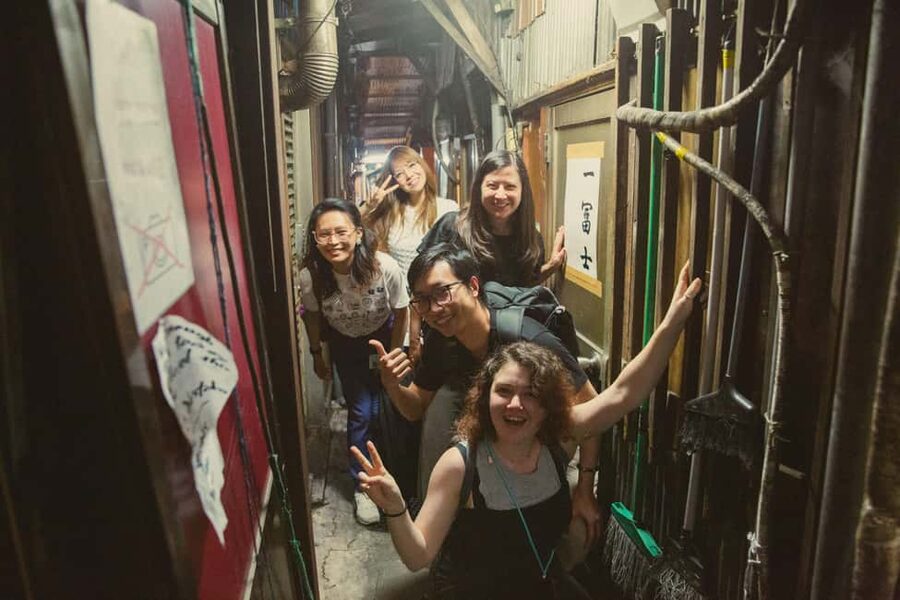
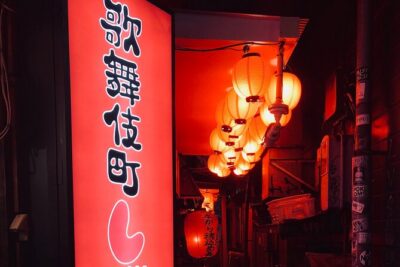
After Omoide Yokocho, the route moves into Kabukicho, Shinjuku’s famous entertainment district. Here, the atmosphere shifts from nostalgic and intimate to bright, loud, and theatrical.
You pass small clubs, smoky pubs, karaoke parlors, and late-night snack bars packed into lantern-lit lanes. The appeal is largely visual and atmospheric. You are seeing the part of Tokyo that comes alive after office hours, with signs stacked above the streets and businesses fitted into every available space.
Kabukicho can feel confusing, especially at night. A guide helps you understand where you are and keeps the walk focused. The tour is not simply a march from one bar to another. The guide provides information about the neighborhood and points out places that would be easy to overlook.
This is also the stretch where you should keep your expectations realistic. You are not getting a full historical tour of Shinjuku, and the two-hour schedule leaves little time for long explanations. The emphasis is on seeing the district, eating, drinking, and talking as you go.
Several people who booked the experience singled out the guides’ local advice. Ash was praised for offering recommendations beyond the evening itself, while Taka was noted for his understanding of the Kabukicho area. That can be valuable if you want ideas for returning later on your own.
Same city, a different round of bars:
- Tokyo Bar Hopping Tour in Shinjuku (All-You-Can-Drink + Dinner)
★ 5.0 · 3,587 reviews - Shibuya Meltdown Nightlife Tour: All-You-Can-Drink Bar Hopping
★ 5.0 · 1,058 reviews - Tokyo: Pub Crawl and Bar Tour
★ 4.5 · 951 reviews - Tokyo: Shinjuku Bar Hopping with All-You-Can-Drink & Dinner
★ 4.9 · 440 reviews
Golden Gai is the evening’s main attraction
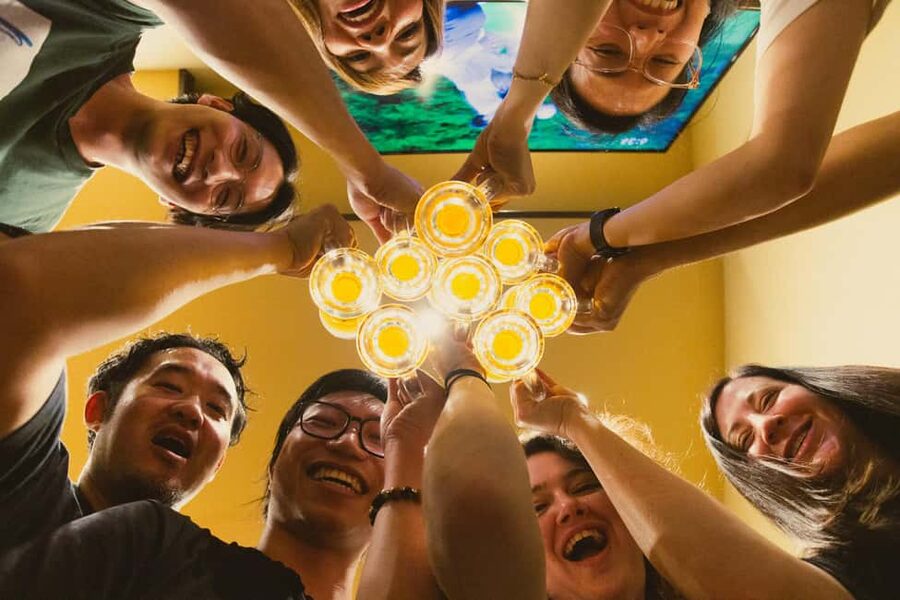
Golden Gai contains more than 300 tiny bars, many with their own style or theme. The lanes are narrow, the rooms are small, and the sense of discovery comes from seeing how many different places fit into such a compact area.
The tour visits Golden Gai more than once, which is a good design choice. You first get a look at the area and its layout, then return for a drink and a closer look at the bar scene. This gives you a chance to notice details you might miss during the first walk-through.
At the final stop, you can expect another included drink, with beer or a cocktail listed among the possibilities. You also have more regional food. The exact bars and dishes can vary, so do not book this expecting a fixed menu or a guaranteed theme.
Golden Gai is not polished nightlife. Its charm comes from the cramped, individual character of the bars. You may find a room devoted to a particular interest, a quiet counter, or a place where conversation matters more than a large sound system. The small size can also make the experience feel personal, but it may be uncomfortable if you dislike tight spaces.
A group of up to eight is a sensible limit here. Larger groups would be harder to seat and could overwhelm the tiny rooms. One particularly useful detail comes from a booking where the group ended up being just one person. The guide, Tak, adjusted without making the evening feel awkward. That suggests the format can work for solo visitors as well as couples and small groups.
Food, drinks, and what the $96 price covers
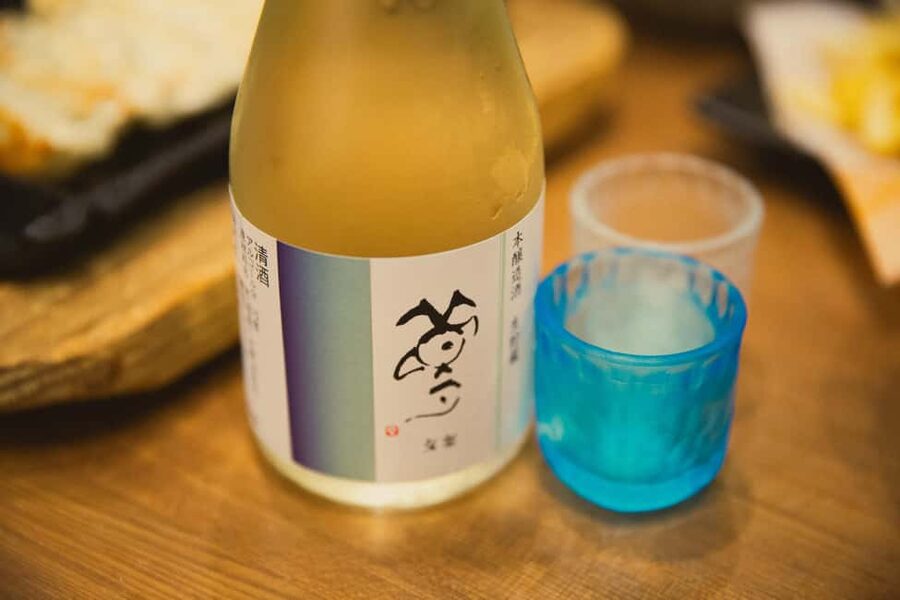
The price is $96 per person. That is not a bargain if you compare it with the cost of wandering into inexpensive izakaya on your own. But the comparison is not quite fair.
You are paying for three alcoholic drinks, six to eight foods, an English-speaking local guide, and help moving through one of Tokyo’s most confusing nightlife areas. You also avoid the trial-and-error of choosing a bar, working out the menu, and figuring out whether a tiny establishment welcomes first-time foreign visitors.
The value is strongest if you are new to Tokyo, unsure about Japanese drinking customs, or keen to meet other people. It is weaker if you already know Shinjuku well, speak Japanese comfortably, or mainly want a quiet meal.
The included food also gives the evening more balance. One person specifically suggested that the experience should be presented more as a food and cultural evening than as simple bar hopping. I agree with that distinction. The drinks are central, but the route also introduces you to eating styles, local streets, and the social side of izakaya.
Additional food and drinks cost extra. The booking does not include hotel pickup or drop-off, so you must make your own way to Tajimaya Coffee and leave Golden Gai independently.
What the guides add to the evening
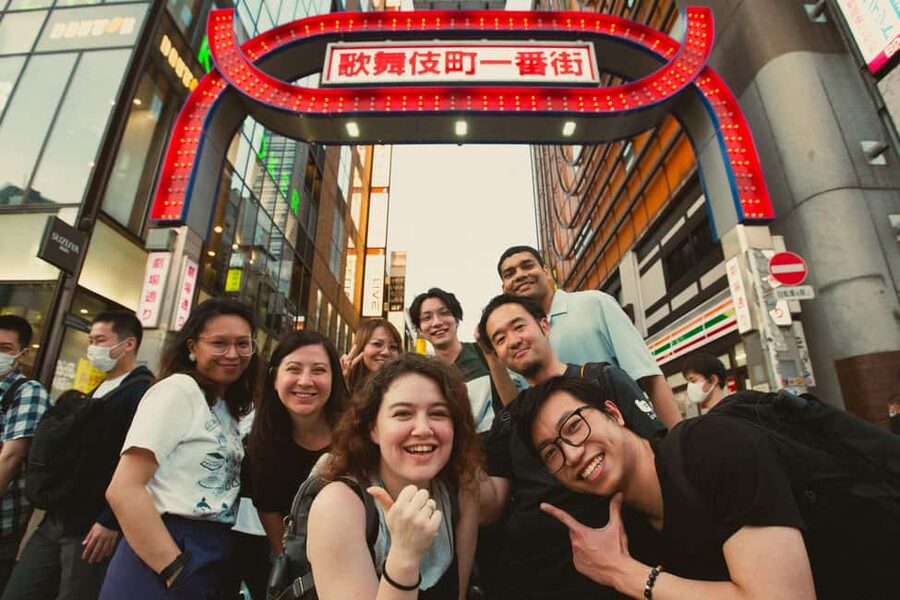
The guide is the difference between a pleasant walk and a useful introduction to Shinjuku nightlife. The strongest part of the experience is not just reaching a bar. It is having someone explain what you are seeing and keep the group comfortable as the night gets busier.
The guide names attached to the experience include Hiro, Ryota, Sean, Shuji, Ash, Hideo, Taka, Tak, and Jimmy. You cannot choose a specific person from the information provided, but the repeated pattern is clear: the guides are expected to speak English well, share local information, and take part in the social side of the evening.
Shuji has been praised for making the night fun while showing the city from his own point of view. Ryota has been noted for good conversation and for helping people feel at ease with strangers. Sean has been recognized for taking groups to small back-street places and sharing information along the way.
This matters if you are traveling alone or have just arrived in Tokyo. A small group can become an easy way to meet people from different countries, while the guide gives you a common focus. The experience has worked with groups from the United States, Australia, Finland, the Netherlands, Germany, France, and other places.
The drinking age in Japan is 20. Anyone under 20 is given alternative drinks, but the tour still revolves around nightlife, so families with young children may not find it suitable. You should also avoid arriving already drunk. That is both a stated rule and basic courtesy in small bars.
Who should book this Shinjuku night tour
I would recommend it most strongly to:
- First-time visitors who want an easy introduction to Shinjuku after dark
- Solo visitors who would enjoy a small social group
- Couples who want food, drinks, and neighborhood atmosphere in one short outing
- People curious about izakaya culture but unsure how to begin
- Anyone who likes walking through crowded city districts and trying several small places
It is less suitable for anyone seeking a formal food tasting with a carefully controlled menu. It is also a poor fit for vegans, vegetarians, people with food allergies, and anyone who needs halal or gluten-free food.
You should think twice if you do not drink alcohol. Alternative drinks are available for people under 20, but the activity itself is built around bars and drinking. The walk is also not suitable for wheelchair users because of the narrow lanes and small venues.
Timing, comfort, and practical planning
Check the available starting times when you book, since the exact departure schedule is not fixed here. An evening start is essential because the tour is built around nightlife, neon, and late-opening bars.
Wear comfortable shoes. You will walk through Omoide Yokocho, Kabukicho, and Golden Gai, and the streets can be crowded. Keep your belongings manageable, especially if you expect to enter very small rooms.
Plan to arrive sober enough to listen, walk, and enjoy the food. The tour already includes three drinks, so you do not need to drink quickly. Take the food seriously, pace yourself, and ask the guide if you are unsure what is being served.
The cancellation policy is helpful for flexible planning. You can cancel up to 24 hours before the activity for a full refund, and you can reserve now and pay later. These terms are useful in Tokyo, where plans often change as you adjust to jet lag or weather.
Should you book it?
Book this tour if you want a friendly, guided introduction to Shinjuku nightlife and would rather follow a local than make random choices among hundreds of bars. The combination of Omoide Yokocho, Kabukicho, and Golden Gai gives you three distinct moods in a short evening, and the food helps keep the experience from becoming a simple drinking crawl.
Skip it if dietary restrictions make the food uncertain, if you dislike cramped bars, or if you already know Shinjuku well. At $96, the value comes from access, guidance, conversation, and the included food and drinks, not from the cheapest possible night out.
For most first-time visitors who want a social evening with local character, I would book it early in a Tokyo stay. You will get an introduction to the area, learn where you may want to return, and finish in Golden Gai with a better sense of how Shinjuku’s small-bar culture fits together.
FAQ
How long does the Shinjuku Izakaya and Golden Gai tour last?
The tour lasts two hours.
Where does the tour meet?
Meet in front of Tajimaya Coffee, written in Japanese as 但馬屋珈琲.
Where does the tour finish?
The tour finishes at Shinjuku Golden-Gai.
How many drinks and foods are included?
The price includes three alcoholic drinks and six to eight foods.
Is an English-speaking guide included?
Yes. A local English-speaking guide leads the tour.
How large is the group?
The group is limited to eight participants.
Can people under 20 join?
Yes. Japan’s minimum drinking age is 20, and people under 20 receive alternative drinks.
Can the tour accommodate vegetarian or allergy-related diets?
No. The operator does not accommodate vegetarian, vegan, halal, gluten-free, or allergy-related requests.
Two-hour nights out around Tokyo
- Amsterdam 2 Hour Small-Group Canal Cruise with Dutch Snacks & Bar
★ 5.0 · 1,058 reviews - Osaka: 2-Hour Nightlife District Walking & Local Food Culture
★ 5.0 · 199 reviews - Amsterdam 2-Hour Evening Cruise With Live Guide and Bar
★ 5.0 · 134 reviews - Québec City: 2-Hour Cocktail & DJ Evening Cruise
★ 4.6 · 13 reviews
Last orders added around Tokyo
- Tokyo:Shinjuku Ni-chome LGBTQ+ Bar Hopping Tour with Guide★ 5.0 · 2 reviews
- Tokyo: Shinjuku Nightlife Tour with Karaoke and Bar Hopping★ 4.1 · 4 reviews
- Tokyo: Shinjuku Hidden Japanese Bar Tour (Neon Light City)★ 5.0 · 4 reviews
- Tokyo: Enjoy Tokyo’s Nightlife in Shinjuku★ 4.5 · 45 reviews
- Tokyo: Shinjuku Golden Gai Bar Hopping Night Tour★ 4.4 · 8 reviews
- Tokyo: Shinjuku Bar Hopping & Karaoke Night Tour★ 4.9 · 19 reviews
- Tokyo: Shinjuku Golden Gai Bar Hopping that only locals know★ 5.0 · 5 reviews
- Tokyo: Luxury Sake, Cocktail, and Whiskey Pairing Tour★ 5.0 · 2 reviews
Tokyo Bar Crawls: the next round
Tokyo Bar Hopping Tour in Shinjuku (All-You-Can-Drink + Dinner)
Read our review →
Shinjuku Local Bar and Izakaya Guided Walking Tour
Read our review →
Shibuya Meltdown Nightlife Tour: All-You-Can-Drink Bar Hopping
Read our review →
Shinjuku Nightlife & Secret Backstreets Walking Tour
Read our review →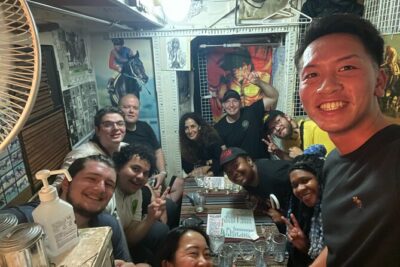
This night out also appears in